

WKU News
WKU Professor Publishes Research on Generosity
- Friday, August 28th, 2026
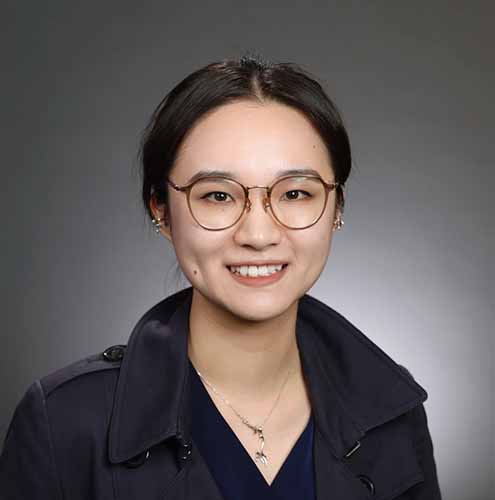
Does generosity differ by age, and does culture shape how giving looks along the way? A new study finds the answer to both is yes: across two countries, compared with their younger counterparts, older adults were less influenced by social distance when giving to others, and gave more to charity.
Dr. Yi Lu, Assistant Professor in the Department of Psychology at Western Kentucky University, worked with a team of collaborators at Cornell University and The Chinese University of Hong Kong to publish this research, “Prosociality Across Adulthood: Social Discounting and Donations in the U.S. and China,” in the journal Psychology and Aging. Dr. Lu earned her Ph.D. in Developmental Psychology at Cornell University.
“Some may assume that people become more self-focused, or simply have less to give, as they get older,” said Dr. Lu. “What we found tells a very different story. Older adults were consistently more generous than younger adults. They were more willing to help people who felt less close to them, like an acquaintance or a stranger, and they gave more to charity overall. We saw this same pattern in both the U.S. and China, two very different cultures, which suggests it isn’t just a coincidence of one particular society, but something more fundamental about how people change as they age.”
To reach these findings, the research team asked nearly 1,000 adults across a wide range of ages, in the U.S. and in China, to make a series of hypothetical decisions about how much money they would be willing to share with people at different levels of closeness, from a close family member to a complete stranger. Participants also reported their charitable donations. Older adults were the most generous group in both countries, even after the researchers accounted for participants’ cultural values and other background differences.
The study also found that a person’s cultural values shaped how generous they were, regardless of age. People who placed greater value on equality and closeness with others tended to be more generous overall, while those who placed greater value on personal achievement and status tended to be less so. Taken together, the findings suggest that generosity in adulthood is shaped both by how we age and by the cultural values we carry with us.
As a new faculty member at WKU, Dr. Lu will continue her research on aging and prosocial behavior, working with Psychology undergraduate and graduate students to give them hands-on applied research experience in her lab.
Citation: Lu, Y.*, Lin, H.*, Löckenhoff, C. E., Zhang, X., Liao, S., & Fung, H. H. (in press). Culture, age, and prosociality: Social discounting and charitable giving in the U.S. and China. Psychology and Aging. *indicates equal first authorship.
Some of the links on this page may require additional software to view.