

46th Annual WKU Mathematics Symposium Schedule and Abstracts
Schedule Overview
3:00pm (Friday)
Free registration is available throughout the whole event and begins at 3:00pm. It is located at Snell Hall First Floor. There will be free refreshments.
3:15 - 3:30pm
Dr. David Brown, Dean of Ogden College of Science and Engineering
Dr. Anthony Harkins, Interim Department Chair of Mathematics
3:30 - 4:30pm
Mathematics and Machines: Advancing in the Age of AI
Snell Hall 1108
4:40 - 5:55pm
Sessions will be in Snell Hall. For specific information see below.
6:00 - 6:35pm
Snell Hall First Floor near Da Vinci's.
6:35 - 7:15pm
Dr. Sam Saarinen (New Classrooms), Julie Brubaker (Mathematics Teacher, Fort Knox High School - Department of Defense Education Activity), and Dr. Bruce Kessler (Data Analytics Manager, CAYA Collaborative Care)
Snell Hall 1108
7:15 - 7:20pm
Dr. Mikhail Khenner
Snell Hall 1108
7:25 - 8:25pm
8:30 - 9:00am (Saturday)
Snell Hall First Floor
9:00 - 10:55am
Sessions will be in Snell Hall. For specific information see below.
11:00am - 12:00pm
The Saga of the Hardest Logic Puzzle Ever
Snell Hall 1108
Suitable Information
There are multiple ways to earn Suitable credit!
Attend the Mathematics Job Panel discussion at the Symposium (Friday 11/20, 6:35-7:15pm).
Attend at least two presentations or one plenary presentation.
Be a student presenter at the Symposium!
Detailed Schedule
Click on the Title and Presenter(s) to read the abstract of the presentation.
Notes: (GA) Gatton Academy High School Student, (U) Undergraduate Student, (G) Graduate Student, (P) Postdoctoral Fellow, (F) Faculty, (I) Industry, * denotes presenter
Each 15-minute talk follows with a 3-minute Q&A. The next presenter should set up the presentation towards the end of the Q&A.
Friday, November 20
|
Time |
Room |
Title and Presenter(s) |
|
4:40-4:55pm |
SH 1101 |
|
|
SH 1102 |
||
|
SH 1103 |
||
|
5:00-5:15pm |
SH 1101 |
Weaker Can Outrank Stronger in Poker by Dominic Lanphier* (F), Sean Williams* (U) |
|
SH 1102 |
Various Discretizations of the Lorenz System by Neslisah Tekbas* (G) |
|
|
SH 1103 |
The Mathematics of a Bad Workday: Modeling How Workplace Experiences Spill Over into Home Life by Katrina Burch* (F)[TALK CANCELLED] |
|
|
5:20-5:35pm |
SH 1101 |
Classifying Complete Covers of the SET Affine Space by Luke Cissell* (U), Molly Dunkum (F) |
|
SH 1102 |
Inventory Systems with Deterioration on Isolated Time Domains by Taylor Latham* (G)[TALK CANCELLED] |
|
|
SH 1103 |
||
|
5:40-5:55pm |
SH 1101 |
|
|
SH 1102 |
||
|
SH 1103 |
Saturday, November 21
|
Time |
Room |
Title and Presenter(s) |
|
9:00-9:15am |
SH 1101 |
Filling shogi boards to capacity with mutually non-attacking pieces by Doug Chatham* (F) |
|
SH 1102 |
||
|
SH 1103 |
||
|
9:20-9:35am |
SH 1101 |
A Study of ABC-functions on Complete Graphs by Gokul Krishna* (G) |
|
SH 1102 |
||
|
SH 1103 |
||
|
9:40-9:55am |
SH 1101 |
Rolle’s Theorem, Concavity, and the Zeros of Fractional Derivatives by Jeffrey Neugebauer* (F) |
|
SH 1102 |
||
|
SH 1103 |
Deep Neural Operator Learning for Stochastic Heat Equations and Applications by Hengrong Du* (F) |
|
|
10:00-10:15am |
SH 1101 |
Derivative-Dependent Fractional Boundary Value Problems by MaHalie Hamilton* (U) |
|
SH 1102 |
Personalizing Cancer Models under Data Scarcity via Parameter Decomposition by Logan Rose* (G) |
|
|
SH 1103 |
When AI Comes for Your Mathematics Research by Molly Dunkum* (F), Robert Donnelly* (F) |
|
|
10:20-10:35am |
SH 1101 |
|
|
SH 1102 |
||
|
SH 1103 |
||
|
10:40-10:55am |
SH 1101 |
|
|
SH 1102 |
Disclosure Timing and Stock Price Efficiency by Kevin Owens* (F) |
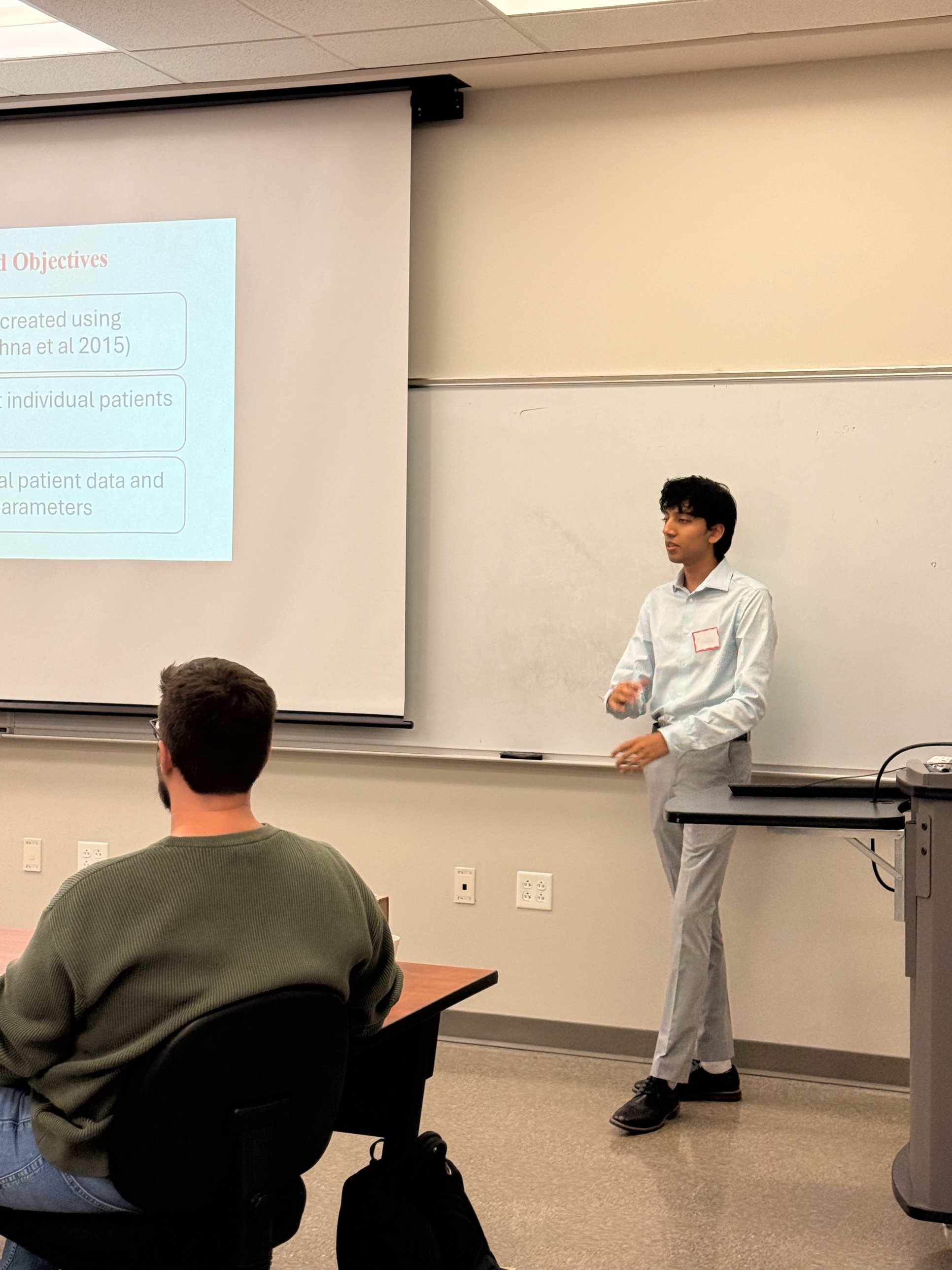
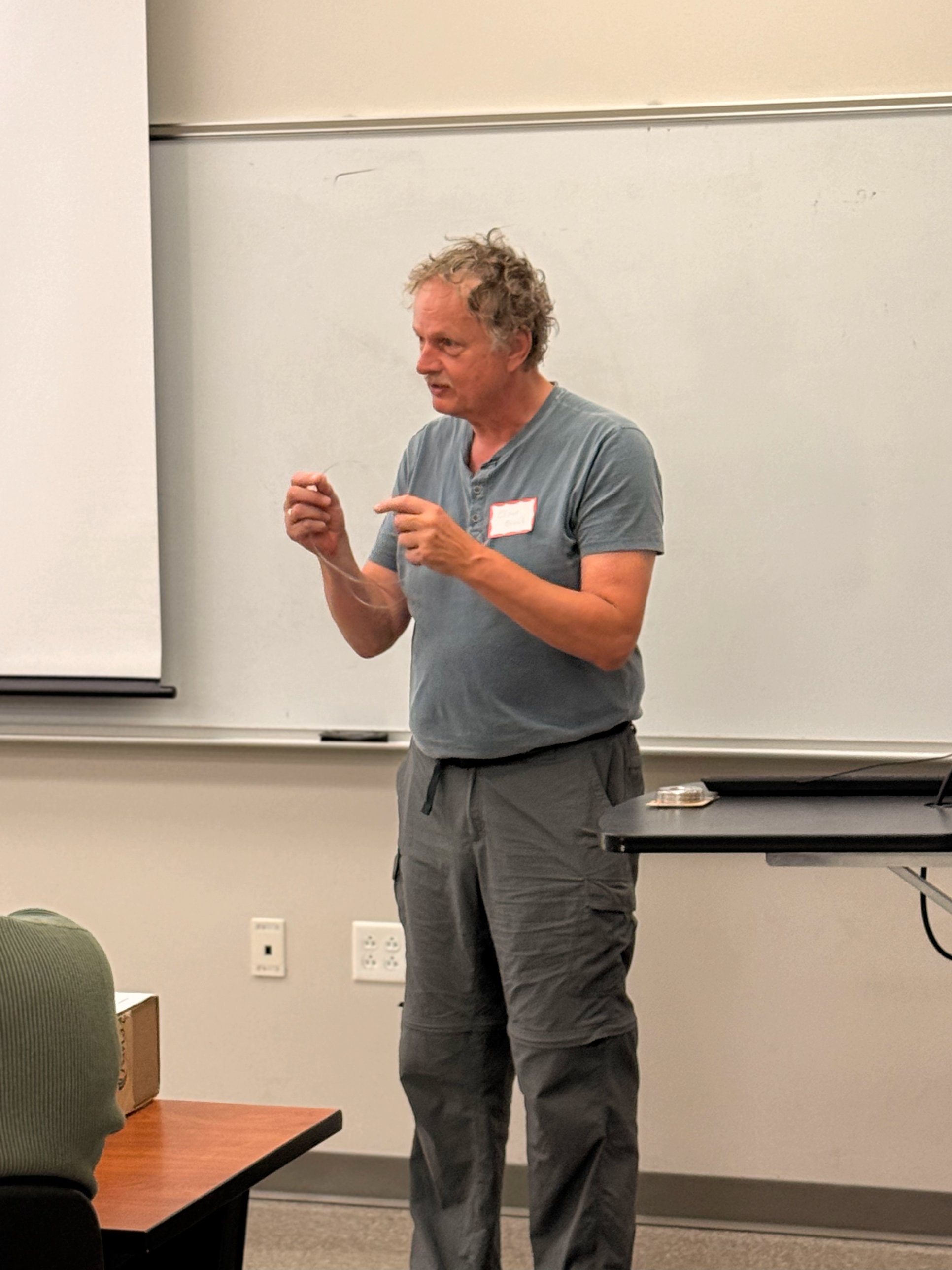
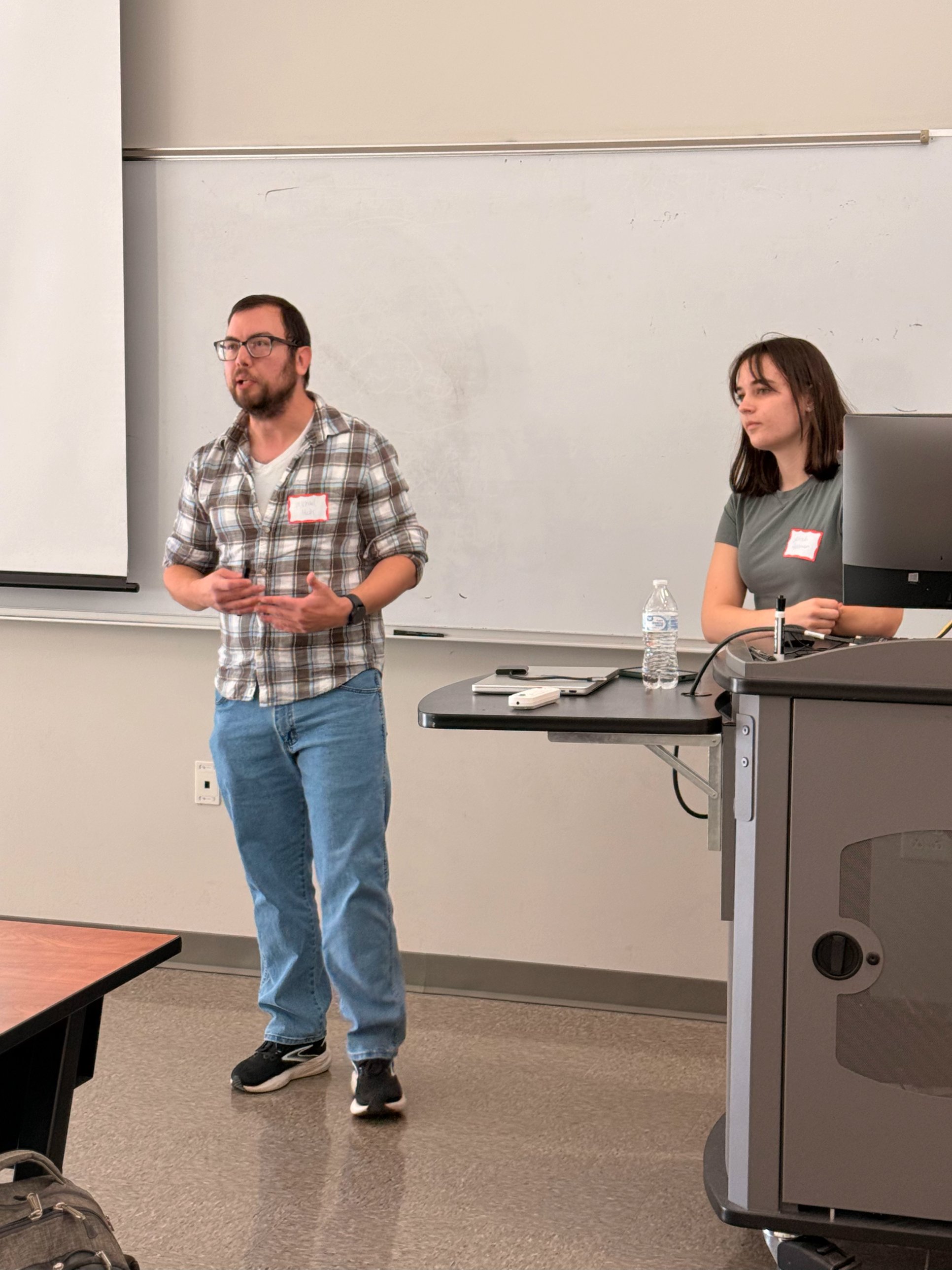
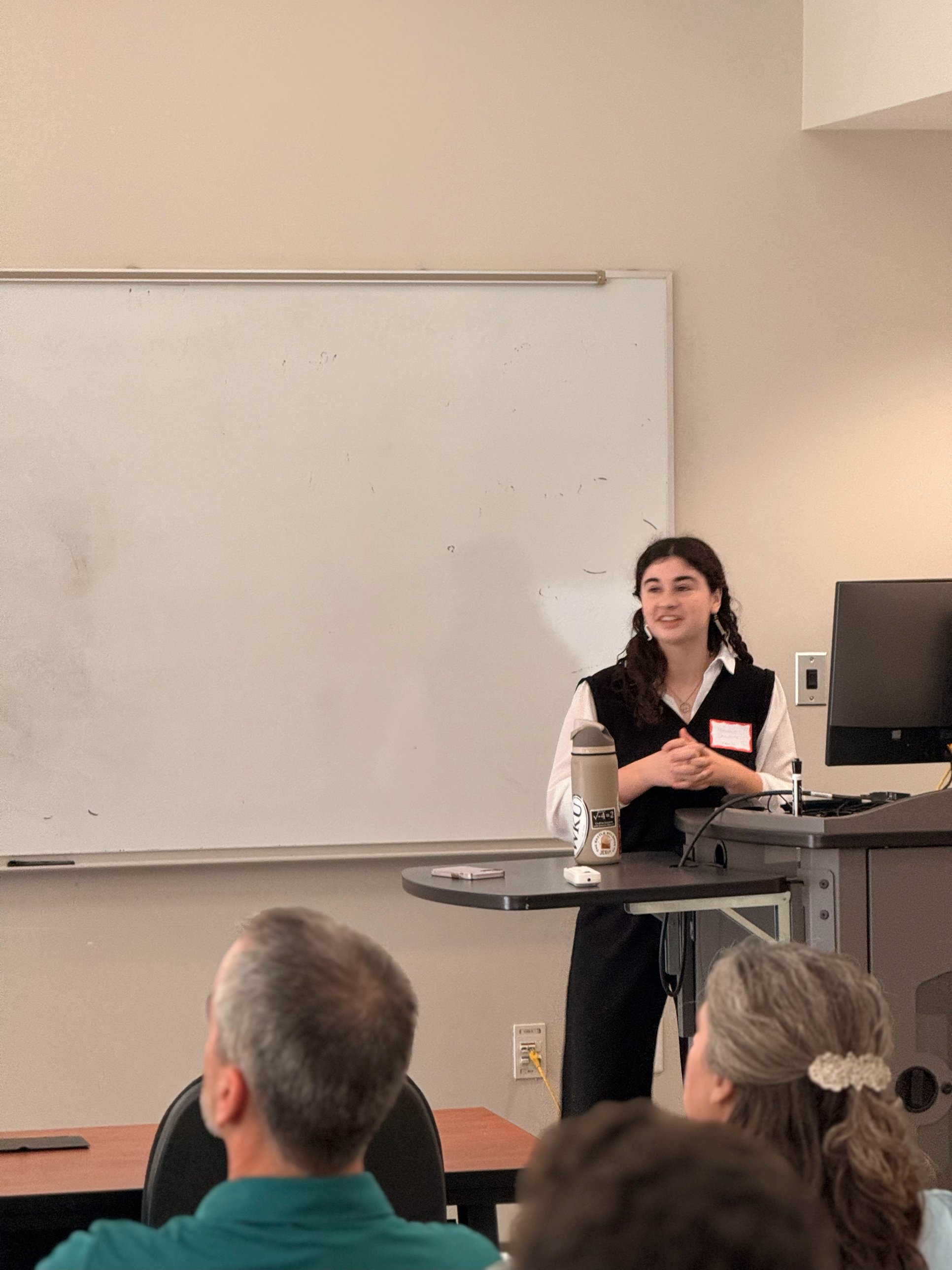
Photos from the Symposium
Test
Abstracts for Presentations
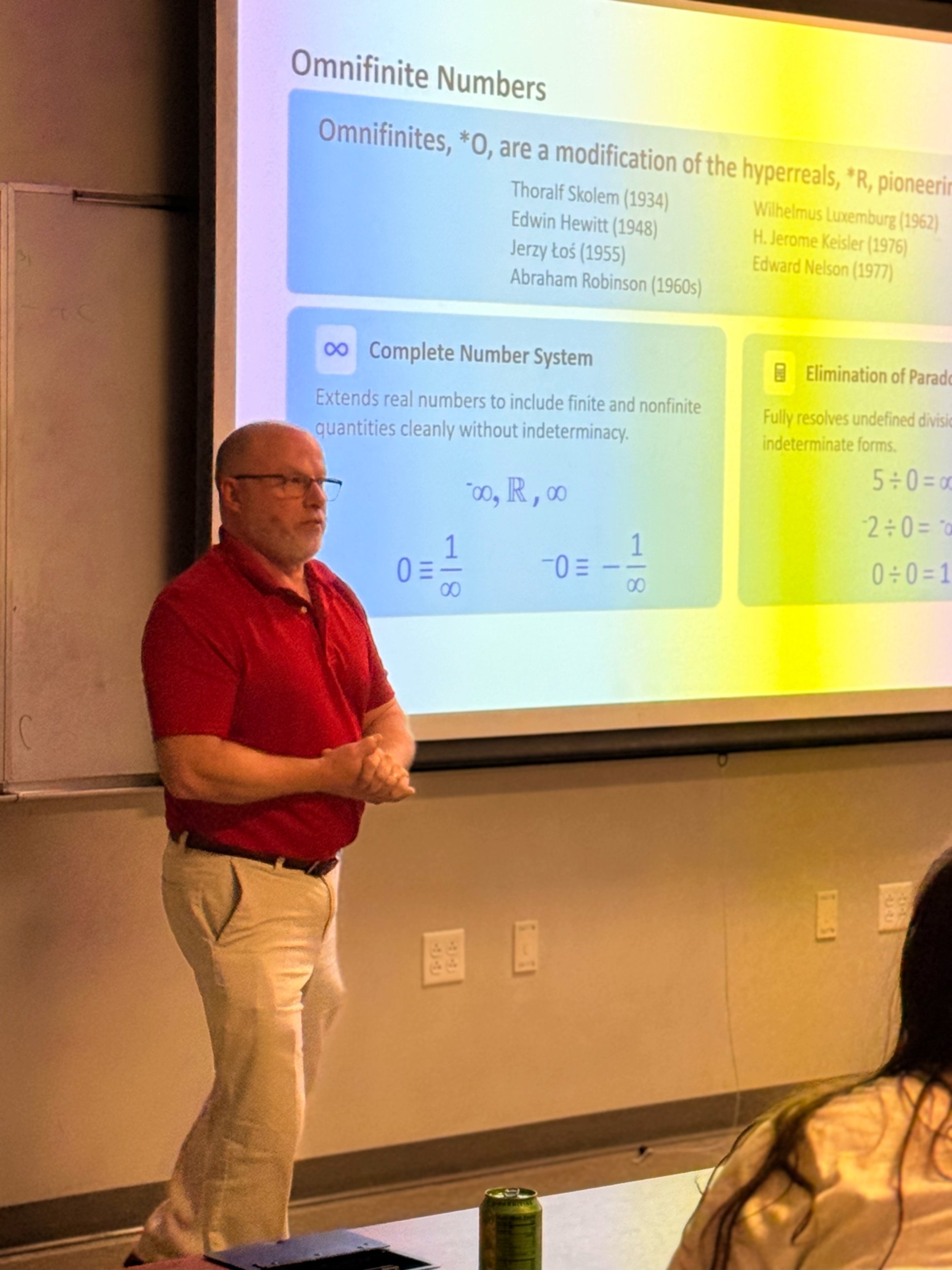
Title: Infinitesimals Calculus using Omnifinites
Presenters: Shane Palmquist* (F), Ramsey King (U), Dylan Kostenbader (U) (Western Kentucky University)
Abstract: This presentation introduces a mathematical framework for arithmetic calculus built upon the foundation of omnifinites—generalized number systems that seamlessly integrate finite, infinite, and infinitesimal quantities. By moving beyond traditional limit definitions, this approach revives the intuitive appeal of historical infinitesimal analysis while maintaining modern logical consistency. We examine how core calculus concepts, including arithmetic properties, compare to the reals and hyperreal numbers in addition to providing a historical basis for this. Key highlights include presenting the errorless calculator, which will be demonstrates the arithmetic of omnifinites, where errors such as division by zero or indeterminant forms are fully defined.
Click here to return to Detailed Schedule
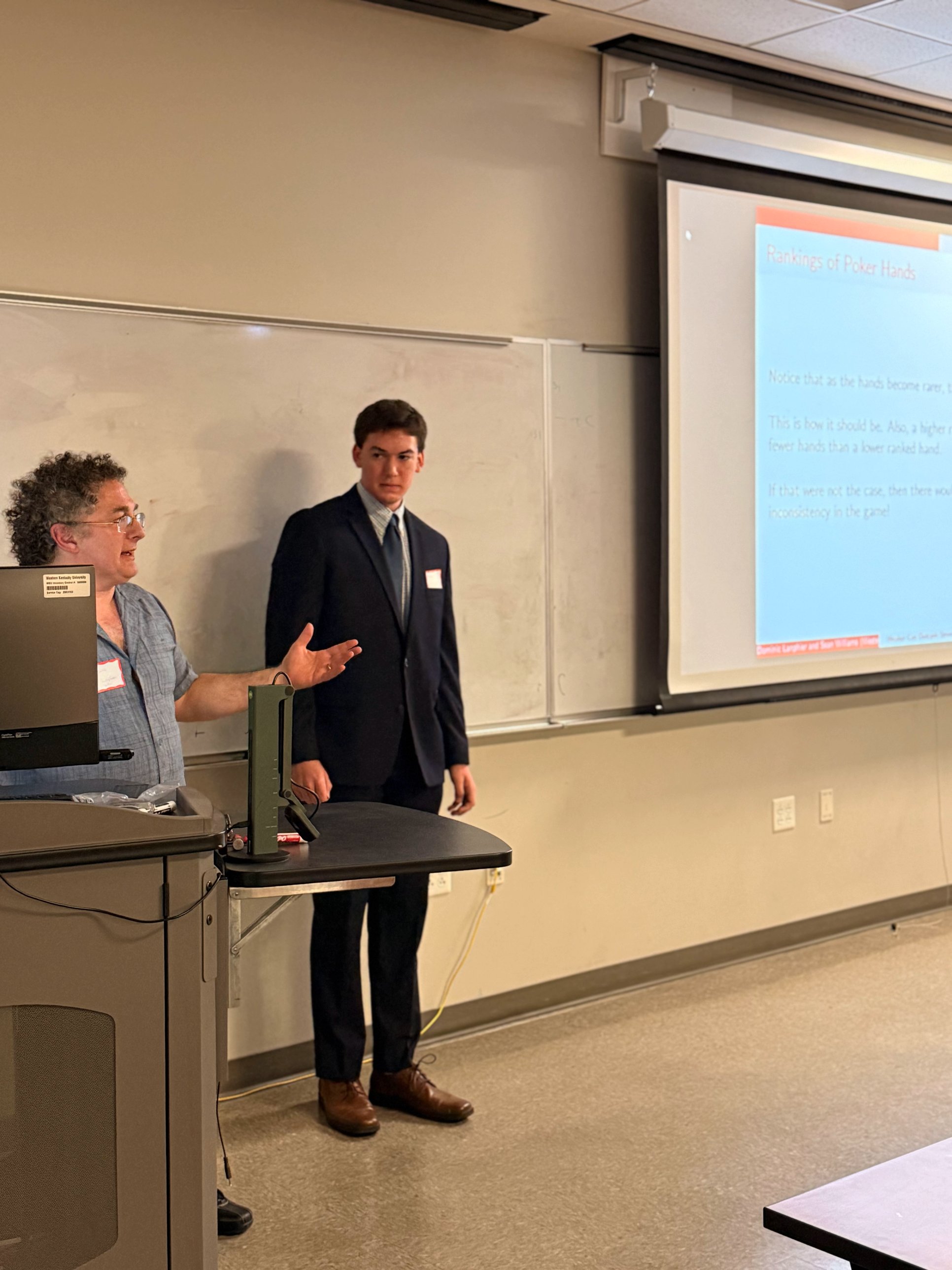
Title: Weaker Can Outrank Stronger in Poker
Presenters: Dominic Lanphier* (F), Sean Williams* (U) (Western Kentucky University)
Abstract: In poker, one hand outranks another hand because it is rarer. That is, there are fewer hands that outrank one hand than the other hand. Peter Winkler from Dartmouth College in his book Mathematical Puzzles gave an example of two Full House hands where one outranks the other, but the higher rank hand can be beaten by more hands than the lower rank Full House. So, in a sense, the weaker hand outranks the stronger hand. However, in the example, each full house contains three Aces and so they cannot coexist in the same deal. We investigate this issue and consider the question: Can there exist, in the same deal, two hands in poker where the weaker hand outranks the stronger hand?
Click here to return to Detailed Schedule
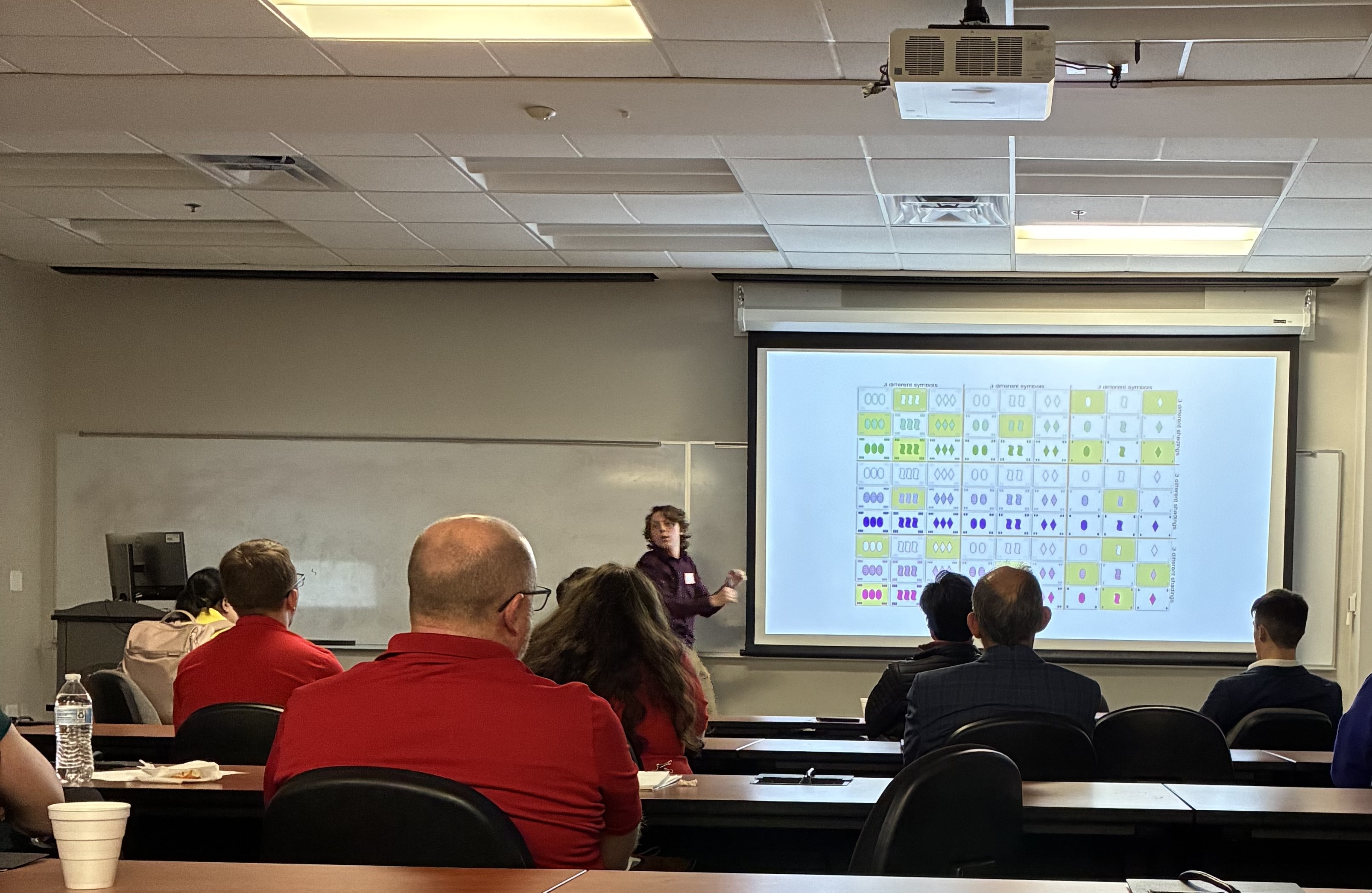
Title: Classifying Complete Covers of the SET Affine Space
Presenters: Luke Cissell* (U), Molly Dunkum (F) (Western Kentucky University)
Abstract: Set is a family card game where the objective is to take triplets of cards from a drawn 4×3 grid that satisfy specific properties. These triples and properties bring forward a very unique, highly-studied affine space that relates to the way this game is played. In this presentation, we will examine the space and how it is related to the game, prove various elementary results related to the space and generalize them to higher dimensions, begin to classify types of specific totally tripled covers of the affine space called Hyperfamilies.
Click here to return to Detailed Schedule
Title: Who is Laplace’s Brother?
Presenters: Anthony Lin* (GA) (The Gatton Academy of Science and Mathematics)
Abstract: In this presentation, we will present a way to solve partial difference equations with the R-transform. The R-transform (Not the Z-transform) is the discretized version of the Laplace transform in differential equations. While previous papers and research have applied R-transform to solve ordinary difference equations, the R-transform has not been used for partial difference equations. We will state the definition and some properties of the R-transform, provide an R-transform table, and obtain a general solution to partial difference equations. We will also show its applications to divide-and-conquer algorithms.
Click here to return to Detailed Schedule
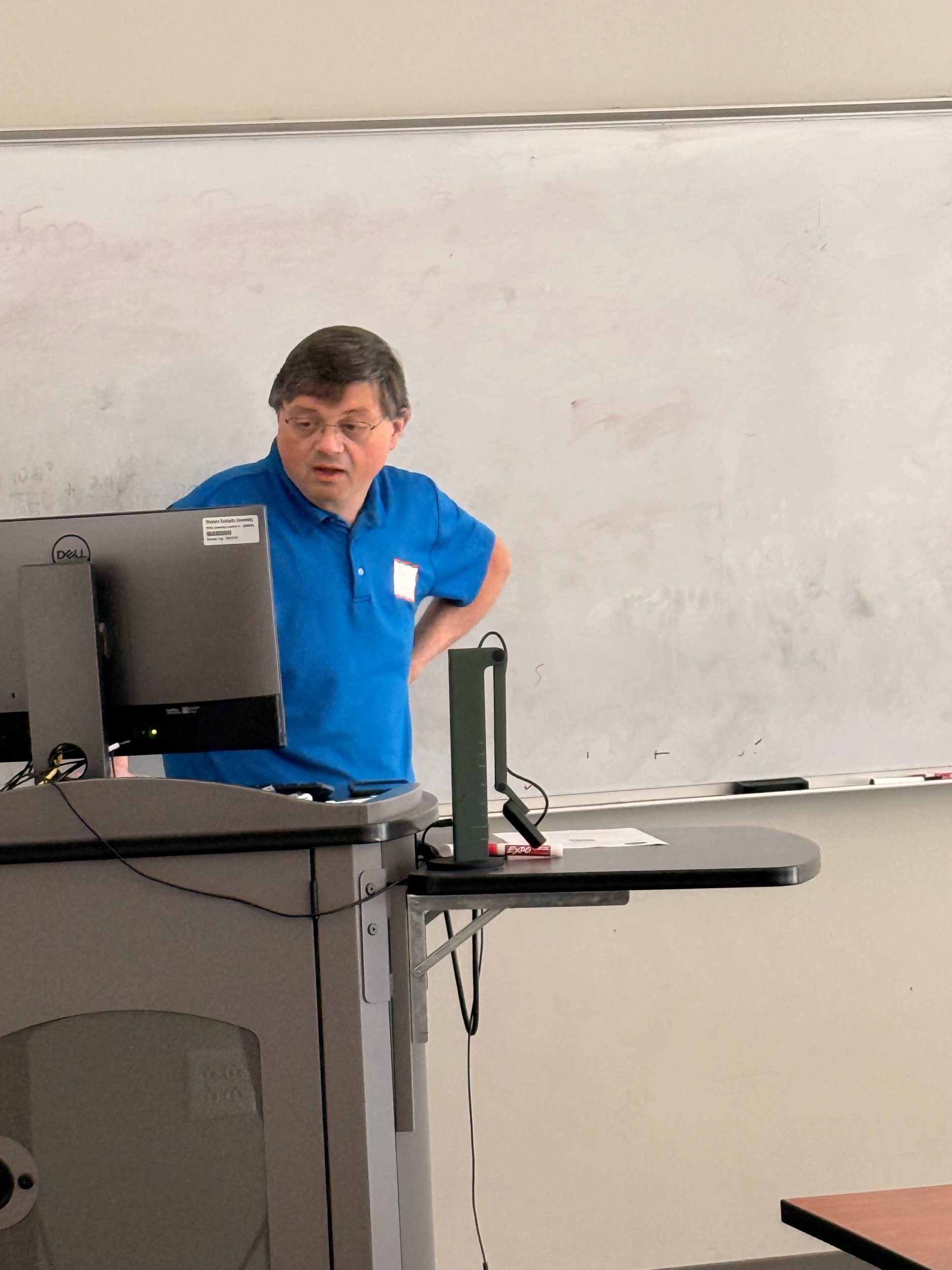
Title: Filling shogi boards to capacity with mutually non-attacking pieces
Presenters: Doug Chatham* (F) (Morehead State University)
Abstract: How many pieces from a Chess-like game can we place on an m×n board so that no piece attacks or guards an occupied square? For a Chess board with at least 3 columns, this number, the “capacity” of the board, is [23m]n + 0, 1, or 2. We consider the pieces of Shogi, a Japanese chess-like game, and show that the capacity of Shogi boards is higher. For instance, for an m × n Shogi board with an even number of columns, the capacity is [45m]n.
Click here to return to Detailed Schedule
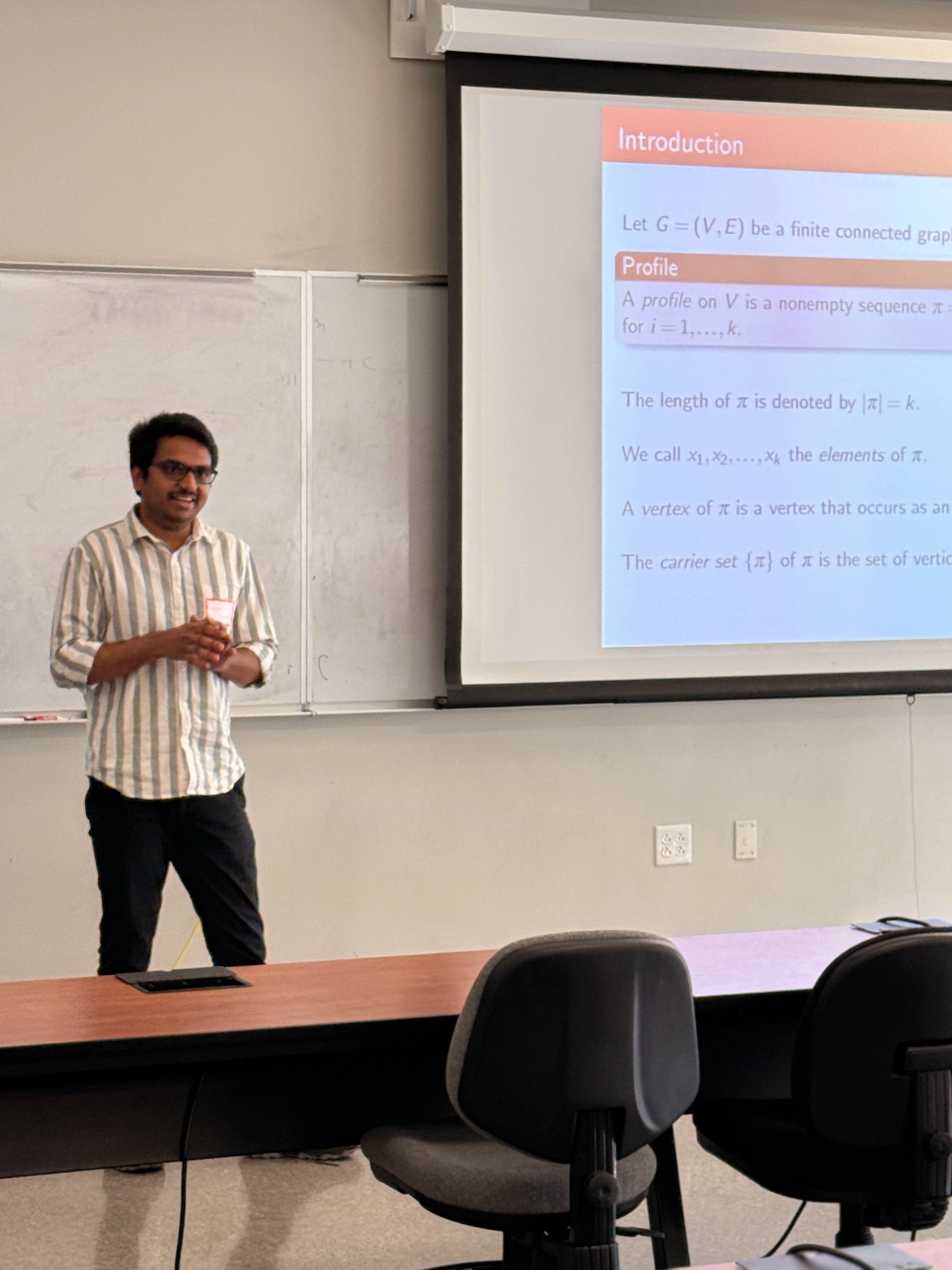
Title: A Study of ABC-functions on Complete Graphs
Presenters: Gokul Krishna* (G) (University of Louisville)
Abstract: The median function Med is a consensus/location function on a connected graph G that maps a finite sequence of vertices (called a profile π) of G to the set of vertices that minimizes the distance sum to the elements of π. The median function satisfies three intuitively clear axioms: Anonymity (A), Betweeness (B) and Consistency (C). A function which satisfies (A), (B) and (C) is called an ABC-function. The median function is the unique ABC-function on trees and median graphs. This study explores the case of complete graphs (Kn). The Median function has been characterized on complete graphs using (A), (C) and Uniformity (Unif) axioms. We prove that there is an infinite family of ABC-functions on Kn. We explore a stronger axiom called Fullness (Full) and show that there exist at least two functions on Kn other than Med which satisfy (A), (B), (C) and (Full) when n is a composite number.
Click here to return to Detailed Schedule
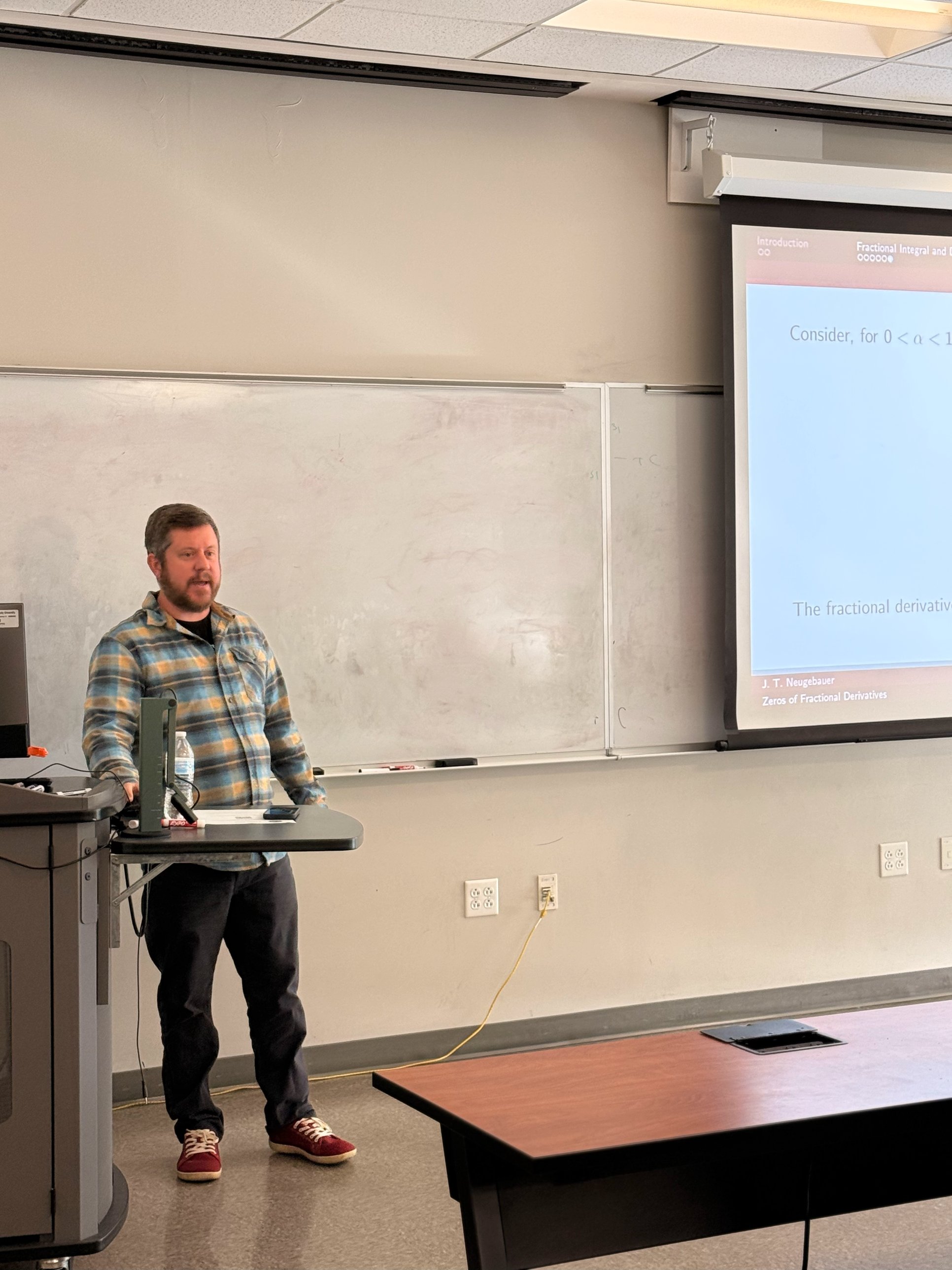
Title: Rolle’s Theorem, Concavity, and the Zeros of Fractional Derivatives
Presenters: Jeffrey Neugebauer* (F) (Eastern Kentucky University)
Abstract: Rolle’s Theorem says that if a differentiable function has two zeros, then its derivative has a zero in between. If the function is also concave upward or concave downward on the entire interval, that zero is unique. We look to obtain analogous results for Riemann-Liouville fractional derivatives. To do this we state a fractional version of Rolle’s Theorem and a fractional version of the concavity result. Along the way we study the Mittag-Leffler function, which plays the role of the exponential, sine, and cosine functions in fractional calculus. We use it to locate the zeros of fractional derivatives and to see where the classical picture breaks down.
Click here to return to Detailed Schedule
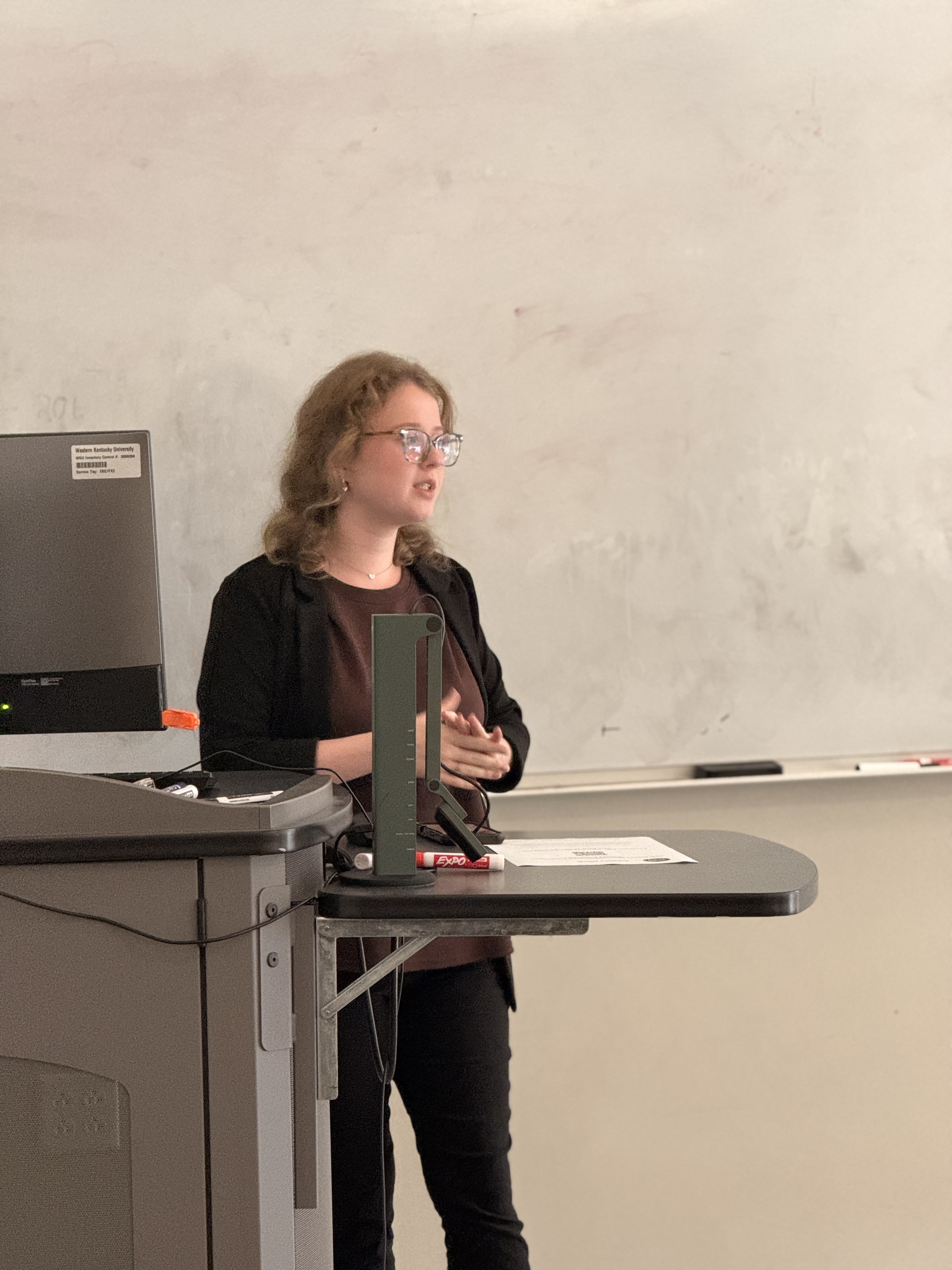
Title: Derivative-Dependent Fractional Boundary Value Problems
Presenters: MaHalie Hamilton* (U) (Eastern Kentucky University)
Abstract: We show the existence of solutions to Riemann–Liouville fractional boundary value problems of the form Dα0+u + f(t, u, u′) = 0, u(0) = 0, B[u] = 0 with 1 < α ≤ 2, where B is a general bounded linear operator. We use the substitution u = tα−1v and take advantage of the invariance of Dt (G(t, s)tα−1) with respect to B, where G is the Green’s function for the associated homogeneous problem.
Click here to return to Detailed Schedule
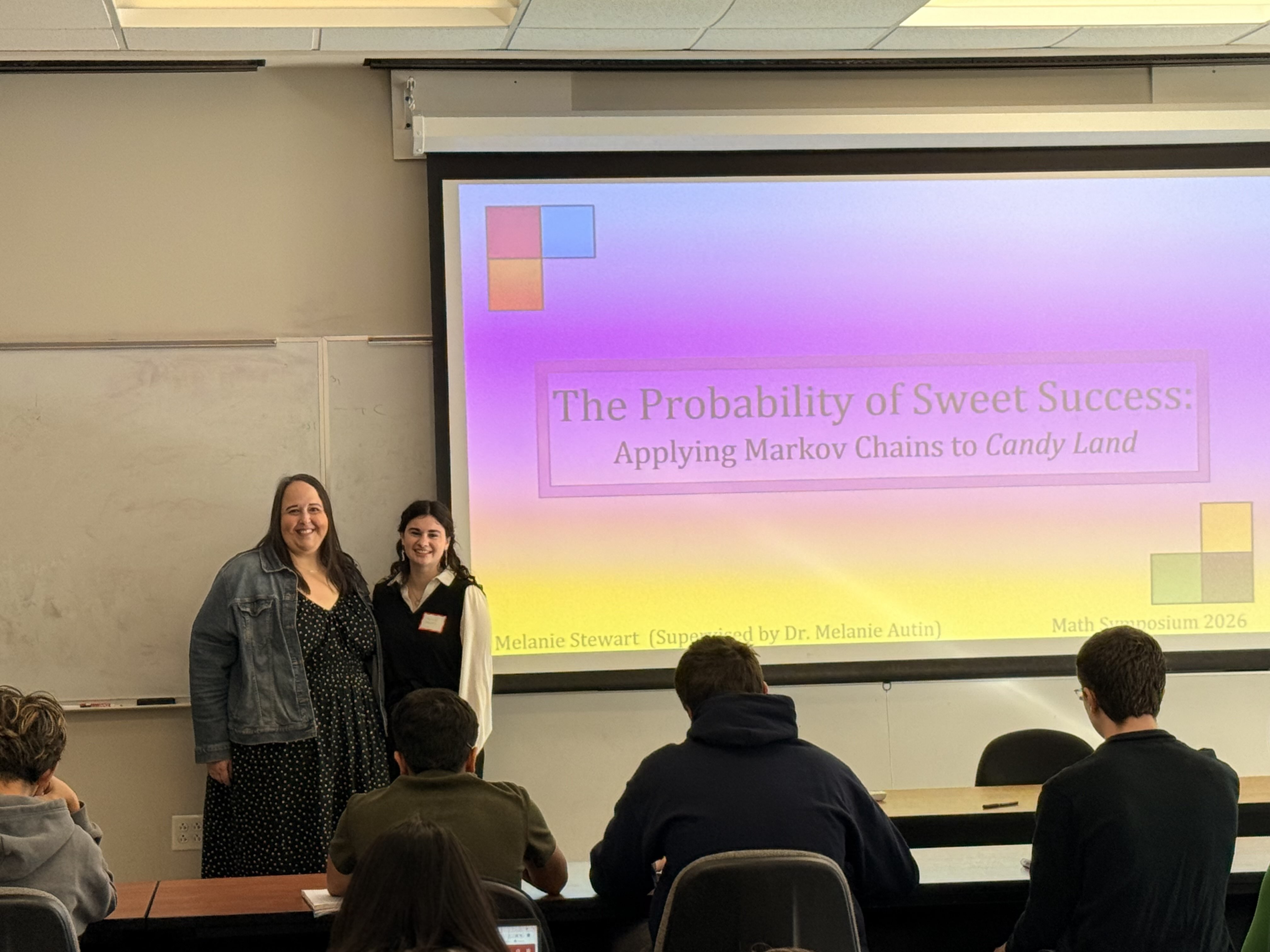
Title: The Probability of Sweet Success: Applying Markov Chains to Candy Land
Presenters: Melanie Stewart* (G), Melanie Autin (F) (Western Kentucky University)
Abstract: Candy Land is considered “a child’s first game” (Hasbro/Milton Bradley, 1984) because there is no reading required; there are simply colors and pictures to guide the players through the game. This game is easy to model with probability because there are no decision-making factors in Candy Land, only random outcomes. This presentation explores a mathematical approach to calculating the expected number of turns in Candy Land. This was done by utilizing Markov chains and their properties to determine how many turns a player is expected to take to win a game of Candy Land. After an introduction to Markov Chains is given, we explore the expected number of turns for a single-player game and the expected number of turns for a multiplayer game. This presentation also introduces modifications to the game and explores how these impact the expected number of turns to win for both single-player and multiplayer games of Candy Land.
Click here to return to Detailed Schedule
Title: pyGWPTools: A Unified Symbolic and Arbitrary-Precision
Presenters: Connor Mattingly* (GA), Jeremy B. Maddox (F) (The Gatton Academy of Science and Mathematics, Western Kentucky University)
Abstract: GWPTools is a symbolic and numerical toolkit for modeling Gaussian wave-packet dynamics in quantum mechanics. This presentation introduces pyGWPTools, a native Python implementation of the core one-dimensional engine that translates the functional, rule-based architecture of the original Mathematica package into a modular, open-source scientific computing framework. Because a Gaussian wave packet remains Gaussian in any potential that is at most quadratic in position, its exact time evolution reduces to coupled differential equations for a small set of time-dependent parameters. In pyGWPTools, a unified parameter structure connects state initialization, dynamical propagation, and observable evaluation, allowing users to query the exact same physical properties regardless of whether a wave packet is propagated analytically in closed form or numerically. The engine supports eight exact analytical potential models and 59 core properties, including spatial and momentum wavefunctions, expectation values, phase-space uncertainties, energies, and cumulative probabilities. Custom locally quadratic potentials with time-dependent coefficients are integrated numerically, and arbitrary-precision arithmetic is built in to overcome the roundoff and underflow errors that arise in standard 64-bit floating-point arithmetic during steep parametric squeezing or in extreme distribution tails. The Python engine has been rigorously benchmarked against the reference Mathematica implementation using symbolic identity reductions, conservation invariants, and high-precision numerical regression tests. This presentation traces a complete wave-packet calculation from initial state construction to physical observables, demonstrating how symbolic functional patterns can be adapted into a modular Python architecture.
Click here to return to Detailed Schedule
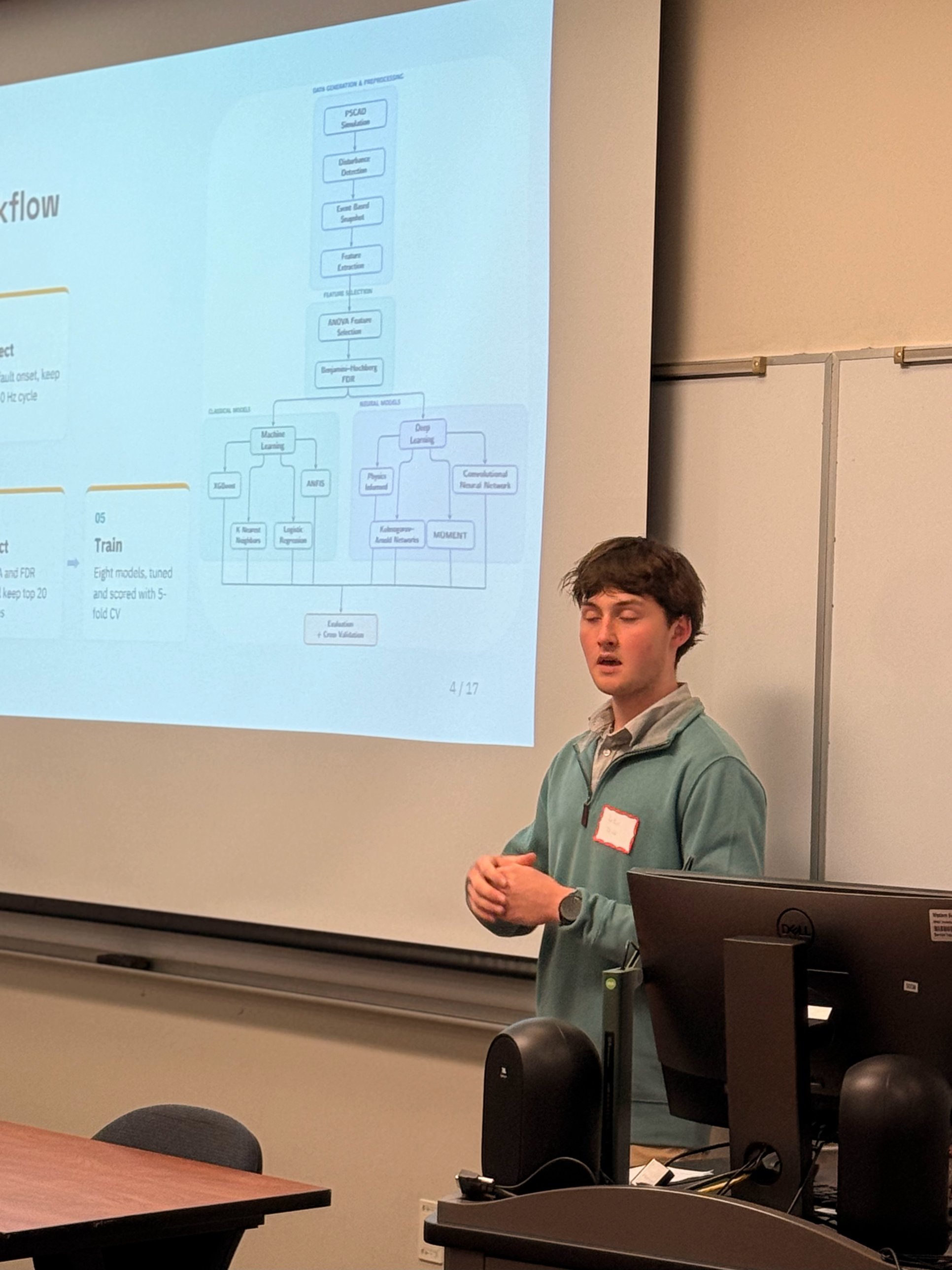
Title: Comparative Analysis of Machine Learning Models for Transmission Line Fault Classification
Presenters: Arthur Elliott* (GA) (The Gatton Academy of Science and Mathematics)
Abstract: This paper looks into the detection and classification of symmetrical and asymmetrical transmission line faults under varying fault locations, resistances, and fault types, across large scale meshed simulated topologies, testing multiple machine learning and deep learning models in direct comparison to each other. 3-phase currents were processed to extract informative signal characteristics with Time Series Feature Extraction libraries in python, tsfresh and tsfel. Feature selection was then performed to eliminate redundant variables and retain the most discriminative features for fault classification, with false positive detection applied afterwards. The models used were state-of-the-art algorithms, both already seen to have success in the field allowing for a more definitive decision on superiority, as well as less commonly studied models. These include k-Nearest Neighbors, Logistic Regression, Adaptive Neuro-Fuzzy Inference System, and Extreme Gradient Boosting; for deep learning, a 1-Dimensional Convolutional Neural Network, MOMENT, Kolmogorov-Arnold Networks, and Physics Informed Neural Networks. The 3-phase transmission line faults, categorized into single line-to-ground, line-to-line, double line-to-ground, and three-line faults were applied at multiple locations within the IEEE 9-bus system initially, then scaled to the 118-bus power system simulated in PSCAD/EMTDC.
Click here to return to Detailed Schedule
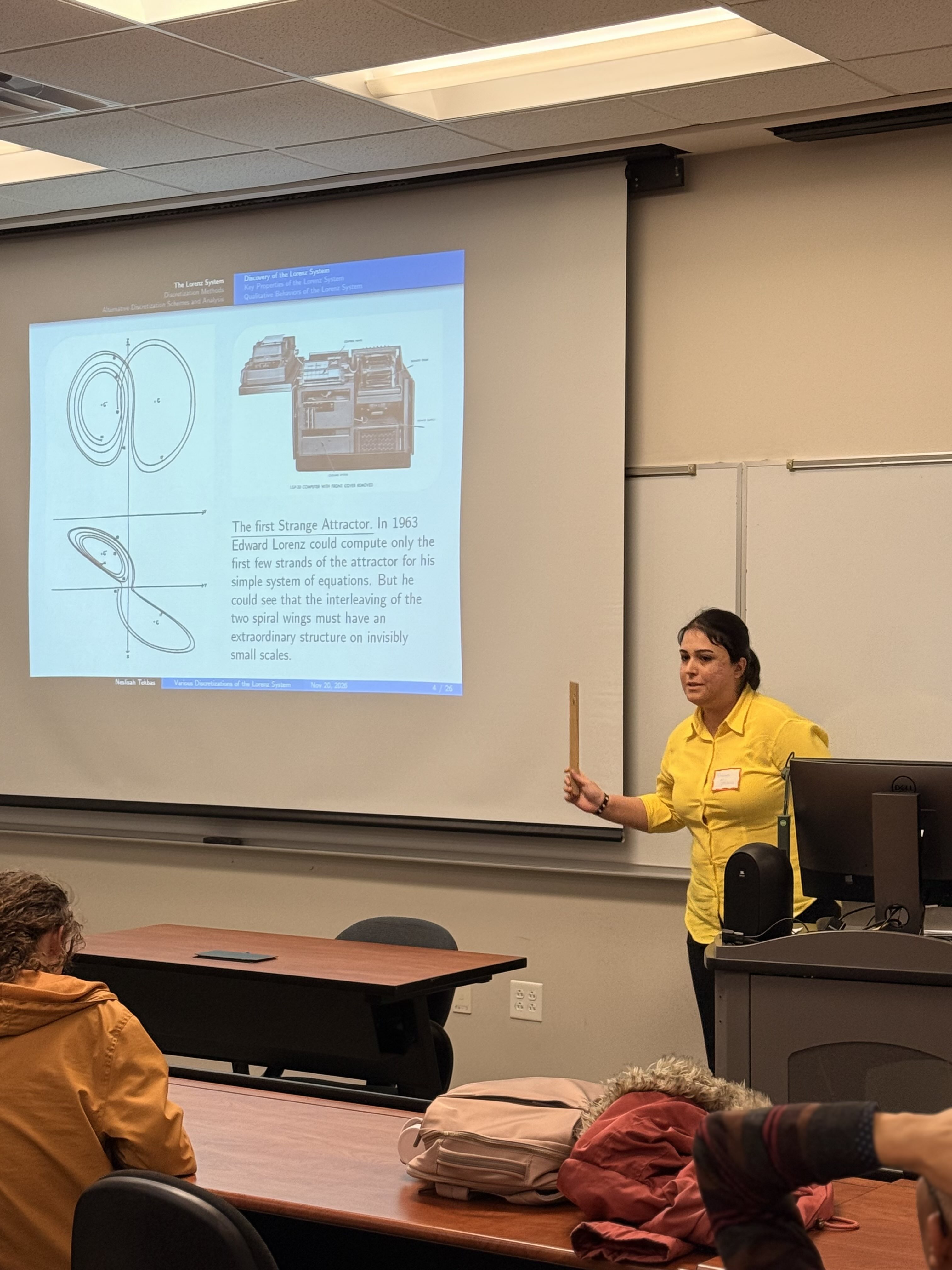
Title: Various Discretizations of the Lorenz System
Presenters: Neslisah Tekbas* (G) (Western Kentucky University)
Abstract: In this study, we first introduce qualitative theory of the Lorenz System. Discovering process and general structure of system is described. Elementary properties is explained in details such as Symmetry, Fixed points. We then focus on the well-known Lorenz equations,
ẏ = x(ρ − z) − y
ż = xy − βz,
where a dot denotes differentiation with respect to time t, and σ, ρ and β are positive parameters. Alongside the standard Euler method, which is a fundamental discretization approach, Letellier and Mendes investigated the discretization of the Lorenz system using the Nonstandard Finite Difference (NSFD) method and demonstrated that the resulting discrete system exhibits dynamic behavior similar to its continuous counterpart. In contrast, we propose an alternative discretization approach that leads to solutions with fundamentally different asymptotic properties. Our findings emphasize the significant impact of discretization methods on the qualitative dynamics of the Lorenz system. Our results indicate that when discretization techniques are applied directly, they may fail to preserve the essential dynamic characteristics of the original continuous system. Therefore, it is necessary to carefully analyze both the continuous model and its discrete equivalent. In particular, a detailed examination of the intrinsic structural properties of each system is crucial to ensure that the discretization accurately reflects the underlying dynamics. These conclusions highlight the importance of selecting appropriate discretization schemes in the study of nonlinear dynamical systems.
Click here to return to Detailed Schedule
Title: Inventory Systems with Deterioration on Isolated Time Domains [TALK CANCELLED]
Presenters: Taylor Latham* (G) (Western Kentucky University)
Abstract: An inventory system with deterioration (ISwD) is any system that receives inventory, and the products of which are used, or become unusable, over time. For example, grocery stores keep produce which is purchased or spoiled and blood banks withhold expirable blood which is transferred to hospital for transfusion. At the end of a cycle, the inventory is restocked, and the cycle begins again. We will give a model of the inventory loss as a function of time, where the time points are uniformly spaced over a fixed cycle. Here, the demand and deterioration rate will remain constant. We shall then discuss time-scale calculus, a unification of discrete and continuous calculus. We will utilize it to take this ISwD into a non-uniform time domain, then we will solve the dynamic equations formed. We will give the cost function, the average cost of the system at each time point, and find the initial inventory lot which minimizes the cost function. The advantage of this modeling technique on non-uniform time scales will be discussed with some numerical examples.
Click here to return to Detailed Schedule
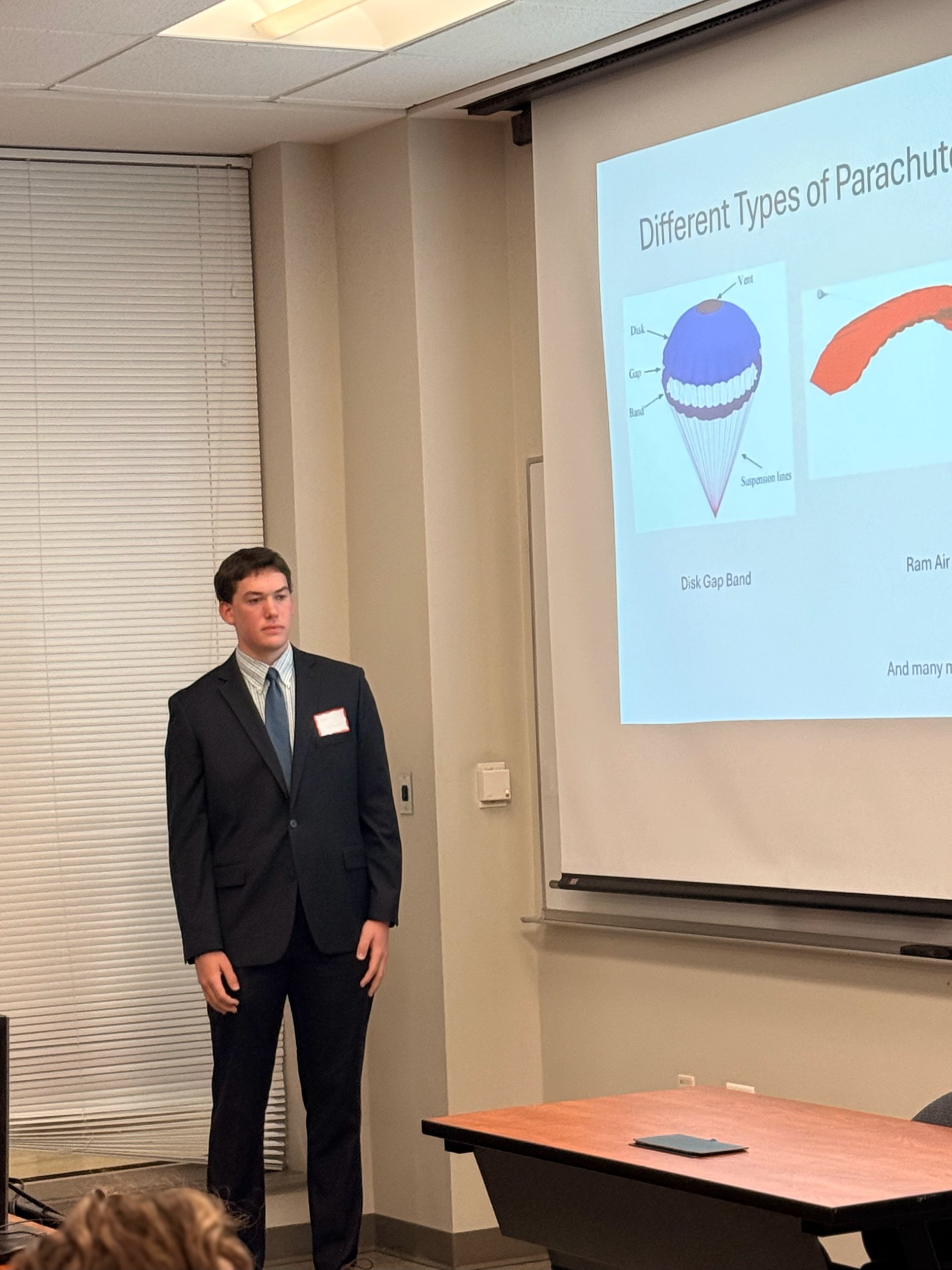
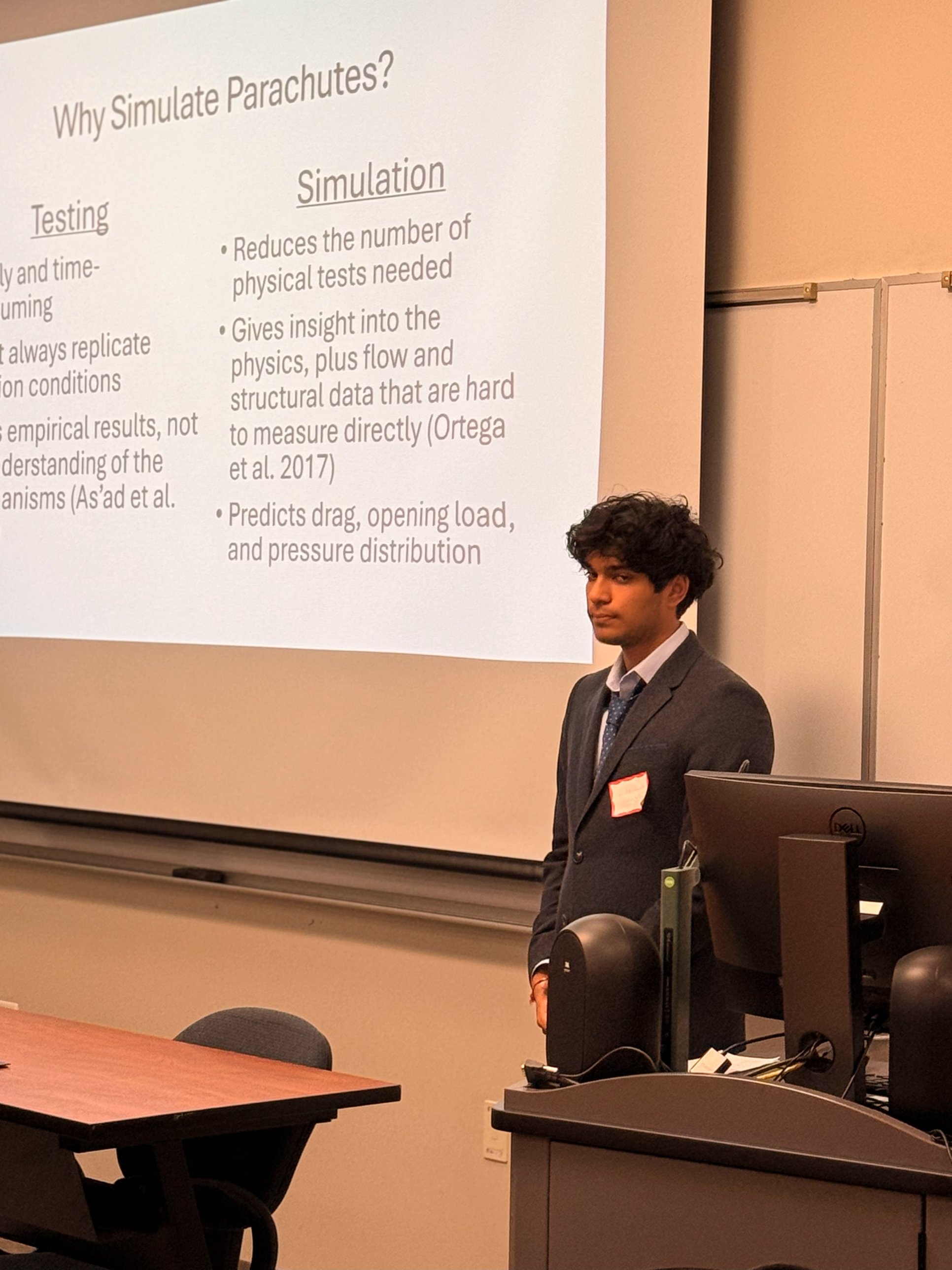
Title: A Comprehensive Review of Recent Advances in Computational Parachute Modeling
Presenters: Sean Williams* (GA), Siddhant Shukla* (GA) (The Gatton Academy of Science and Mathematics)
Abstract: Parachute inflation is one of the most challenging problems in computational mechanics because it involves the interaction of a highly flexible, porous fabric canopy with the turbulent and constantly changing airflow around it. As the parachute opens, the fabric and surrounding airflow continuously affect one another, creating a complex and highly nonlinear process. This review explores developments in computational parachute modeling over the past decade, drawing on a review paper and approximately ten recent studies covering both subsonic and supersonic parachute systems. These include simulations of the ASPIRE flight tests, Orion spacecraft parachutes, and groups of parachutes operating within aircraft wakes. The review examines the main numerical approaches used to model parachute behavior, including space-time and interface-tracking finite element methods, immersed-boundary and embedded-interface methods, and explicit Eulerian-Lagrangian frameworks. It also compares how these methods account for important physical challenges, such as fabric porosity, canopy self-contact, large mesh deformations, and turbulence. Different approaches to modeling porosity, including Darcy-Forchheimer, Ergun, and homogenized geometric models, are considered alongside turbulence models ranging from Reynolds-averaged Navier-Stokes (RANS) to detached-eddy simulation and large-eddy simulation. In addition to comparing the modeling techniques, this review evaluates how well the studies demonstrate the accuracy and reliability of their results. This includes examining grid refinement, time-step sensitivity, coupling effects, conservation checks, and comparisons with experimental data from wind tunnels, drop tests, and actual flight tests. Recent research has made significant progress, moving beyond basic comparisons with smaller-scale experiments toward predicting drag and peak loads for full-scale parachute systems. However, several challenges remain. Many studies still lack thorough verification, interactions between the canopy and surrounding wake are often modeled in only one direction, and uncertainties in fabric properties and initial canopy geometry can strongly influence the results. Overall, these findings highlight the need for more openly available benchmark problems, consistent standards for reporting simulation results, and more reliable models capable of accurately capturing the complex interactions between porous parachute fabrics and turbulent airflow.
Click here to return to Detailed Schedule
Title: Path-Dependent Quantum Thermodynamics and Coherence Loss in a Driven Caldeira-Leggett Oscillator
Presenters: Ismail Gilani* (GA), Jeremy B. Maddox (F) (The Gatton Academy of Science and Mathematics, Western Kentucky University)
Abstract: In an open, non-equilibrium quantum system, work and heat exchange with a surrounding environment depend explicitly on the trajectory taken through control-parameter space rather than solely on the endpoints. This project employs the GWPTools Mathematica package to model the reduced density matrix dynamics of a one-dimensional Gaussian quantum state coupled to a Markovian thermal bath within the Caldeira-Leggett master equation framework. We compare three finite-time control protocols connecting identical initial and final parameter states via smooth hyperbolic-tangent switching functions: (i) simultaneous ramping of the harmonic trap frequency and bath temperature, (ii) mechanical trap stiffening prior to thermal heating, and (iii) thermal heating prior to mechanical stiffening. Along each path, the non-equilibrium dynamics are quantified through the instantaneous internal energy, mechanical work rate, dissipative heat flux, state purity, and Rényi-2 entropy, with numerical consistency verified via the integrated quantum first-law residual. Comparing these protocols reveals how the relative timing and ordering of mechanical driving versus thermal coupling govern irreversible entropy production, coherence loss, and net work extraction in open quantum systems.
Click here to return to Detailed Schedule
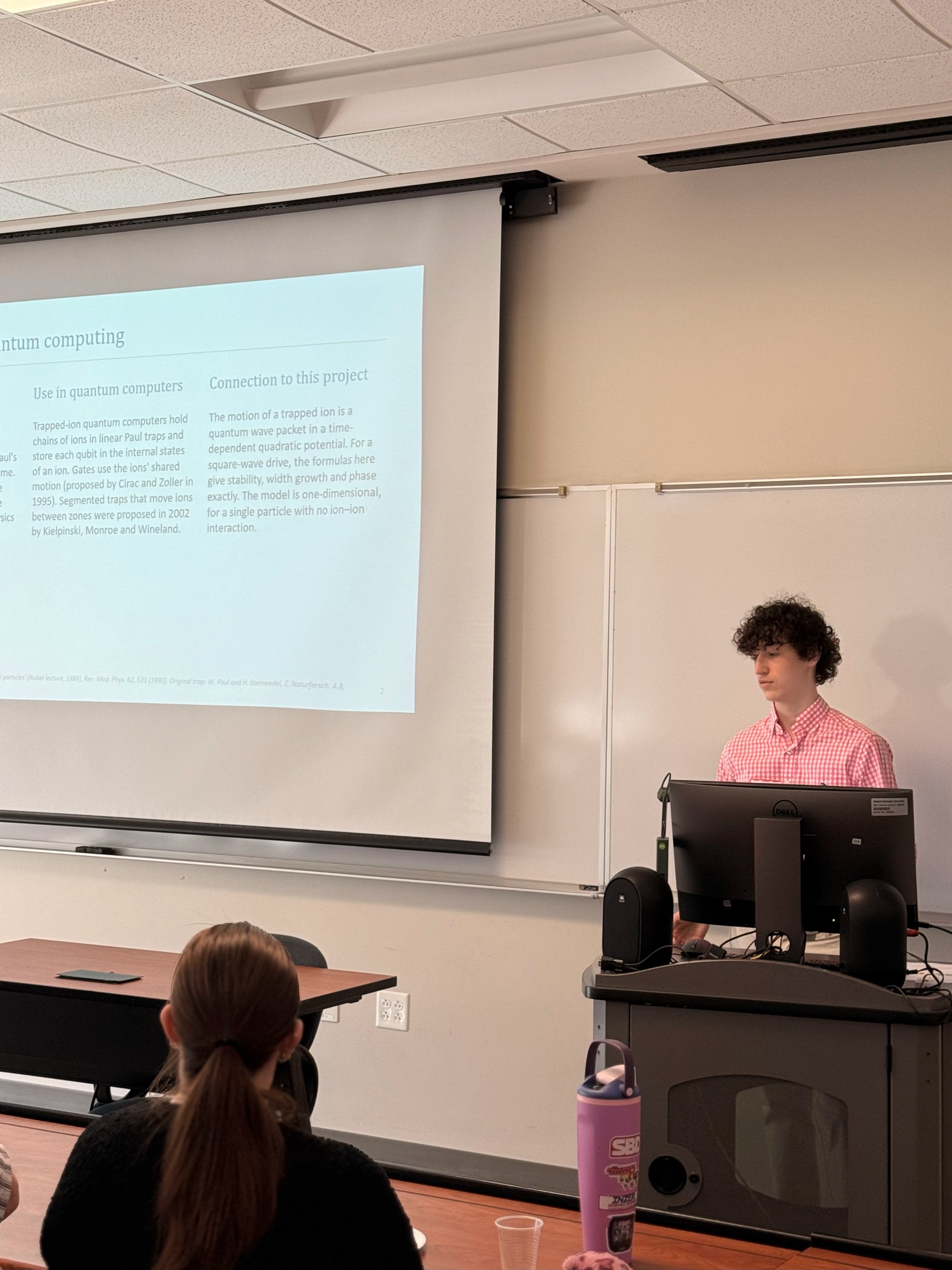
Title: Exact Closed-Form Gaussian Wave-Packet Dynamics in Time-Dependent Quantum Traps and Laser Fields
Presenters: Carter Heck* (GA), Jeremy B. Maddox (GA) (The Gatton Academy of Science and Mathematics)
Abstract: Gaussian wave packets are a special case in quantum mechanics: in a potential that is at most quadratic in position, an initially Gaussian state stays Gaussian for all time, so its motion reduces to a few parameters governed by ordinary differential equations. GWPTools, an open-source Mathematica package, builds on this by returning those parameters as exact symbolic formulas for a library of potentials, rather than running a numerical solver. We extend that library with three potentials in which the force changes in time: a laser pulse acting on a free particle, a Paul trap whose stiffness switches between two values, and a harmonic trap that weakens over time as ω(t) = Ω(1 + t/τ)2. For each one, we linearized the governing equations into coupled differential equations for the packet’s classical center and its complex width and phase, and solved them in closed form. The laser pulse reduces to integrals of the driving force; the switching trap to 2×2 transfer matrices chained across each switch, which also give an exact condition for stable motion; and the weakening trap to a time rescaling that maps it onto a constant-frequency oscillator. We also track the quantum phase exactly so that it stays continuous over long times, avoiding jumps at branch cuts. Each model is added to the package as a self-contained extension, leaving the existing code unchanged. As a check, we validated every closed-form expression against an independent high-precision numerical integration of the governing equations, and the two agreed to better than one part in a billion. The talk walks through the mathematics of each potential in turn, showing how its equations are reduced and solved, and presents the results as figures such as wave-packet density maps and the Paul trap stability region.
Click here to return to Detailed Schedule
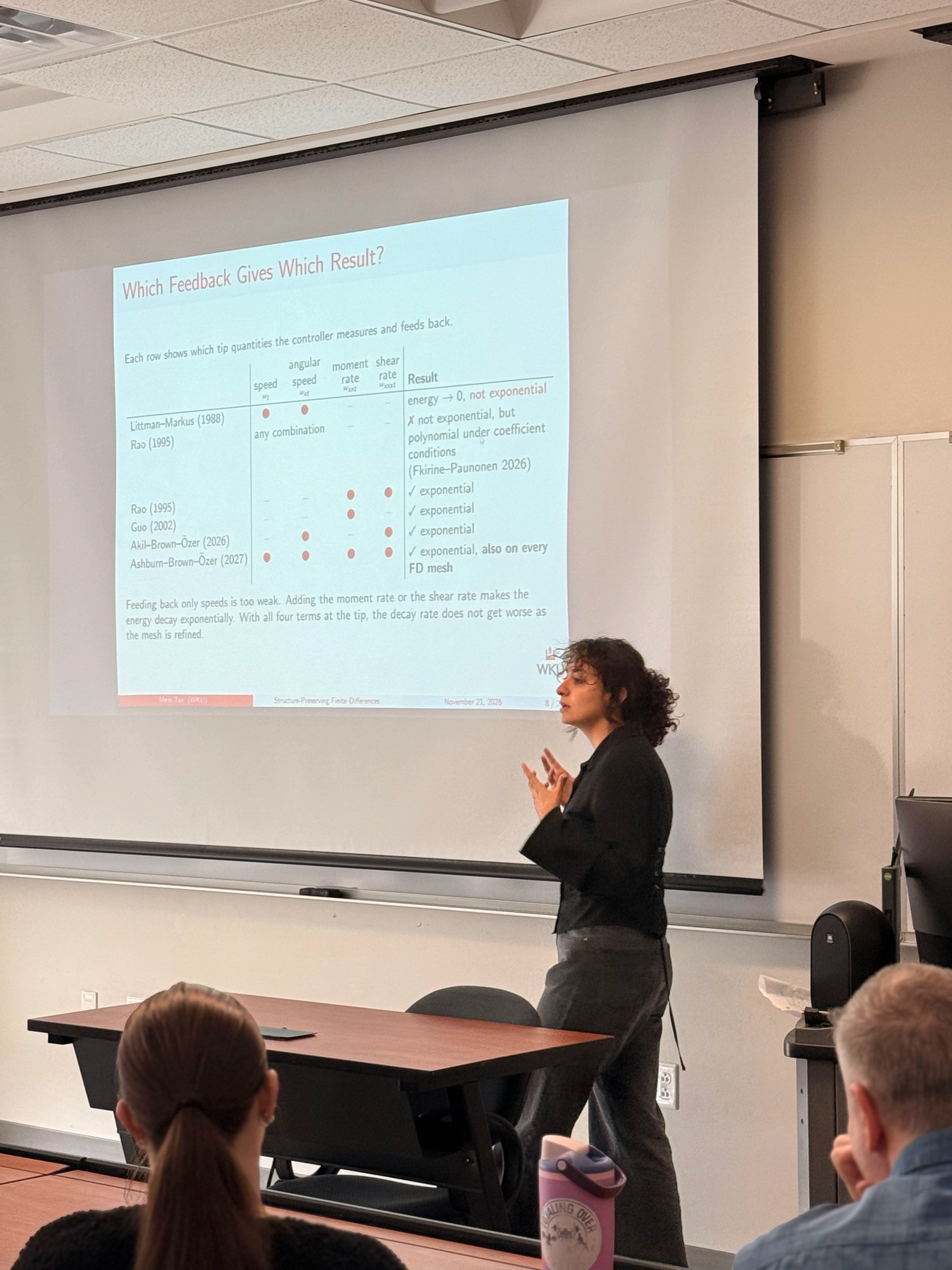
Title: Structure-Preserving Finite-Difference Approximation of a Doubly Inertial Floating Euler-Bernoulli Beam: Toward Uniform Exponential Stability
Presenters: Melis Tan* (G) (Western Kentucky University)
Abstract: Motivated by NASA’s Spacecraft Control Laboratory Experiment (SCOLE) [5], we investigate a PDE-ODE hybrid model consisting of a floating Euler-Bernoulli beam coupled to translational masses and rotational inertias at both endpoints. Unlike the classical clamped-free SCOLE configuration, the floating beam has dynamic boundary conditions at both ends. Four feedback components, involving translational and angular velocities together with shear- and moment-rate terms, act exclusively at one endpoint, while the opposite endpoint remains uncontrolled.
The traditional clamped-free SCOLE model, with a single tip mass and rotational inertia, is exponentially stable under four feedback components. Ashburn, Brown, and Özer [1] established exponential stability of this model and uniform exponential stability of its structure-preserving staggered finite-difference approximation using Lyapunov methods, obtaining explicit exponential decay-rate estimates. A direct extension of their Lyapunov construction to the floating beam, which has two dynamic endpoints, may suggest the need for additional feedback components, potentially four at each endpoint. However, our objective is to retain the same four feedback components acting at only one endpoint. Özer [2] established exponential stability of this doubly inertial floating-beam system using a frequency-domain approach based on the Huang-Prüss theorem.
Building on these results, we develop a structure-preserving staggered finite-difference approximation that incorporates the dynamic boundary conditions and one-sided feedback. We examine the discrete energy-dissipation structure and present preliminary numerical spectral results for different mesh sizes. Since exponential stability of a PDE-ODE hybrid system does not necessarily imply uniform exponential stability of its numerical approximations [3, 4], our central objective is to establish mesh-independent exponential decay estimates. We discuss the challenges of extending the existing Lyapunov construction to the floating beam and investigate possible approaches based on uniform resolvent estimates and discrete Lyapunov functionals.
References
[1] K. Ashburn, Z. Brown, and A. Ö. Özer, “A first-order staggered finite-difference framework for a fully inertial SCOLE system with exponential stability,” Evolution Equations and Control Theory, Volume 27, 100833, 2027.
[2] A. Ö. Özer, “Exponential stabilization of a doubly inertial floating Euler-Bernoulli beam using four controllers at a single endpoint,” submitted, 2026.
[3] A. Ö. Özer, Unconditional Uniform Exponential Stability of a Structure-Preserving Finite Difference Scheme for Two Coupled Wave Equations with a Dynamic Interior Mass, Applied Numerical Mathematics, Volume 231, 533-549, 2027.
[4] A. Ö. Özer and R. Emran, “Uniform exponential stability of Fourier-filtered finite-difference and finite-element approximations of a boundary-damped wave equation,” Discrete and Continuous Dynamical Systems - Series S, 2027.
[5] L. Taylor and A. V. Balakrishnan, “The SCOLE design challenge,” in Proceedings of the 3rd Annual SCOLE Workshop, 1987.
Click here to return to Detailed Schedule
Title: Personalizing Cancer Models under Data Scarcity via Parameter Decomposition
Presenters: Logan Rose* (G) (University of Kentucky)
Abstract: A medical digital twin (MDT) is a virtual representation of disease which is continuously updated in real time using longitudinal patient data. Effective MDTs may be used in a clinical setting to predict disease outcomes and make treatment decisions. Such models rely on robust and efficient parameter calibration under data scarcity. In this work, we develop novel methods to recover and personalize parameters of models relevant to MDTs under limited test data. We decompose selected model parameters into a common component, shared across patients and a personalized component, which is patient-specific and is continuously updated with new patient data. The common component represents a commonality between patients and is estimated once, while the personalized component represents each patient’s deviation from the common component. We decompose parameters by formulating and solving an optimization problem. We demonstrate the utility of this decomposition by applying our techniques to synthetic data generated by canonical dynamical systems, such as cancer models with treatment intervention. Our results show accurate and rapid parameter personalization, even in limited data regimes.
Click here to return to Detailed Schedule
Title: Reaction-Diffusion PDE Modeling of Livestock-Mediated Behavioral Cascades in Predator-Prey Dynamics [TALK CANCELLED]
Presenters: Judah Thornton* (GA), Choutta Saicharan (GA), Richard Schugart* (F) (The Gatton Academy of Science and Mathematics & Western Kentucky University)
Abstract: Traditionally, multi-trophic interactions in grassland ecosystems are quantified by slow, vegetation-mediated pathways. However, recent empirical work accentuates rapid, behavior-mediated cascades. Hence, this study formulates a spatial reaction-diffusion partial differential equation (PDE) model representing the cattle–grasshopper–swallow behavioral cascade reported by Zhu et al. (2024), in which livestock grazing disturbances trigger grasshopper escape movements that consequently increase their vulnerability to avian predators. To quantify and implement this interaction, a one-dimensional spatial predator–prey PDE system will be solved in MATLAB, directly contrasting landscape dynamics under grazed (cattle present) and ungrazed (cattle absent) conditions. A novel feature of the model expands the avian spatial domain beyond localized study plots and incorporates livestock disturbance. Altogether, this model aims to reproduce empirical field observations, investigate mechanisms behind the sixfold change in predator foraging visits, and evaluate resulting grazing-induced reduction in grasshopper density presented by Zhu et al.
Click here to return to Detailed Schedule
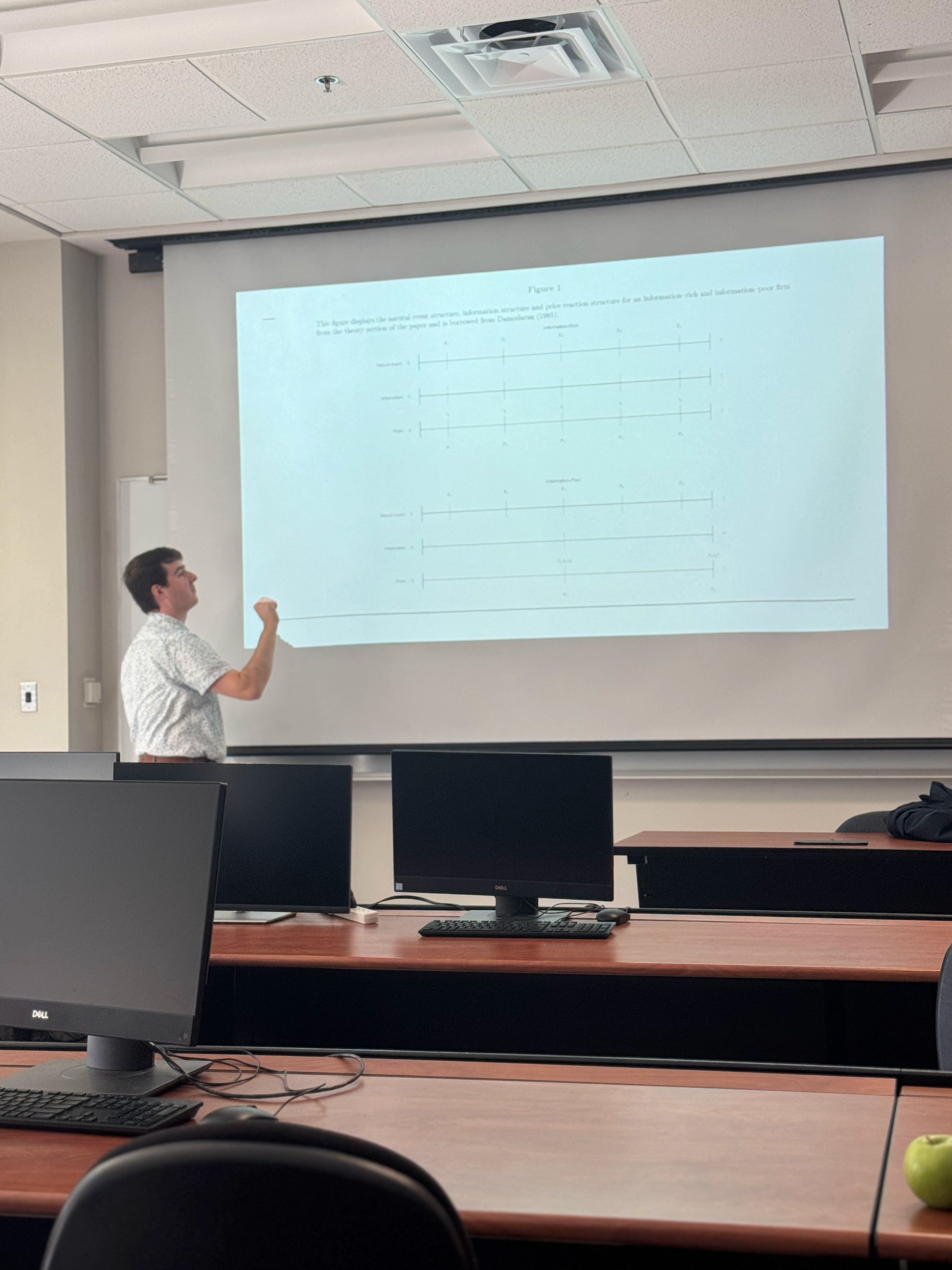
Title: Disclosure Timing and Stock Price Efficiency
Presenters: Kevin Owens* (F) (Western Kentucky University)
Abstract: Motivated by the work of Damodaran (1985), we develop a measure of informativeness regarding company disclosures that is based upon the higher moments of the stock returns of the compnay. Using a spatio-temporal recurrence plot derived measure of stock price efficiency, we document that the efficiency of U.S. firm stock prices is decreasing in the ratio of the kurtosis of monthly returns to the kurtosis of daily returns (“kurtosis ratio”), using a sample time period of 2010-2024. Firms which have the highest (lowest) values of this ratio are information rich (poor) firms, and we observe lower (higher) stock price efficiency for these firms. A rolling window portfolio trading strategy based on our results demonstrates our primary analysis inferences are economically significant. Our research suggests that the SEC needs to consider in more detail the tradeoffs involved in allowing companies to select whether to issue semiannual reports instead of quarterly reports.
Click here to return to Detailed Schedule
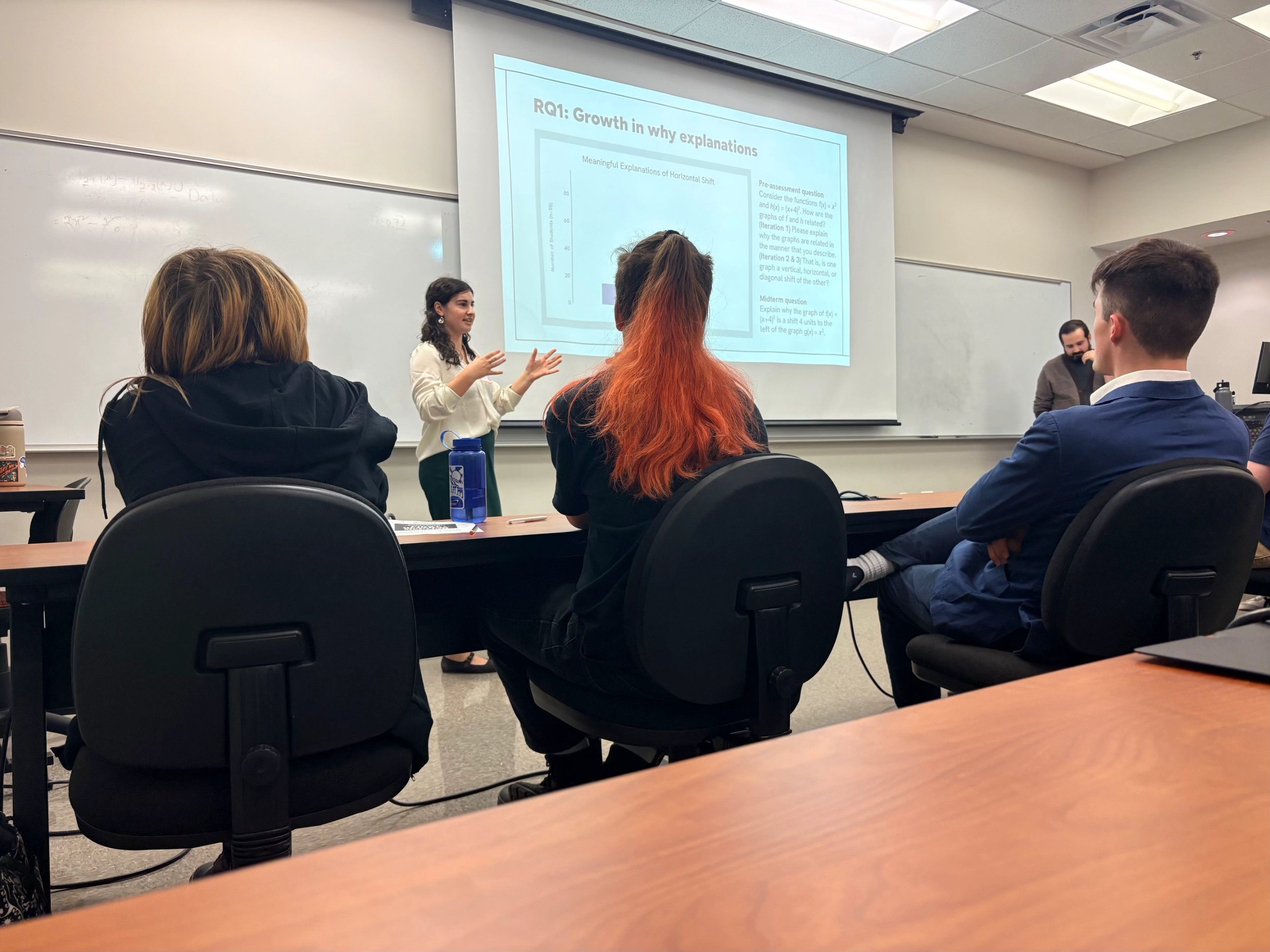
Title: Meaningfully Explaining Why: Future Teachers’ Reasoning About Horizontal Function Translations
Presenters: Melanie Stewart* (G), Nick Fortune* (F) (Western Kentucky University)
Abstract: Students often struggle to explain why function translations occur and may rely on memorized rules. This presentation examines prospective secondary mathematics teachers’ (PSTs) explanations of horizontal function translations within an Inquiry-Oriented Dynamical Systems and Modeling course designed to develop meaningful connections between university and secondary mathematics (in this presentation, we focus on solutions to autonomous differential equations and horizontal translations in secondary school). The researcher analyzed data from five iterations across three universities. Results reveal several meaningful approaches, including function composition, input compensation, and a race analogy. The researcher also identified an overarching output first perspective in which students attend to corresponding outputs before reasoning about input adjustments. This perspective supports meaningful justification and suggests a promising way to develop all students’ relational understanding (Skemp, 1976, 1978) of horizontal translations and PSTs’ pedagogical content knowledge.
Click here to return to Detailed Schedule
Title: The Mathematics of a Bad Workday: Modeling How Workplace Experiences Spill Over into Home Life [TALK CANCELLED]
Presenters: Katrina Burch* (F) (Western Kentucky University)
Abstract: Workplace experiences rarely remain confined to the workplace. Negative interpersonal encounters, including workplace incivility, may influence employees’ psychological well-being, health, and experiences at home. Understanding these relationships presents a statistical challenge: how can researchers distinguish the effects of daily fluctuations in workplace experiences from stable differences between individuals? This presentation explores the application of multilevel statistical modeling to intensive longitudinal research examining workplace incivility and the work–home interface. Drawing on a program of daily diary research, the presentation illustrates how repeated observations nested within individuals can be used to investigate dynamic relationships between workplace stressors and subsequent psychological and behavioral outcomes. Particular attention is given to the decomposition of within-person and between-person variance, person-mean centering, and the statistical implications of correlated observations. The presentation also considers how longitudinal modeling can accommodate individual differences in vulnerability to workplace stressors, including social and economic factors relevant to health disparities. By illustrating the mathematical foundations and practical applications of multilevel models, this presentation demonstrates how statistical methods can reveal patterns of occupational stress that conventional cross-sectional approaches may obscure. More broadly, it highlights the contributions of applied statistics to understanding how everyday workplace experiences extend beyond organizational boundaries and potentially influence health and well-being.
Click here to return to Detailed Schedule
Title: A Nonlinear Mixed-Effects Approach to Parameter Identifiability in Diabetic Foot Ulcer Healing
Presenters: Malleshwar Jayaraman Suresh* (GA) (The Gatton Academy of Science and Mathematics)
Abstract: Diabetic foot ulcers (DFUs) are among the most common complications of diabetes, and DFUs that fail to close are a leading cause of nontraumatic lower-limb amputation. Standard treatments for DFUs often fail because biochemical processes vary between patients. Mathematical models can analyze these mechanisms, but linking them to individual patients remains challenging. We address this challenge by extending our previous work with a four-equation ODE model from Krishna et al. (2015) that tracks matrix metalloproteinases (in particular, MMP-1); its inhibitor, TIMP-1; the extracellular matrix; and fibroblast density over time. While previous work used cohort-averaged patient data from Muller et al. (2008), the current work curve fits data from 16 individual patients over 12 weeks using nonlinear mixed-effects (NLME) modeling in Monolix with the Stochastic Approximation of Expectation-Maximization (SAEM) algorithm. Parameter identifiability was assessed for each patient by computing coefficients of variation (CVs) for every parameter. Parameters with high CVs were considered unidentifiable and either fixed at nominal values or removed. The model was then refit, producing a reduced model with improved identifiability. Of the eleven rate constants, four (k2, k6, k7, and k10) were found to be practically unidentifiable and were removed by setting them to 0, and one (k3) was fixed at a nominal value, since its individual estimates were nearly uniform across the cohort. One parameter (k9) that ranked poorly by this measure was nevertheless retained, since its estimates spanned nearly three orders of magnitude for several patients and removing it degraded their curve fits. Overall, this work better captures individual variability in DFU patients while identifying a practically identifiable subset of parameters from sparse clinical data. Confidence and prediction intervals were also constructed for the estimated parameters and curve fits. Future work will use the reduced model developed here to pose an optimal design problem for when patient measurements should be taken.
Click here to return to Detailed Schedule
Presenters: Claus Ernst* (F) (Western Kentucky University)
Abstract: You have a stiff elastic spring wire; imagine you form a knot with this wire and fuse the endpoints together and then release that configuration. What shape will the wire take? This shapes are called elastic knots. We can think of this as minimizing the bending of the wire, distributing the curvature as evenly as possible. Will these configurations be planar or non-planar. We mainly talk about numerical simulations with lots of pictures.
Click here to return to Detailed Schedule
Title: The Role of Mathematical Structure, Uncertainty in Discourse, and Open Discussion Boards in the Teaching and Learning of Abstract Algebra 2
Presenters: Sarah Hartman* (G), Michael D. Hicks (F) (Middle Tennessee State University)
Abstract: Recently, we have been collecting classroom data of an Abstract Algebra II class covering topics in ring theory and field theory. In this talk, we will discuss preliminary observations that we have made about: (a) the students’ structural reasoning about maximal ideals, (b) the presence of uncertainty in their advanced mathematical discourse and how it affects their reasoning within the class, and (c) observations we have made about the students’ use of a digital discussion board and how it supports our ability to adapt to their reasoning within the class. We will present examples of each of these observations and describe how they will inform our future research on the teaching and learning of abstract algebra.
Click here to return to Detailed Schedule
Title: Goodness-of-Fit Tests on the Poisson Distribution: An Evaluation of Type I and Type II Error
Presenters: Melanie Stewart* (G), Ngoc Nguyen* (F) (Western Kentucky University)
Abstract: This presentation covers the comparison of a variety of goodness-of-fit tests on the Poisson distribution by comparing type I and type II errors when hypothesis testing. Goodness-of-fit tests compare how well an observed distribution fits with a hypothesized distribution (Horn, 1977). The goodness-of-fit tests include the chi-square, multinomial, and discrete Kolmogorov-Smirnov tests. This presentation will give an overview of the Poisson distribution, hypothesis testing, and the selected goodness-of-fit tests. For each goodness-of-fit test, type I and type II error percentages were simulated, and an analysis of which test(s) are most appropriate for the Poisson distribution will be presented. In general, the primary goal of this presentation is to determine the performance of different goodness-of-fit tests across the Poisson distribution, taking into account factors such as sample sizes and varying parameters, as measured by type I and type II errors.
Click here to return to Detailed Schedule
Title: Deep Neural Operator Learning for Stochastic Heat Equations and Applications
Presenters: Hengrong Du* (F) (Fisk University)
Abstract: Neural operators such as DeepONets learn maps between function spaces, but most of their theory covers deterministic PDEs with smooth inputs. In this talk, I will present a universal approximation theorem for the solution operator of semilinear stochastic heat equations on the d-dimensional torus (d ≥ 2). These equations are driven by Gaussian forcing whose realizations are distributions rather than functions. The key idea is to encode the forcing through finitely many Fourier measurements. A smooth parabolic cutoff reduces the infinite-dimensional input to a finite vector, and Schauder estimates in parabolic Hölder–Besov spaces control the truncation error. A branch–trunk ReLU network then approximates the resulting finite-dimensional map. The error is controlled uniformly in space-time and in every finite stochastic moment, with explicit bounds on the number of measurements, trunk functions and network size. In the linear case, this reduction is exactly a truncation of the first Wiener chaos. As an application, I will discuss a high-probability, local-in-time approximation result for stochastic Navier–Stokes equations.
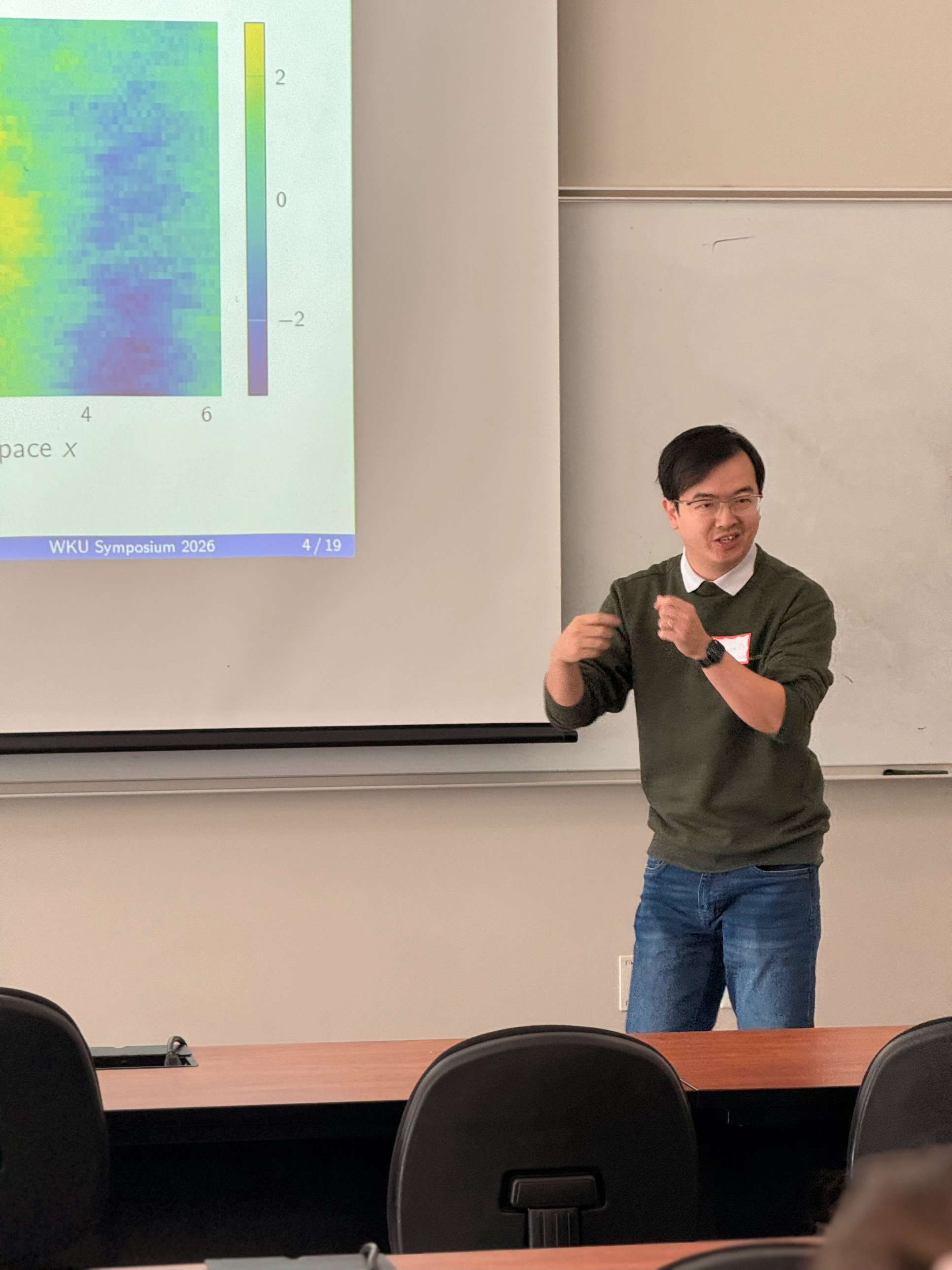
Click here to return to Detailed Schedule
Title: When AI Comes for Your Mathematics Research
Presenters: Molly Dunkum* (F), Robert Donnelly* (F) (Western Kentucky University)
Abstract: We reflect on a recent and personal experience in which an ’independent researcher’ from outside the discipline utilized AI to make short work of an open problem of ours, in the process obviating some recent and potential future work with students and young researchers.
Click here to return to Detailed Schedule
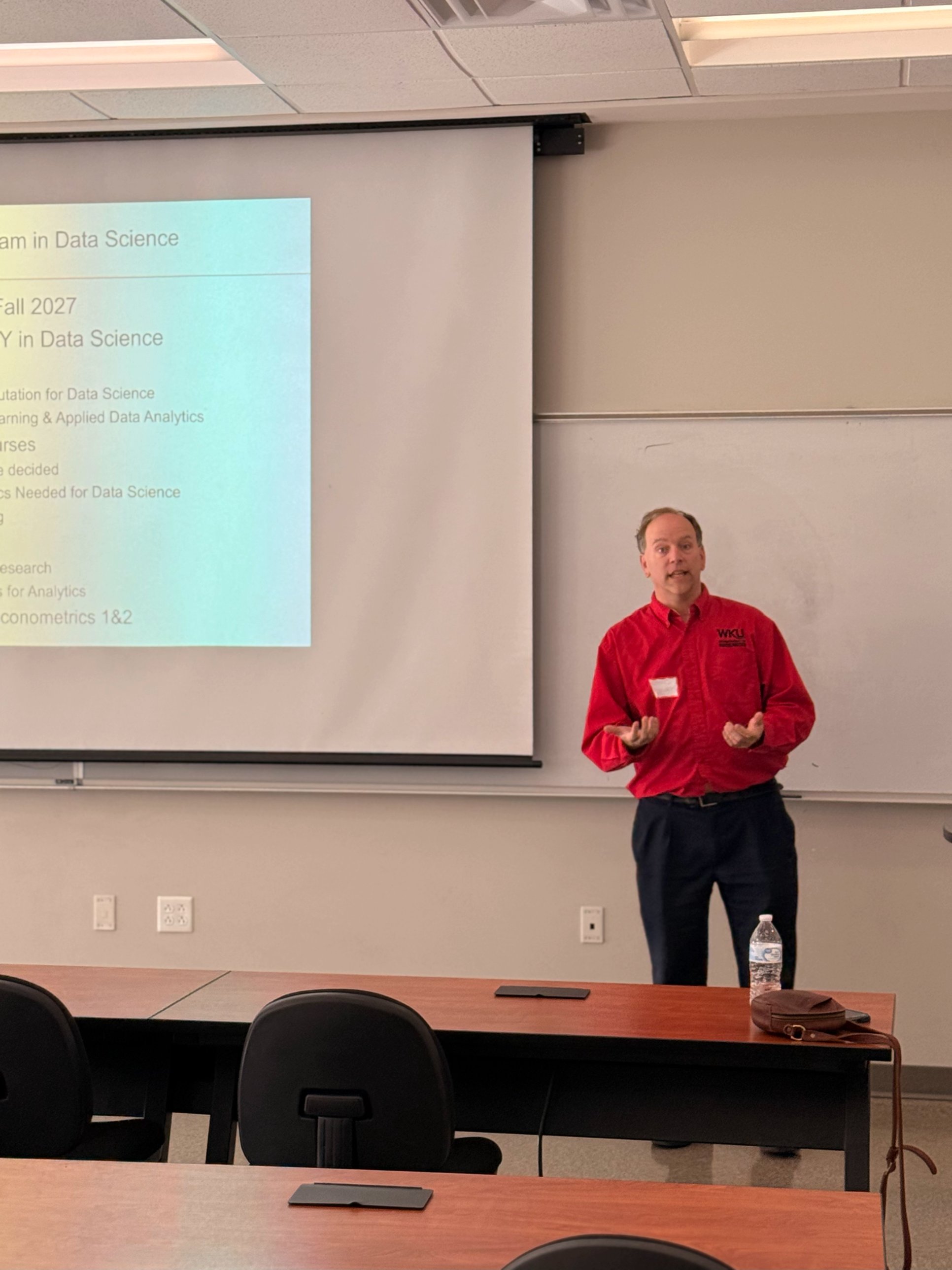
Title: Data Science-PhD Program, Graduate Certificate in Statistical Data Science, Math Masters Concentration, Part of Applied Undergraduate Concentration
Presenters: Richard Schugart* (F) (Western Kentucky University)
Abstract: It’s all data all the time! In this talk, details will be presented about the Fall 2027 PhD Program in Data Science, 12-credit Graduate Certificate in Statistical Data Science, Data Concentration in Math MS Master’s Program, and data science inclusion in the Applied Mathematics Undergraduate Concentration. The remaining time will be used for a student Q&A.
Click here to return to Detailed Schedule
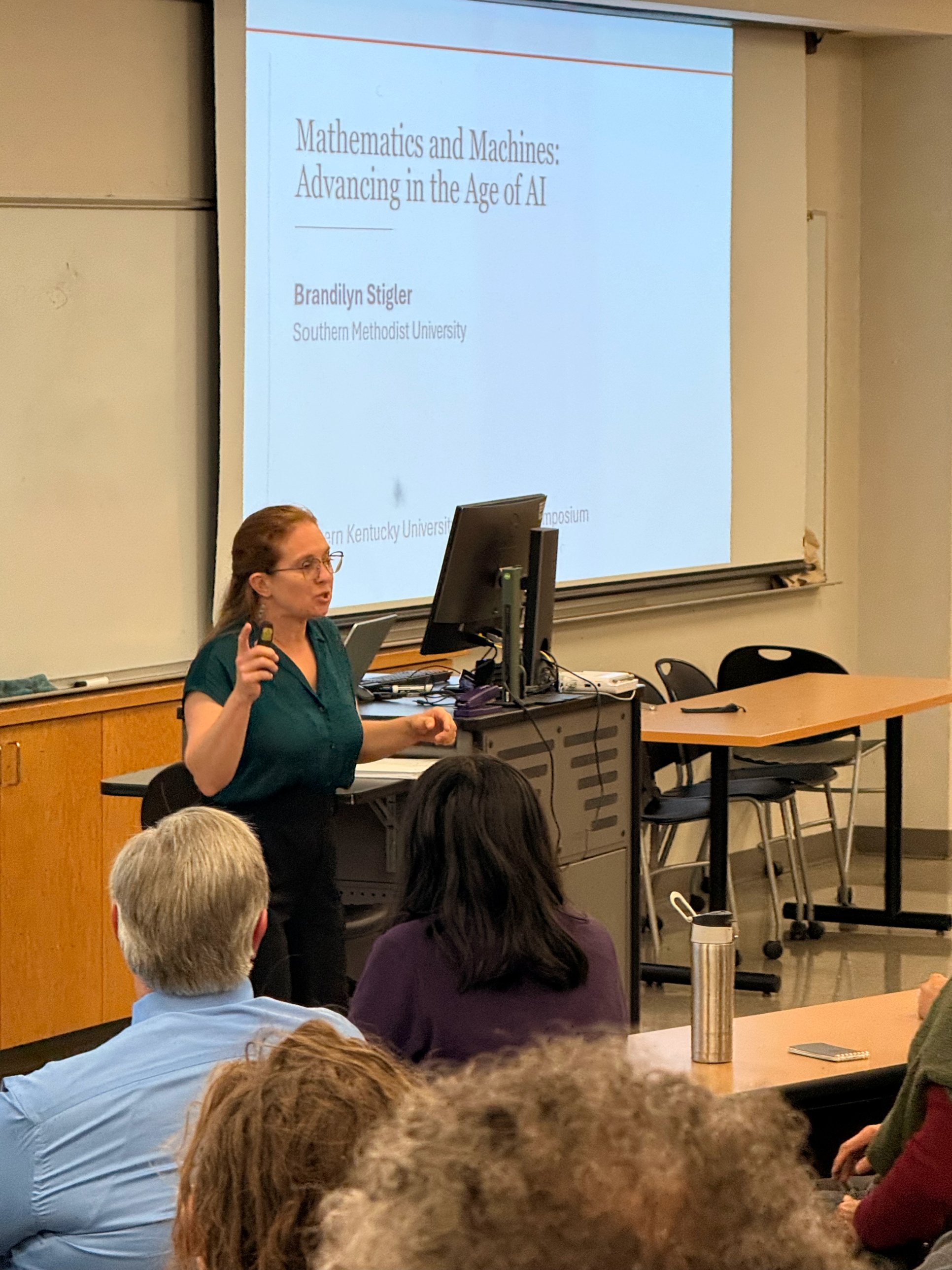
Title: Plenary Address: Mathematics and Machines: Advancing in the Age of AI
Presenters: Dr. Brandilyn Stigler* (F) (Southern Methodist University)
Abstract: Throughout history, technological advances have transformed society in both beneficial and disruptive ways. They extend what we are capable of doing, and at the same time create conditions in which we become dependent on those extended capabilities. Major technological changes create societal forks in the road: they open possibilities for progress, while displacing existing forms of work, requiring us to adapt. We are currently living through such a transition, driven by rapid improvements in generative AI.
In this talk, we will consider how previous technologies have changed mathematics and human thinking, and highlight some lessons they offer for the present moment. What habits may help us navigate, and perhaps even thrive in, the changes ahead?
Click here to return to Schedule Overview
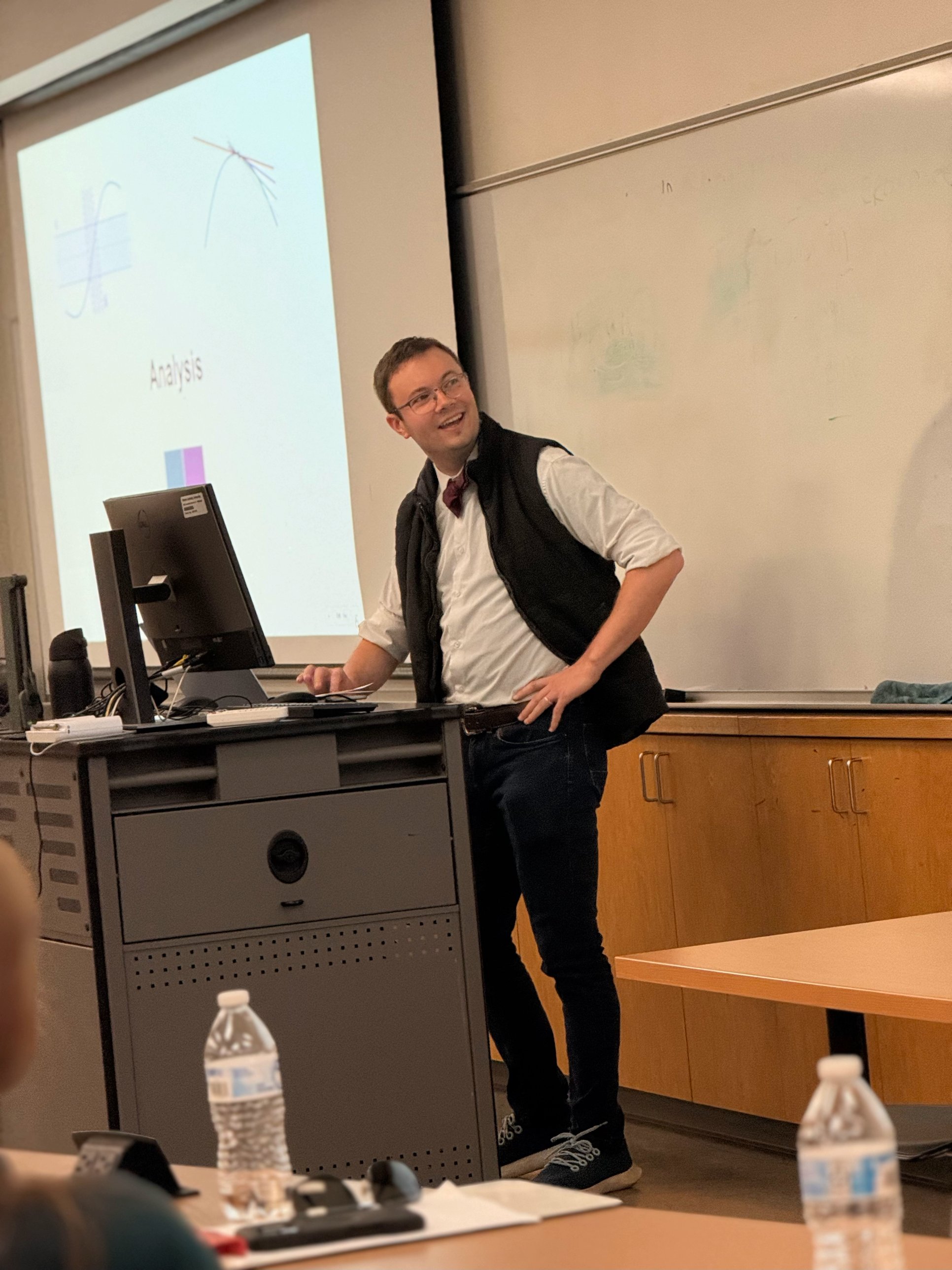
Title: Plenary Address: The Mathematics of Mind Reading
Presenters: Dr. Sam Saarinen* (Director of Learning Engineering and Research, New Classrooms)
Abstract: Mind reading isn’t hard... if you can coerce someone into answering an infinite number of questions truthfully. Can we do better? What if we have a finite budget of questions? What if the answers are sometimes noisy? What if we must select from questions someone else wrote? Math comes to the rescue! Mostly by telling us when to give up and when we can cheat. This talk serves as a whirlwind tour of famous results in statistics, graph theory, information theory, and complexity theory that all conspire to (mostly) solve an unusual problem.
Click here to return to Schedule Overview
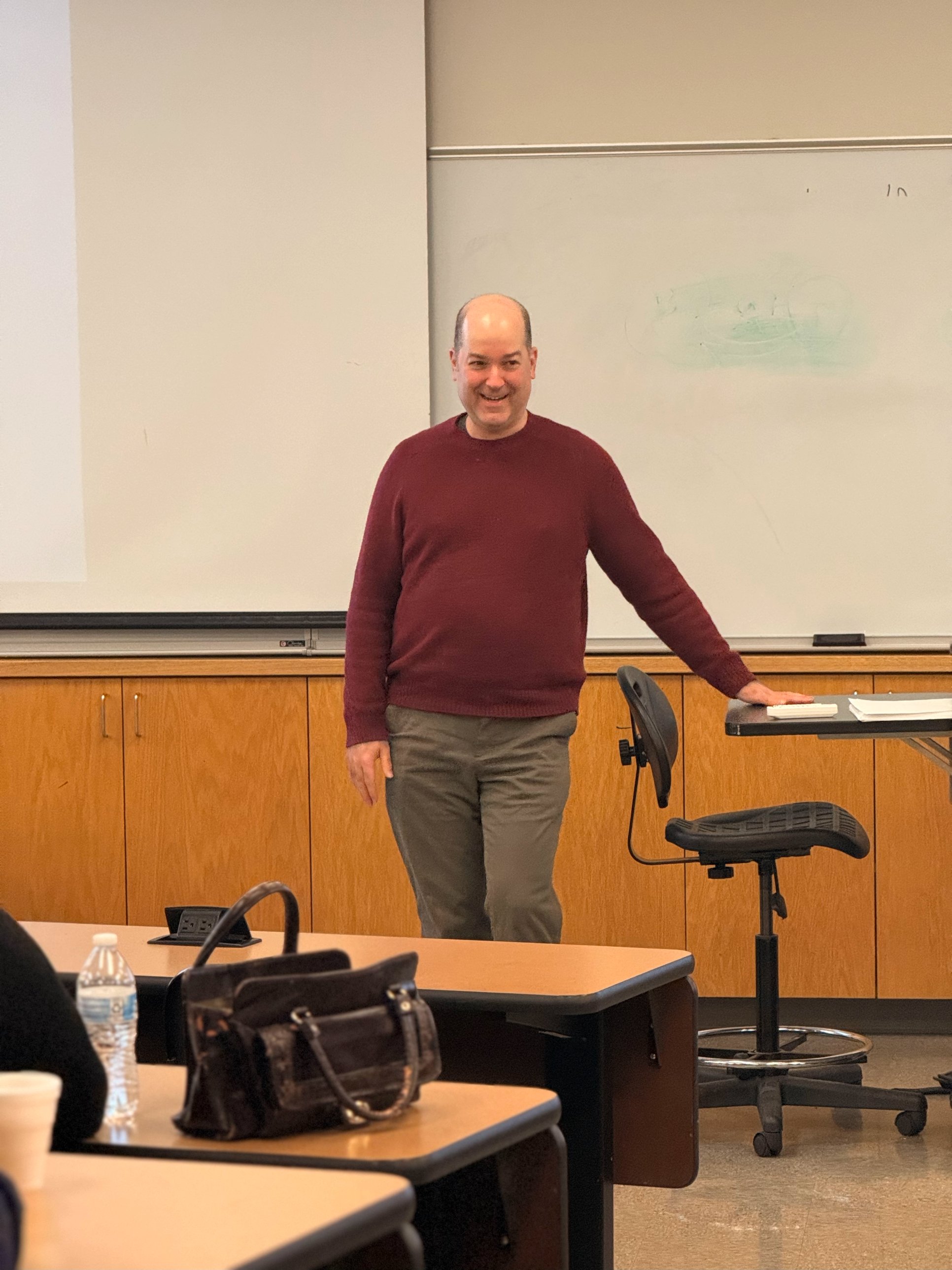
Title: Plenary Address: The Saga of the Hardest Logic Puzzle Ever
Presenters: Dr. Jason Rosenhouse* (F) (James Madison University)
Abstract: You are confronted with three gods: one always tells the truth, one always lies, and one decides randomly whether to tell the truth or lie. You don’t know which is which. They will answer any yes/no question put to them, but they will do so in their own language. In this language the words for yes and no are da and ja, but you do not know which one means yes and which one means no. Can you determine which God is which with no more than three questions? This puzzle was introduced in 1996 by philosopher George Boolos. Since then, it has spawned a veritable industry of papers exploring ever more ingenious nuances of the puzzle. We will survey some of this history. Along the way, we will consider the rhetorical nightmare of Aristotelian logic, the uses of biconditional statements, the embedded question lemma, how to get three answers from a binary question, how to make a god’s head explode, and much else besides.
Click here to return to Schedule Overview
Some of the links on this page may require additional software to view.