

History Undergraduate Research Conference
What is the History Undergraduate Research Conference?
The History Undergraduate Research Conference (HURC) is an internal conference in
which WKU students present the results of their scholarship in a friendly and supportive
academic setting. It exists to celebrate the achievements of our students and to share
ideas with other like-minded historians (both undergraduates and faculty).
According to History Department tradition, the rules and regulations of the HURC were
initially a small sub-section of the Book of Rites, included under the Smaller Rules
of Demeanor. However, the practice fell into disuse in 213 BCE after all copies of
the Book of Rites were destroyed at the behest of Qin Shi Huangdi (well-known to have been an amateur revisionist historian). The HURC was
resurrected at the initiative of Carol Crowe-Carraco in 2011 and has been an annual
tradition for WKU’s students of history ever since.
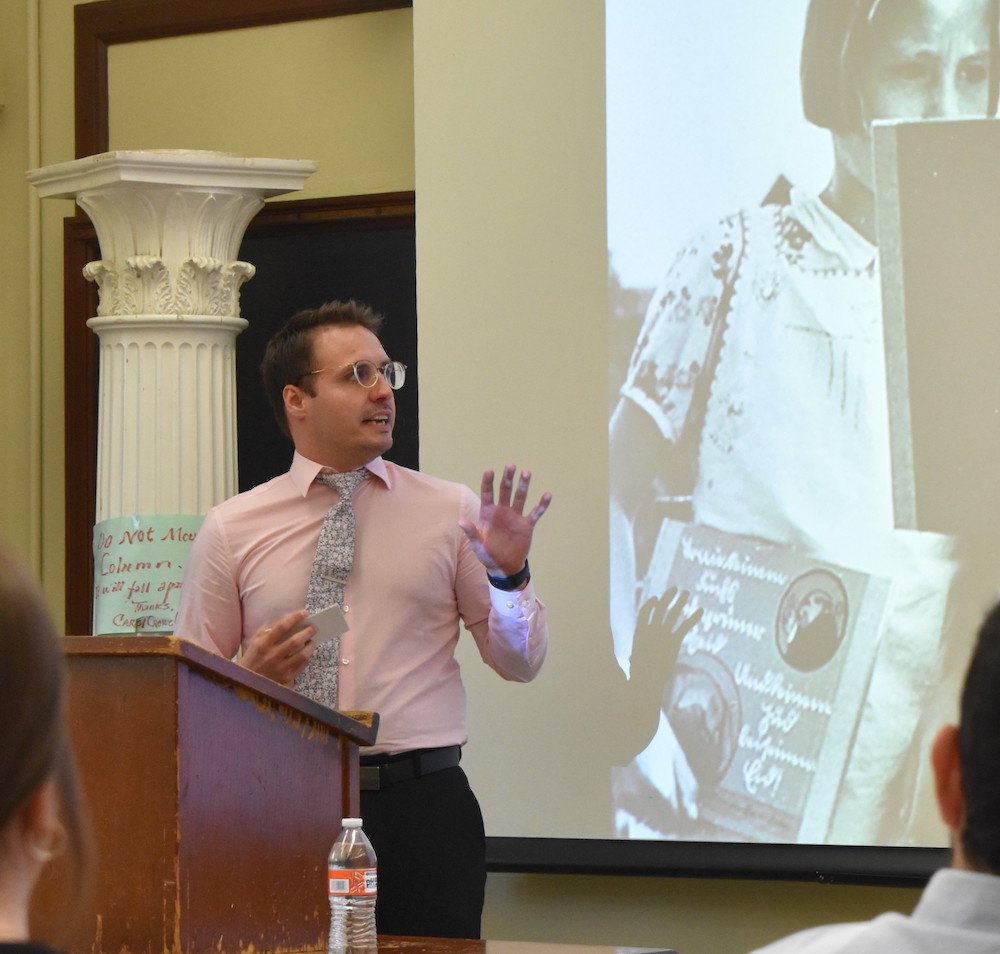
The conference was held to great success in a new location on the first floor of Grise Hall on Monday April 27. The presenters and papers were:
| 3:30 to 4:30 PM: Civil War & Race | ||
| Baity, Alex | Self-Emancipated Soldiers: How African American Regiments from Kentucky impacted the Civil War | |
| Denham, Achilles | The relationship between the Klu Klux Klan of the 1920s and Catholic citizens of the United States | |
| Wilkerson, Jenny | Mythologizing Antebellum Kentucky: The Establishment of My Old Kentucky Home in the 1920s | |
| O'Daniel, Wilson | A Red America Starts in Spain: How American Catholics Framed the Spanish Civil War | |
| 4:45 to 5:45 PM: Law & citizenship | ||
| Miller, Luke | The Deaf Community and the Unfinished Promise of the ADA | |
| Mulrooney, Kayden | Access Denied: How FOIA Became an Obstacle for the Press | |
| Riggs, Ryan | Why don't we own our cells? | |
| 4:45 to 5:45 PM: Comparative histories (Early career students) | ||
| Davis, Max | US Revolution: Civil War or Foreign War? | |
| Karasiewicz, Jessica (HCC) | Mali and the Mongols–A Comparative Analysis | |
| Lancaster, Olivia (HCC) | The Role of Christianity and Islam in Dividing the East from West | |
| Robey, Taronce | A Republic of Brothers: Fraternalism and the Making of American Citizenship | |
| 6:00 to 7:00 PM: Local & regional histories | ||
| Dheel, Sydnie | The Interpretation of Historic Homes: Women, Wealth, and Race | |
| Lucas, Caden |
Prohibition Beyond Repeal: Federalism, Local Option Elections, and Law in the Legal History of Prohibition and Alcohol Regulation in Bowling Green and Warren County, Kentucky | |
| Taylor, Matthew | The Black Patch War: America's Only Populist Revolt | |
| Wilson, Brooke | Identity through Liberation: When Injustice Fuels Dedication | |
| 6:00 to 7:00 PM: Change, culture, and conflict | ||
| Bisceglia, Joe | Two-Hundred Twenty-Three: A Potential Error in Judgement & The Path Not Taken | |
| Brown, Ethan | Puritanical Parliamentarians: The Conservative Rationale of the English Civil Wars | |
| DeLoe, Logan | How Cryptids and History Can Create Modern Monsters | |
| Swenson, Ellen | Vampires and Tuberculosis: A Historical Perspective of Folk Belief and Disease History of New England in the 19th Century | |
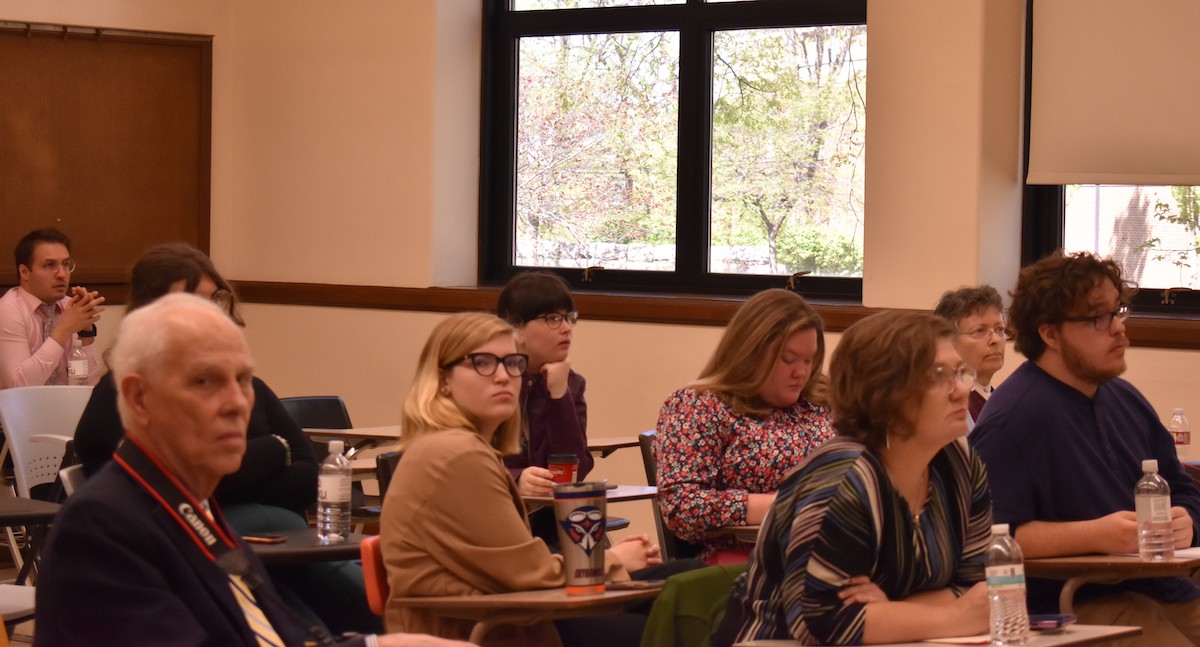
This year’s conference was among the best in recent memory! There were a large number
of strong papers and audience turnout was excellent.
We’ll be returning to Grise Hall again in Spring 2027. Is that good news? Maybe! Nothing
says “sophisticated intellectual discussion like cinderblock walls, dropped ceilings,
and artificial light, right?
The conference will be held late in the semester – the week of April 19 or April 26.
Look for a firm date for the conference early in Fall Semester, with a call for abstracts
in early December 2026 and an abstract deadline around April 1st.
Next year, after the abstract deadline, we will also offer a “Conference presentation
basics” mini-workshop for students interested in some quick-and-dirty tips about how
to quickly and efficiently write a good presentation and present it to an audience.
(Pro tip #1: Want to give a good presentation? Try wearing pants!)
If you have any questions, please contact Dr. Jeffrey Miner (conference coordinator)
at jeffrey.miner@wku.edu.
Some of the links on this page may require additional software to view.