

Potter College News
Learning to Sound Like Yourself: the 24th Annual Ted Hovet Conference
- Mina Davis, Edited by Brielle Freeman
- Thursday, December 4th, 2025
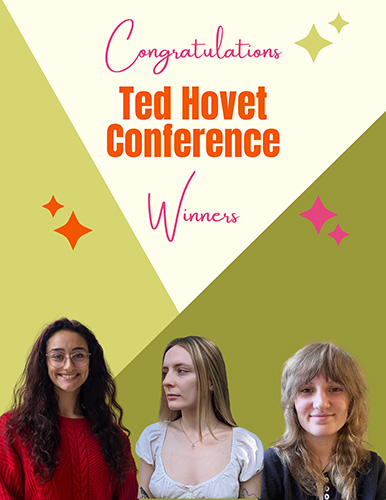
What does it mean to “sound like yourself” in academic writing? Each year, the Ted Hovet Conference reveals just how much brilliance is unfolding inside WKU’s English classrooms. The Ted Hovet Conference convenes each fall to showcase undergraduate essays in research, linguistics, literary analysis, and related fields. Named after the former WKU professor Dr. Ted Hovet, the event champions collaborative learning through extracurricular activities, conferences, and student organizations in his honor. Structured into three panels, each panel reflects a recurring theme that emerges from the student submissions selected for presentation. Its purpose is to celebrate student scholarship while creating opportunities for peers to learn from one another.
This conference not only provides an outlet for sharing research but also fosters a sense of community among students in English studies. It creates a space where students can empower one another through the exchange of ideas and the strength of their individual voices. “I hope to give students the opportunity to connect with each other, their coursework, and their ideas,” says Dr. Gillian Knoll, the event’s primary coordinator. “Much of the work we create for classes is seen only by the professor and the student. This conference allows for a really exciting synergy of thought, where students can engage with one another and receive feedback in the moment.”
Each hour of the conference introduces a new panel built around a shared thematic thread. The first panel, titled “Horrific Insights,” featured essays that explored a wide range of horror-related subjects. These papers approached the theme from multiple angles—beginning with studies of body horror and extending to environmental anxieties connected to real-world ecological issues. Together, the essays examined how different forms of horror reveal unsettling
truths about both human experience and the world we inhabit. “Opportunities like the Ted Hovet Conference give students the chance to feel recognized for all the hard work we put into expressing ourselves creatively and academically,” panelist Sarah Gamble shared. “Events like this inspire students to keep reaching for amazing things.”
The second panel, titled “Transitory Identities,” explored a broad range of topics connected by questions of personal identity and philosophical selfhood. The essays approached identity from multiple perspectives: through posthumanist theory and the evolving implications of artificial intelligence; through close comparative readings of various translations of The Odyssey and the different interpretive frames they offer; and through discussions of gun safety, particularly the emotional and psychological strain that increasing school shooting incidents place on parents and educators. “Dedicated writing students, like the ones who presented, put not only thought and effort into their work, but also heart and soul,” panelist Bella Wahbeh noted. “They deserve the chance to share their unique insights and remarkable prose with a wider audience than just the professor who reads their paper.”
The third and final panel encapsulated the importance of maintaining one’s personal voice within academic research and creative work. Titled “Essays with Voice,” the panel was dedicated to former professor Dale Rigby, who passionately advocated for student expression and the value of “sounding like yourself.” The essays addressed a range of topics, including gender roles, identity formation, and sexuality, all connected by the central theme of preserving one’s authentic voice. Each presenter reflected on the process of self-discovery and the challenges of developing a distinct style within scholarly writing.
Two panelists, Heather Neidlinger and Sydney Thier, shared personal reflections on working closely with Rigby during their graduate studies. Neidlinger, who mentored under him while teaching English 100, recalled learning the importance of writing in a way that aligns with how she genuinely processes ideas, rather than relying solely on formal academic conventions. Thier, who worked with him in a Creative Nonfiction Writing course, spoke about Rigby’s remarkable attentiveness to both his students and colleagues—a quality she deeply admired and one that encouraged her to embrace her own voice prominently and fully in her writing.
From concerns about waterway safety and air pollution in an era shaped by emerging AI technologies, to discussions of school safety, gun violence, linguistic analysis, body horror, translation theory, masculinity, gender roles, and self-discovery, the range of topics presented at this year’s conference was remarkably broad and unique. By highlighting such diverse student work and encouraging participants to develop and express their own voices, the Ted Hovet Conference continues to showcase the depth, creativity, and intellectual curiosity that define students in Western Kentucky University’s English Studies programs.
Some of the links on this page may require additional software to view.