

Biology Education
Find Your Field in Biology Education
- Biology (major number 617) = 48-49 hours
- Science and Mathematics Education (major number 774) = 37 hours
This ensures a strong understanding of both the subject matter and the methods for teaching it. This means you will have required courses in both biology and in SMED.
- the middle school science (MSS) program
- the middle grades mathematics (MGM)
- or a teacher certifiable science or mathematics content major.
Biology 617 (this major) is one of the majors that leads to teacher certification. The combination of programs (617 + SMED) leads to a bachelor’s degree with a minimum of two majors. Completion of the two programs, as well as the successful completion of the current requirements to be recommended for certification, will qualify a student for Kentucky middle grades science or mathematics certification (grades 5-9), or secondary certification (grades 8-12) in one of the following approved science or mathematics secondary content fields:
- biology,
- chemistry,
- earth and space science,
- mathematics,
- or physics.
- A key aspect of the SMED program is that it leads to teacher certification.
- To teach in the public schools, a teacher must hold certification.
- Graduates are prepared to teach biology in Kentucky schools and potentially in other states, depending on reciprocity agreements.
- You will be associated with the SKyTeach Program at WKU, a collaboration between the College of Education and Behavioral Sciences and Ogden College of Science and Engineering.
- Includes partnerships with school districts in Western Kentucky University's service area.
- Visit their webpage HERE.
- To choose SMED as one of your majors, you'll need additional guidance and advice from
SKyTeach. Contact their office today!
Jillian Burkhalter, SkyTeachPhone: 270.745.3900Email: jillian.burkhalter@wku.edu
- What High School Teachers Do: High school teachers teach academic lessons and various skills that students will need to attend college and to enter the job market.
- Work Environment: High school teachers work in schools. They work during school hours but may also work evenings and weekends to prepare lessons and grade papers. Most do not teach during the summer.
- How to Become a High School Teacher: High school teachers typically have at least a bachelor’s degree. In addition, public school teachers must have a state-issued certification or license, which may require an academic background in the subject(s) they will be certified to teach.
- High school science teachers are in high demand! Many states report shortages of qualified science teachers. In the 2024–25 school year, 41 states reported a shortage of science teachers.
- Special education, science, and math are areas facing the most widespread teacher shortages.
- Review this article on the STEM teacher crisis.
- The median annual wage for high school teachers was $64,580 in May 2024.
- About 64,000 openings for high school teachers are projected each year, on average, over the decade.
- All of those openings are expected to result from the need to replace workers who transfer to other occupations or exit the labor force, such as to retire.
In Kentucky, teachers can advance their careers through rank advancement, additional certifications, and taking in leadership roles. Rank advancement, specifically from Rank II to Rank I, is a significant step, often tied to increased responsibilities and compensation. Other options include pursuing endorsements, like English as a Second Language or Gifted and Talented, or obtaining National Board Certification.
Rank Advancement:
-
Rank II and Rank I:These are key milestones for career progression in Kentucky, often requiring additional graduate coursework or completing a program like the Foundations in Teaching and Learning program from KEDC.
-
This initiative allows teachers to pursue rank advancement through independent professional growth plans, incorporating graduate-level classes, professional development, and research.
-
Programs like Foundations in Teaching and Learning offer alternative pathways to rank change and career advancement, often through micro-credential-based learning.
-
National Board Certification: Earning this certification demonstrates a high level of teaching expertise and can lead to career advancement.
-
Endorsements: Adding endorsements, such as English as a Second Language or Gifted and Talented, can open up new teaching opportunities.
-
Leadership Roles: Teachers can pursue leadership roles within their schools or districts, such as instructional coach, specialist, or administrator.
-
Alternative Pathways: The Go Teach KY website offers resources and support for teachers exploring different career paths and opportunities for advancement.
-
Professional Development: Engaging in continuous professional development, including online options offered by the Kentucky Education Association, can enhance skills and knowledge, leading to career growth.
-
University Programs: Universities like Western Kentucky University offer Masters programs designed to prepare teachers for leadership roles and rank change.

Know Your Path in Biology Education
This Biology Major (617) is intended to be partnered with the Science Math Education major, or SMED (774). This pathway below reflects your course requirements to complete this dual-degree pathway.
Biology & Science Core
Cells, Metabolism, & Genetics + Lab • Ecology, Evolution & Diversity + Lab • Algebra • Biophysics + Lab • Chemistry + Lab • Professional Aspects of Biology
SMED Requirements
Step 1: Introduction to Inquiry-Based Approaches to Teaching • Step 2: Introduction to Inquiry-Based Lesson Design • Knowing and Learning in Mathematics and Science • Classroom Interactions • Perspectives on Mathematics and Science • Research Methods for Math and Science Teachers • Project-Based Instruction • SMED Student Teaching Seminar • Student Teaching
Additional BIOL Courses
Animal Biology & Diversity or Microbial Biology & Diversity or Plant Biology & Diversity • Ecology or Evolution • Molecular & Cell Biology + Lab or Genetics + Lab • 3 more Upper-Level Lecture/Lab Courses (of your choice) •1 Science Process Course
BIOL ED Example Courses for Selection: General Education Requirements
Child Welfare • Rural Sociology • Science Controversies • Social Justice • Leadership Studies • Developmental Psycology • Sociology • Cultral Connections • Place, Community, Resilience
Kentucky has adopted the Next Generation Science Standards as a basis for teaching science. Taking courses that support content in these standards will help you develop and teach engaging lessons to your students.
All education majors who will be student teaching in any content area must complete at least 200 verified hours of appropriate field experiences prior to their student teaching semester. WKU’s School of Teacher Education, through collaboration with partnering school districts, provides a wide array of clinical field work experience opportunities for all of our professional education students.
Your last spring semester will be completely reserved for student teaching and include just two courses from your SMED major.
- Student Teaching
- Student Teaching Seminar
The Office of Professional Educator Services details the field experience and student teaching process in depth and houses all the necessary applications and documents. You will work through them and SKyTeach to arrange your student teaching requirement.
The Office of Professional Educator Services also facilitates the Praxis exam and teacher certification. You must pass the Praxis exams (a series of tests to assess the knowledge and skills of prospective educators) and obtain certification to teach at a public school in the state of KY. Your SKyTeach advisers will walk you through all of these steps.
Find Your Place in Biology Education

SKyteach is a collaboration between the College of Education and Behavioral Sciences and Ogden College of Science and Engineering, Their mission is to develop outstanding teachers to improve math and science education in Kentucky and to offer mentoring throughout the program and continued support after graduation.
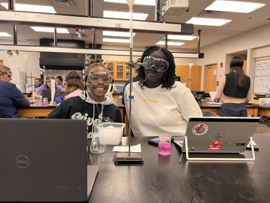
We occasionally have openings for undergraduate teaching assistants in our Anatomy & Physiology Lab and in our Introductory Biology Labs. These are paid positions lasting a full term in which you would be responsible for one or two sections of the course, under the guidance of faculty member. This would excellent experience for a career in education.
The Biology Department has lots of student organizations to chose from. These clubs are great way to make friends, get involved, and enhance your experience in our department! Tri Beta would be great choice. They are dedicated to improving the understanding and appreciation of biological study.
BioCoaches are talented upper division students that serve as peer mentors and learning assistants in our introductory courses. You could serve in BIOL 120, BIOL 122 or at our HelpDesk. All positions will help you learn to engage with students and communicate the concepts of biology well in practice for your future career as a teacher!

TeachKY is focused on recruiting and retaining educators. It aims to inspire future teachers and address the critical teacher shortage in the state. It offers information and support for aspiring and current teachers and t

There are many opportunities to participate in research as an undergraduate student in our department. Our undergrads regularly present at conferences and contribute to new discoveries! Find an faculty mentor who does education-based research to best fit your career goals.

The purpose of KSTA is to assist science educators implementing the Kentucky Academic Standards for Science. The group serves as an advocate for the science teaching community and sponsors statewide and regional meetings.
The NSTA's mission is to promote excellence and innovation in science teaching and learning, serving as a global community for science educators. They advocate for high-quality, accessible, and inclusive science education.
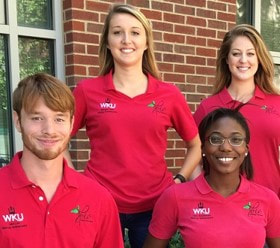
Biology Ambassadors are an elite group of students who assist with recruitment, retention, and advising. They help prospective students and visitors understand that the Biology Department is truly an exceptional place.

Students with similar interests can connect in a safe, accepting, and inclusive atmosphere thanks to WKU's Intercultural Student Engagement Center, student organizations, student government, and leadership and volunteerism programs.
Next Chance to Register for Classes
Some of the links on this page may require additional software to view.