

Bachelor of Arts in Psychology
APPLIED HUMAN BEHAVIOR
Turn Behavioral Insight into Real-World ActionTurn Behavioral Insight into Real-World Action
Every clinic, courtroom, business, and athletic team runs on human behavior. Through WKU's hands-on research and focused internships in general, forensic, or sport psychology, you will develop the practical skills employers and graduate programs value most.
Program at a Glance
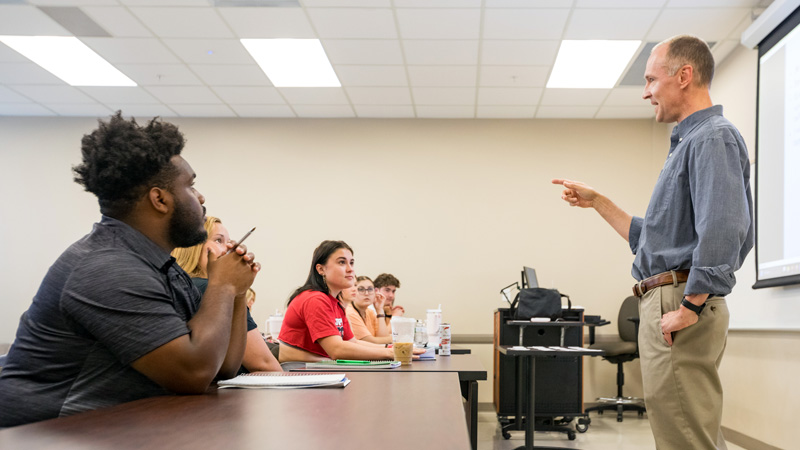
Real-World Experience
Earn credit through supervised work in agencies, private business, clinical, or industry settings.
Focused Concentrations
Pursue a focused concentration in General Psychology, Forensic Psychology, or Sport Psychology.
Faculty Research Labs
Join active research teams in Gary A. Ransdell Hall starting your first year.
Faculty-Led Mentorship
Learn directly from full-time faculty researchers and dedicated advisors.
What You Can Do With a Psychology BA
A psychology degree provides high-demand skills: behavioral analysis, survey and research design, interpersonal communication, and data interpretation. Employers across healthcare, business, and public service actively recruit WKU psychology graduates.
Behavioral Health & Social Services
- Case manager or social services coordinator
- Behavioral health technician or psychiatric assistant
- Community outreach coordinator
- Crisis support specialist
- Rehabilitation counselor (often completed after master's study)
Business & Public Sector Roles
- Human resources or recruiting specialist
- Market research or consumer insights analyst
- Sales and account manager
- Public policy or criminal justice professional
Graduate & Professional School
WKU Psychology graduates regularly earn admission to competitive graduate programs:
- Master's and doctoral degrees in clinical or school psychology
- Clinical Mental Health Counseling (LPC)
- Master of Social Work (MSW)
- Law school (JD)
- Occupational therapy and healthcare administration
Three Focused Pathways to Match Your Ambition
Tailor your degree with focused concentrations in general, forensic, or sport psychology to match your career goals. Select a concentration that aligns with your career direction or graduate school plans.
What You Will Study: Core training in developmental, cognitive, social, and abnormal psychology. You will also complete foundational courses in research methods and statistics.
Why Choose This Track: Maximum flexibility. Pair your degree with a minor or second major. Many students interested in mental and behavioral health or human services add the Clinical and Community Behavioral Health minor.
Common Next Steps: Human resources, behavioral health support roles, community services, or graduate study in Clinical Mental Health Counseling (LPC), clinical, or school psychology.
What You Will Study: The role of human behavior and psychological principles within the legal and justice systems. Coursework includes Psychology and Law and Advanced Forensic Psychology, and integrated criminology and political studies.
Why Choose This Track: Built for students interested in criminal justice, court systems, corrections, victim advocacy, or law school.
Common Next Steps: Probation and parole, court advocacy, law enforcement behavioral analysis, juvenile justice, or graduate study in law (JD) and forensic psychology.
What You Will Study: An interdisciplinary curriculum that blends psychology, kinesiology, performance, and sport.
Why Choose This Track: Designed for students passionate about athletic performance, physical wellness, and team dynamics.
Common Next Steps: Athletic coaching, performance consulting, fitness facility management, corporate wellness, or graduate pathways in sport psychology and occupational therapy.
Four Years, Mapped
Structure your degree around clear academic checkpoints to graduate on schedule in four years with 120 credit hours.
Foundations & Quantitative Reasoning
Core Coursework:
- PSY 100: Introduction to Psychology
- PSY 104: Orientation to the Field of Psychology
Colonnade Quantitative Requirement:
- MATH 183: Introductory Statistics or PHIL 215: Symbolic Logic
Track Milestone:
- Sport Track: Begin Human Anatomy & Physiology (BIOL 131).
Target Checkpoint
30 Credit Hours
Complete 30 credit hours and finish initial general education requirements.
Research Methods & Interdisciplinary Exploration
-
Core Research Sequence:
-
PSY 210: Research Methods
-
PSY 211: Research Methods Laboratory
-
PSY 313: Statistics in Psychology
-
-
Track Milestones:
-
Forensic Track: Begin interdisciplinary electives across Criminology (CRIM) and Political Science (PS).
-
Sport Track: Complete introductory electives in Nutrition (HMD), Physical Education (PE), and Sport Leadership.
-
Target Checkpoint
60 Credit Hours
Declare your required minor or second major (General and Forensic tracks). Sport track fulfills all hours in-major.
Advanced Concentration & Applied Electives
-
Core Breadth:
-
Complete upper-level elective across applied development, behavior, and behavior change.
-
-
Track Milestones:
-
Forensic Track: Take Psychology and Law (PSY 470) and Advanced Forensic Psychology (PSY 472).
-
Sport Track: Take Sport Psychology (PSY 340) and Motivation & Emotion (PSY 412).
-
Target Checkpoint
90 Credit Hours
Join a faculty research lab or confirm your eligibility for PSY 390 Field Experience.
Senior Capstone & Degree Completion
-
Senior Culminating Experience:
-
PSY 481:Thinking Critically about Psychology or another approved capstone.
-
-
Graduation Readiness:
-
Complete remaining elective hours or required minor coursework.
-
Target Checkpoint
120 Credit Hours
File for graduation with 120 total credits.
See Yourself on The HillSee Yourself on The Hill
Discover where theory meets practice. Visit the Bowling Green campus to explore our Gary A. Ransdell Hall classrooms, active research labs, and collaborative student spaces.
Book a Campus Tour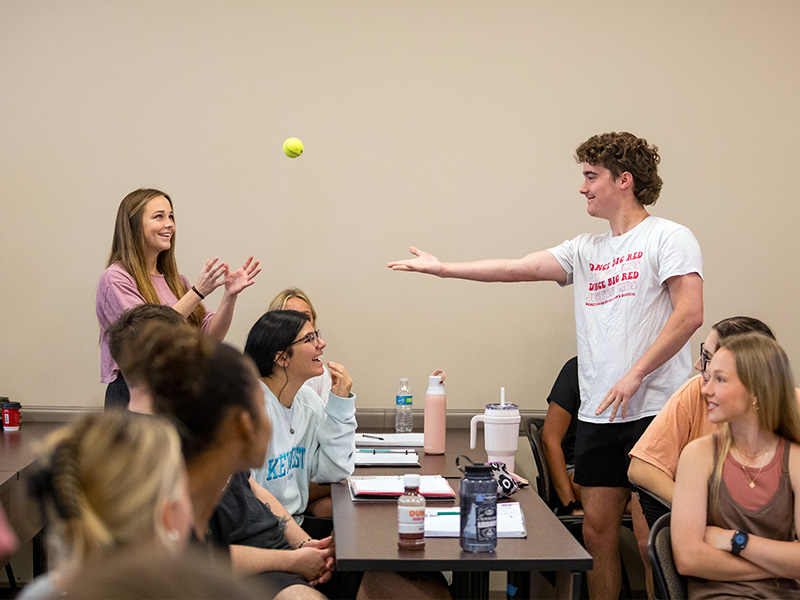
Frequently Asked Academic Questions
Yes. Every concentration has a structured Finish in Four plan.
Because the major requires 35 to 54 credit hours, you have plenty of room to finish your Colonnade general education requirements, complete your minor or concentration courses, and graduate in eight standard semesters without overloading your schedule.
WKU offers three distinct tracks so you can tailor your degree to your specific goals:
-
General Psychology (35 credit hours): Our most flexible pathway. You will study core behavioral foundations and select electives that match your interests. This track requires a minor or second major, giving you a custom double-focus.
-
Forensic Psychology (41 credit hours): Designed for students interested in the intersection of psychology and the legal system. In addition to psychology coursework, you take targeted classes in criminology, criminal justice procedures, and philosophy of law. This track also requires a minor or second major.
-
Sport Psychology (54 credit hours): Built for students focused on athletic performance, motivation, and physical wellness. This is a comprehensive standalone concentration that integrates coursework from exercise science, human anatomy, nutrition, and sports communication. Because of its interdisciplinary depth, no outside minor is required.
If you select the General or Forensic Psychology concentration, yes. You will pair your major with a minor (typically 18 to 24 hours) or a second major. Popular pairings include Criminology, Clinical and Community Behavioral Health, Child Studies, Sociology, or Business Administration.
If you select the Sport Psychology concentration, no minor is required. The 54-hour curriculum includes built-in coursework across exercise physiology, anatomy, and nutrition.
Yes. Unlike large universities where research is reserved exclusively for graduate students, WKU undergraduates actively participate in faculty research labs.
-
No prior research experience is required.
-
You can start by enrolling in Supervised Study in Psychology (PSY 290) for 1 to 3 credit hours, assisting faculty with data collection and active studies.
-
Advanced students can take Research, Readings, or Special Projects (PSY 490) to design and lead projects under faculty mentorship.
-
WKU psychology undergraduates regularly co-author papers and present findings at the WKU Student Research Conference, Posters at the Capitol in Frankfort, and national conferences like APA and APS.
Yes. Through Field Experience in Psychology (PSY 390), undergraduate students step outside the lecture hall and into professional work environments across south-central Kentucky and beyond.
-
What You Do: You work directly under the supervision of a practicing professional. You will observe how psychological principles apply to real clients, clients’ families, students, or organizations.
-
Where You Can Work: Placements match your career goals and include community mental health agencies, youth services and residential programs, crisis centers, school systems, non-profits, human resources departments, and rehabilitation clinics throughout Bowling Green, Nashville, and surrounding areas.
-
Why It Matters for Your Future:
-
For Employment: You graduate with documented, on-the-job experience and professional references rather than just a degree on paper.
-
For Graduate School: Admissions committees for clinical, counseling, and school psychology look specifically for verified contact hours in applied settings.
-
Yes. WKU is home to three respected graduate credentials in psychology, all based in Gary A. Ransdell Hall:
Studying as an undergraduate at WKU allows you to build direct relationships with the same faculty who teach and supervise in these graduate programs.
A psychology degree provides skills that employers across every sector prioritize: behavioral analysis, research design, interpersonal communication, and data interpretation.
Graduates who enter the workforce secure roles such as:
-
Behavioral Health and Human Services: Case manager, community outreach coordinator, behavioral health technician, crisis support specialist, and youth advocate.
-
Business and Industry: Human resources specialist, corporate recruiter, market research analyst, and sales manager.
-
Public Service and Legal Systems: Court advocate, probation or juvenile justice assistant, and public policy coordinator.
If you decide to continue your education later, your degree covers all standard prerequisites for master's and doctoral degrees in clinical psychology, school psychology, counseling, social work, and law school.
Learn by DoingLearn by Doing
Undergraduate psychology at WKU goes beyond lecture halls. You can join faculty-led research teams, run lab studies, and present your findings at academic conferences.
View Student Research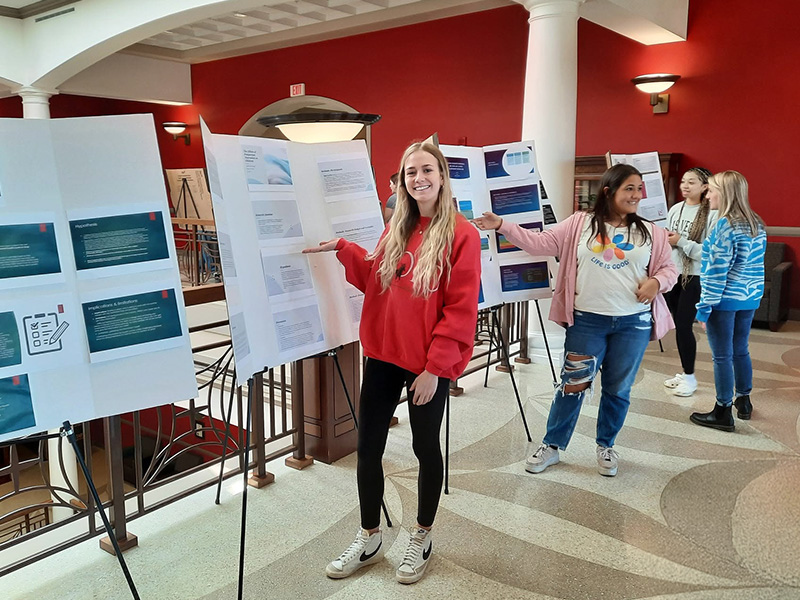
Undergraduate Research Labs
Undergraduate students can collaborate with psychology faculty on active research projects. Active departmental research spaces include:
- Measurement and Intervention Team
- The Academic Quality (TAQ) Lab
- Psychology of Applied Law and Memory (PALM) Lab
- Clinical/Applied Research (CAR) Group
- Learning and Development Lab
- Forensic and Applied Cognitive Theory in Society Lab
Real Hilltoppers: Stories from Our Graduates

Student Research Spotlight
Kendall Al-Halah
Jackson, TN
Forensic Psychology
"I have been able to engage in research and present the research at local and international conferences. Both opportunities have allowed me to look into different career fields and build my resume as I plan to enter a graduate program."
Alumni Spotlight
Marleigh Solomon
Benton, KY
Psychology
"I want to dedicate my career to early intervention in childhood, so I can help children who have been through traumatic experiences and mental health struggles come out on the other side of it as healthy, loving, productive members of society."

Alumni Spotlight
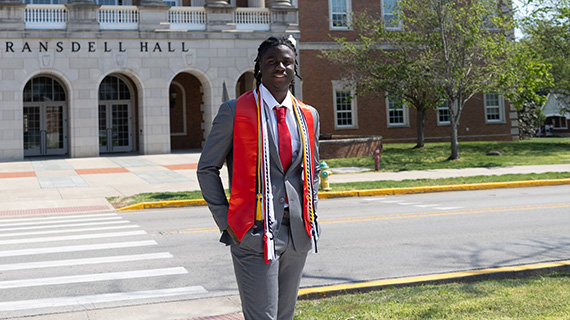
Ikechukwu Micheal Diugu
Nashville, TN
Psychology
"My experiences working with youth and mentoring students showed me how important mental health, guidance and support are, especially in underserved communities. Studying psychology has given me the knowledge and tools to better understand behavior,"
Have Questions? Talk to Our Department Team
Our undergraduate advising specialist and department faculty are ready to help you plan your degree.
Undergraduate Academic Advisor
- Heidi Fortenberry
- heidi.fortenberry@wku.edu
- (270) 745-2076
Find Your Place in WKU PsychologyFind Your Place in WKU Psychology
Join a community dedicated to understanding human behavior and driving change across clinics, courtrooms, schools, and organizations. Take your next step toward becoming a Hilltopper:
Gary A. Ransdell Hall, Office 3012
1906 College Heights Blvd. #11030,
Bowling Green, KY 42101-1030
Additional Information
Make A Gift
Every dollar helps a student make a difference. Your gift supports WKU Psychology students by providing access to meaningful experiences like attending research conferences or traveling to a competitive internship site.
 GIVE NOW
 Some of the links on this page may require additional software to view.