

Master of Arts in Applied Communication
Communication Expertise for Today's Dynamic Workplace
SMC’s Master of Arts in Applied Communication is a 31-credit-hour, fully online and asynchronous graduate program. Designed for working professionals and recent graduates, the program combines communication theory, applied research, and professional practice to help students address communication challenges in contemporary organizations.
Students develop expertise in organizational communication, digital communication, audience engagement, and message evaluation. Applied projects, case analyses, and a professional portfolio connect graduate study with workplace practice.
The curriculum is interdisciplinary by design. In addition to advanced communication courses, students may connect communication expertise with areas such as data analytics, emergency management, health administration, instructional design, marketing, nonprofit administration, public health, and professional writing. With careful course planning, selected coursework may also contribute to a graduate certificate.
Graduates are prepared to apply strategic communication expertise in corporate, nonprofit, healthcare, education, and government contexts.
To learn more, contact gradcommunication@wku.edu

Curriculum Overview
The M.A. in Applied Communication requires 31 credit hours, structured in three components:
|
Component |
Hours |
Description |
|
Required Core |
4 |
Foundation in applied communication research + capstone portfolio |
|
Communication Electives |
15 |
Choose 5 courses from 9 advanced communication topics |
|
Non-Comm Electives |
12 |
Choose 4 courses from partner graduate certificate programs |
Communication courses are offered in 8-week bi-terms. Many non-communication electives follow a 16-week semester format.
-
COMM 505: Introduction to Applied Communication & Research (3 hrs) — Bridges professional experience with academic rigor by developing essential skills in applied communication and workplace-relevant research.
COMM 598: Portfolio (1 hr) — Capstone course where students curate a professional portfolio showcasing skills, achievements, and growth throughout the program.
|
Course |
Title |
Focus |
|
COMM 523 |
Health Communication |
Provider-patient relationships, health behavior change |
|
COMM 547 |
Organizational Communication |
Org comm theories applied to workplace practices |
|
COMM 553 |
Health Comm Campaigns |
Planning, implementing, evaluating health campaigns |
|
COMM 561 |
Comm for Global Orgs |
Strategies for global organizational environments |
|
COMM 566 |
Organizational Persuasion |
Persuasion in contemporary organizations |
|
COMM 568 |
Org Belonging & Engagement |
Inclusive workplaces, employee engagement |
|
COMM 571 |
Digital Comm for Org Success |
Digital communication across work contexts |
|
COMM 581 |
Applied Org Communication |
Theory-to-practice in industry settings |
|
COMM 590 |
Intercultural Comm Strategies |
Communication across cultural differences |
Students select courses from the following partner graduate certificate programs to tailor the degree to their professional goals. Courses taken from a single certificate’s curriculum may also count toward earning that certificate when its requirements are met. Pursuing a certificate is optional.
|
Program |
Focus Area |
|
Data Analytics |
Business intelligence and data-driven decision making |
|
Emergency Mgmt & Disaster Science |
Risk assessment, disaster planning, crisis response |
|
Health Administration |
Healthcare management and policy |
|
Instructional Design |
Training and development strategies |
|
Marketing & Sales |
Consumer behavior and market research |
|
Public Health |
Community health promotion and education |
|
Recreation & Sport Administration |
Nonprofit management and administration |
Graduate certificates are short, fully online credentials that provide targeted upskilling and can be completed in one year. COMM-prefix courses in these certificates also count toward M.A. communication electives.
Health Communication (9 hours)
Understanding communication’s role in healthcare — interpersonal and organizational factors that shape healthcare delivery.
- Required: COMM 523 + COMM 553 + 3 hours of restricted electives aligned with health contexts
Organizational Communication (9 hours)
Research-backed tools to understand and improve communication across teams, departments, and leadership.
- Required: COMM 547 + 6 hours from COMM 561, 566, 568, 571, 581, or 590
Application Materials
All students seeking admission into a graduate degree program at WKU should submit the Graduate Studies application and all supporting materials (i.e., official transcripts, test scores, letter of intent, etc.) to Graduate Studies with sufficient time to allow program review prior to admission. Documents can be submitted via the Application Portal or by email to graduate.school@wku.edu.
Candidates must meet the minimum university-wide admission requirements and program-specific requirements.
For our program, applicants should submit the following:
- An application to Graduate Studies
-
Undergraduate transcripts reflecting all undergraduate studies and an earned undergraduate degree with a minimum cumulative grade point average (GPA) of 3.00
- Letter of intent detailing:
-
- academic and/or professional experiences,
- goals in pursuing graduate studies in communication,
- specific areas of communication the applicant is interested in
-
Students should complete the required core courses (COMM 501, COMM 502, COMM 547) within their first 15 hours of coursework with a grade of "B" or higher in each. As a general policy, the program does not allow transfer of research methods courses to fulfill the research methods requirements.
Core Courses (9 hours):
-
COMM 501: Qualitative Research Methods in Communication (3 hours)
-
COMM 502: Quantitative Research Methods in Communication (3 hours)
-
COMM 547: Organizational Communication Theory (3 hours)
Elective Courses (15 hours):
-
COMM 523: Health Communication
-
COMM 526: Family Communication
-
COMM 528: Communication in the Nonprofit Sector
-
COMM 531: Global Leadership Communication
-
COMM 552: Democracy, Power, & Voice in Organizations
-
COMM 553: Health Communication Campaigns
-
COMM 560: Seminar in Organizational Communication
-
COMM 561: Multinational Organizational Communication
-
COMM 564: Crisis Communication
-
COMM 566: Corporate & Organizational Advocacy
-
COMM 568: Organizational Identification
-
COMM 570: Seminar in Human Communication
-
COMM 571: Organizational Communication in the Digital Age
-
COMM 578: Interpersonal Communication
-
COMM 581: Applied Organizational Communication
-
COMM 586: Processes of Group Communication
-
COMM 590: Intercultural Communication
-
COMM 595: Independent Study in Communication
-
COMM 596: Graduate Internship in Communication
Capstone Options (6 hours)
- Non-Thesis Capstone Option
Students selecting the Non-thesis Capstone Option will complete 6 additional hours, which may come from the Organizational Communication, electives, or Human Communication electives, or, with approval, from other graduate programs outside the department, as appropriate with the planned course of study. Students selecting the Non-Thesis Capstone Option will also complete written Comprehensive Examinations. - Thesis Capstone Option
Students completing a Thesis will enroll in 6 hours of COMM 599: Thesis Research/Writing. The thesis will culminate in an oral defense of the project.
Total Credit Hours: 30
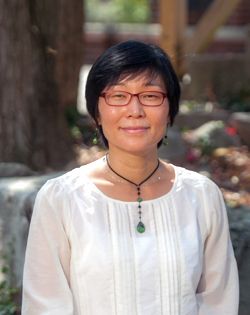
- Associate Professor / Communication / Graduate Program Coordinator
- jieyoung.kong@wku.edu
- JRH 239
- 270-745-6578
Additional Graduate Program Information
Some of the links on this page may require additional software to view.