

Facebook Pixel Department of Economics | WKU | Western Kentucky University
Department of Economics

Department of Economics at Western Kentucky University


The Department of Economics at Western Kentucky University strives to provide students with educational opportunities that will help prepare them to be accomplished professionals. A degree in economics allows for flexibility in choosing a career—graduates of the Western Kentucky University Economics Department find jobs in finance, banking, insurance, local and federal governments, research institutions, education, and international organizations. 

Apply Now

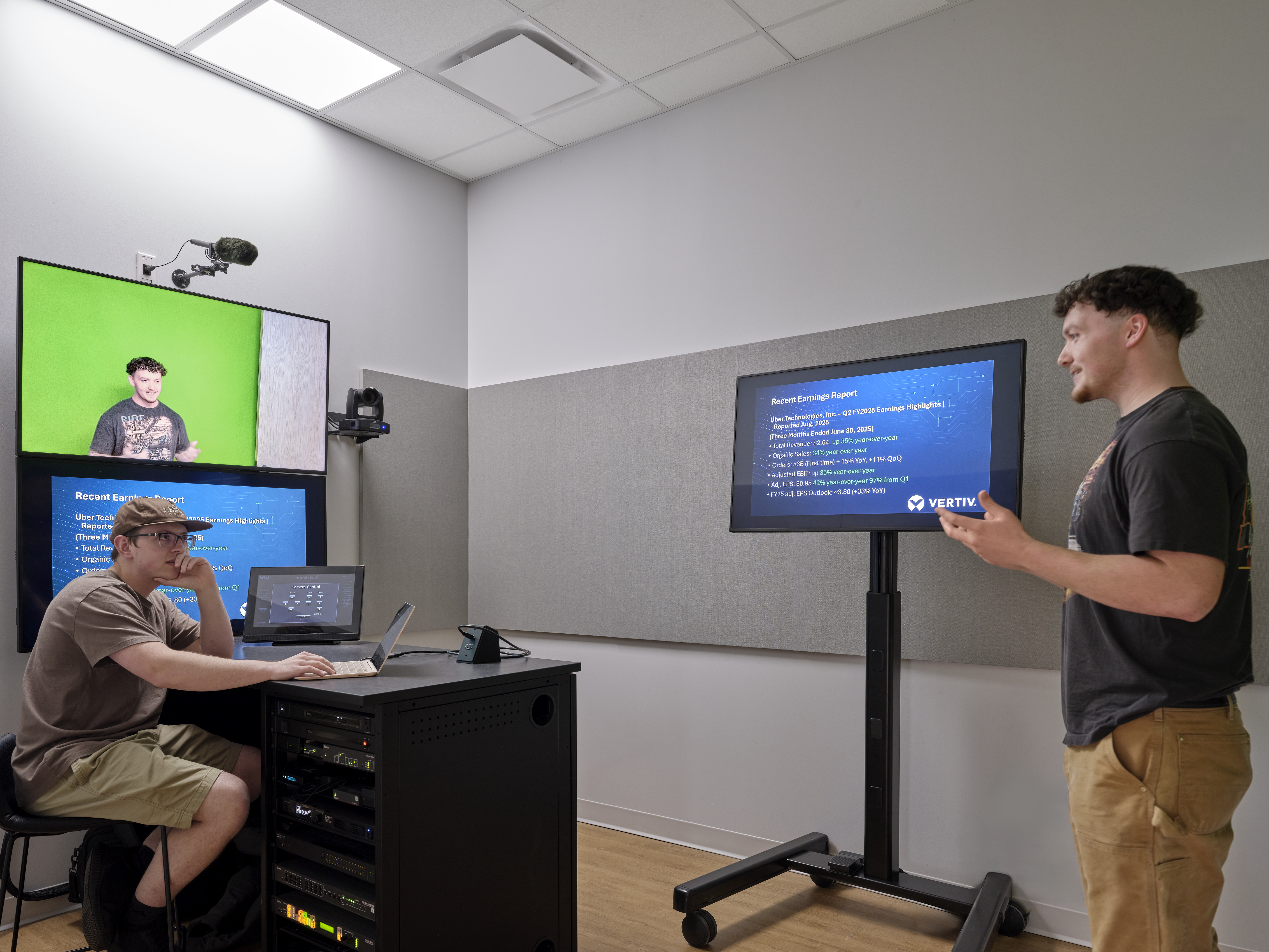
One Button Room


UNDERGRADUATE PROGRAMS

Economics, Bachelor of Arts (638)


  • Undergraduate
  • AB
  • Business
  • Economics

Overview

Why complete a degree in Economics?

Economics is the study of how people, businesses, and governments make decisions in the face of scarce resources — from money and time to natural resources and public services. The B.A. in Economics is WKU’s most flexible economics path: it pairs core economic theory and data analysis skills with the freedom to add a second major or minor in nearly any field, letting students build a customized, highly marketable combination of skills. Graduates pursue careers in finance, banking, insurance, government, research, and law, and the Joint Undergraduate Master’s Program (JUMP) lets students begin work toward a Master of Arts in Applied Economics while still completing their bachelor’s degree.

What is your path to a degree in Economics at WKU?

The Economics program requires 35 hours of professional and elective coursework, within the 120 hours required for a baccalaureate degree, plus completion of a second major or minor. Rather than a course-by-course list, the path is intentionally structured so each stage builds the skills students need for both certification and career.

Foundational & Theory Courses

Before students can analyze real-world problems, they need a rigorous grounding in how markets, firms, and policy behave. These courses build the conceptual toolkit — supply and demand, optimization, macroeconomic forces — that underlies every other course in the major and every economics-related career path.

Quantitative & Data Courses

Modern economics is a data-driven discipline. These courses build the statistical fluency and econometric modeling skills that let graduates turn raw data into evidence-based conclusions — a skill set in high demand across finance, government, and research roles.

Career & Capstone Courses

A degree means little without the professional polish to use it. These culminating courses connect classroom learning to real career paths, ensuring students leave WKU not just knowledgeable but workforce ready.

Economics Electives (12 hours)

Because economics touches nearly every part of society, electives let students aim their analytical training toward the specific industries or issues that interest them most, sharpening their degree into a tool suited to their own career goals.

Program Concentrations

The B.A. in Economics does not offer formal concentrations. Its flexibility comes instead from the required second major or minor, which lets students combine economic analysis with virtually any other discipline at WKU.

Program Requirements (35 hours)

A baccalaureate degree requires a minimum of 120 unduplicated semester hours. More information can be found at www.wku.edu/registrar/degree_certification.php.

Students who began WKU in the Fall 2014 and thereafter should review the Colonnade requirements located at: https://www.wku.edu/colonnade/colonnaderequirements.php.

The major in Economics requires 120 credit hours of coursework with 35 hours in Economics and leads to a Bachelor of Arts degree. The program requires completion of a second major or a minor.

Course List
Required Economics Courses
ECON 202Principles of Economics (Micro)3
ECON 203Principles of Economics (Macro)3
ECON 206Statistics3
ECON 302Microeconomic Theory3
ECON 303Macroeconomic Theory3
ECON 306Statistical Analysis3
or ECON 307 Financial Data Modeling
ECON 399Career Readiness in Economics1
ECON 465Regression and Econometric Analysis3
ECON 499Senior Assessment1
Additional Courses
Select 12 hours from the following, excluding ECON 306, 307, and 497: 1, 212
ECON 3@
ECON 4@
Total Hours35
1

Some upper-level ECON electives may satisfy Colonnade Connections requirements: ECON 375 is in the Social and Cultural category, and ECON 385 and ECON 430 are in the Local to Global category. Note, only one of these courses can be used to satisfy the Connections requirement - the rest must be taken from other disciplines.

2

ECON 307 is an alternative for ECON 306 in the required courses, so it cannot be taken as an elective. ECON 306 may not be applied to electives. ECON 497 is reserved for Mathematical Economics majors.

Finish in Four Plans

Finish in Four Plan

First Year
FallHoursSpringHours
Colonnade: Natural & Physical Sciences w/o lab3Colonnade: Arts & Humanities3
ECON 202 (Colonnade Explorations - Social and Behavioral Sciences)3COMM 1453
ENG 1003HIST 101 or HIST 1023
MATH 123, MATH 136, or MATH 1373ECON 2033
General Elective3ECON 2063
 15 15
Second Year
FallHoursSpringHours
ENG 200 (or another approved Colonnade Foundations - Literary Studies course)3ECON 3033
Colonnade: Natural & Physical Sciences w/ lab3ECON Elective3
ECON 3023General Elective3
ECON Elective3General Elective3
General Elective3General Elective3
 15 15
Third Year
FallHoursSpringHours
Colonnade: Connections (Systems)3Colonnade: Connections (Social & Cultural)3
ENG 3003ECON Elective3
ECON 306 or ECON 3073General Elective3
ECON Elective3General Elective3
General Elective3General Elective3
 ECON 3991
 15 16
Fourth Year
FallHoursSpringHours
Colonnade: Connections (Local to Global)3General Elective3
ECON 46513General Elective3
General Elective3General Elective3
General Elective3General Elective1
 ECON 4991
 15 14
Total Hours 120
1

It is recommended that ECON 465 should be taken during the second to last semester as it will help student prepare for the Senior Seminar. ECON 465 should not be taken concurrently with ECON 499.


Business Economics, Bachelor of Science (724)


  • Undergraduate
  • Bachelor of Science
  • Business
  • Economics

Overview

Why complete a degree in Business Economics?

Business Economics combines the analytical rigor of economic theory with hands-on training across accounting, finance, business data analytics, management, and marketing — giving graduates both the “economic way of thinking” and the practical business skills employers want. It is an ideal path for students who want the depth of an economics major without pursuing a second major, opening doors to careers as financial analysts, bank examiners, business consultants, policy analysts, and more.

What is your path to a degree in Business Economics at WKU?

The Business Economics program requires 72 hours of professional and elective coursework, within the 120 hours required for a baccalaureate degree. Rather than a course-by-course list, the path is intentionally structured so each stage builds the skills students need for both certification and career.

Business Core (27 hours)

Before diving into specialized major coursework, students build fluency across the core functions of business — accounting, economics, finance, marketing, management, statistics, and analytics. This shared foundation, completed by every Gordon Ford College of Business major, ensures graduates don’t just understand their discipline in isolation; they understand how that work connects to strategy, operations, and decision-making across an organization. A culminating strategy course ties these functions together, asking students to think like leaders rather than specialists.

Career Preparation Curriculum (6 hours)

Technical skill alone doesn’t land a job or carry a career — employers consistently rank communication and professionalism alongside technical knowledge. This curriculum is designed to ensure students enter the workforce ready on day one: developing polished written and verbal communication, building a professional identity early in their academic career, and culminating in a senior-level assessment that confirms readiness for the profession.

Economics Coursework (21 hours)

This is where the analytical depth of the major is built — progressing from macro and micro theory into applied statistical and econometric methods, and finishing with managerial economics, which directly applies economic reasoning to business decision-making.

Electives (18 hours)

The combination of economics and business electives lets each student aim their training toward a specific path, whether that’s finance, data analytics, entrepreneurship, or another business discipline — turning a broad foundation into a personalized career pipeline.

Program Concentrations

The Business Economics major does not offer formal concentrations, but its 18 hours of electives give students substantial room to focus their coursework, often paired with a minor or certificate in data analytics, entrepreneurship, or sales.

Program Requirements (72 hours)

A baccalaureate degree requires a minimum of 120 unduplicated semester hours. More information can be found at www.wku.edu/registrar/degree_certification.php.

Students who began WKU in the Fall 2014 and thereafter should review the Colonnade requirements located at: https://www.wku.edu/colonnade/colonnaderequirements.php.

The Business Economics major does not require an additional minor or major, but the structure of the program leaves enough room for students to complete a minor or certificate, especially if that minor or certificate is in the Gordon Ford College of Business. 

Course List
Business Foundations Courses
MATH 123Mathematical Applications for Business *3
ACCT 110Accounting for Decision Makers3
ECON 202Principles of Economics (Micro)3
ECON 206Statistics3
MGT 210Organization and Management3
MKT 220Basic Marketing Concepts3
BDAN 250Introduction to Analytics3
FIN 330Principles of Finance3
MGT 498Strategy and Policy3
or ENT 496 Hilltopper Student Consulting Experience
Career Preparation Courses
BA 170Business Student Basics 11
or BA 175 University Experience-Business
or BA 220 Special Topics in Business Administration (Lower Division)
MGT 261Business Communication Fundamentals3
ECON 399Career Readiness in Economics1
ECON 499Senior Assessment1
Economics Courses
ECON 203Principles of Economics (Macro)3
ECON 302Microeconomic Theory3
ECON 303Macroeconomic Theory3
ECON 306Statistical Analysis3
or ECON 307 Financial Data Modeling
ECON 375Moral Issues of Capitalism 23
or ECON 390 Economics, Law, and Public Choice
or ECON 434 The Economics of Poverty and Discrimination
ECON 414Managerial Economics3
ECON 465Regression and Econometric Analysis3
Economics Electives
Select 12 hours from the following: 212
ECON 3@
ECON 4@
Business Electives
Select 6 hours from the following:6
ACCT 220
Principles of Financial Accounting
ACCT 3@
ACCT 4@
BDAN 3@
BDAN 4@
ECON 3@
ECON 4@
ENT 3@
ENT 4@
FIN 3@
FIN 4@
MGT 3@
MGT 4@
MKT 3@
MKT 4@
Total Hours72
*

Or any calculus class, or math ACT score of at least 26, or math SAT score of at least 610.

1

BA175 (1 hour) is only for Business LLC students. BA220 (3 hours) is only for WKU students and transfer students who choose a business major as a sophomore or higher.

2

Some upper-level electives may satisfy Colonnade Connections requirements: ECON 375 is in the Social and Cultural category, and ECON 385 and ECON 430 are in the Local to Global category. Note, only one of these courses can be used to satisfy the Connections requirement - the rest must be taken from other disciplines. 

Finish in Four Plans

Finish in Four Plan

First Year
FallHoursSpringHours
Colonnade: Natural & Physical Sciences3Colonnade: Arts & Humanities3
ECON 202 (Colonnade Explorations - Social and Behavioral Sciences)3COMM 1453
ENG 1003HIST 101 or HIST 1023
MATH 1233ECON 2033
BDAN 2503ECON 2063
BA 170, BA 175, or BA 2201 
 16 15
Second Year
FallHoursSpringHours
ENG 200 (or another approved Colonnade Foundations - Literary Studies course)3MGT 2613
Colonnade: Natural & Physical Sciences with lab3-4MKT 2203
MGT 2103ACCT 1103
MGT 2003ECON 3033
ECON 3023ECON Elective3
 15-16 15
Third Year
FallHoursSpringHours
Colonnade: Connections (Systems)3Colonnade: Connections (Social & Cultural)3
ENG 3003ECON 375, ECON 390, or ECON 4343
FIN 3303ECON Elective3
ECON 306 or ECON 3073Business Elective3
ECON Elective3General Elective3
 ECON 3991
 15 16
Fourth Year
FallHoursSpringHours
Colonnade: Connections (Local to Global)3MGT 498 or ENT 4963
ECON 4143ECON 4653
Business Elective3General Elective3
ECON Elective3General Elective3
ECON Elective3ECON 4991
 15 13
Total Hours 120-121
1

Mathematical Economics, Bachelor of Science (731)


  • Undergraduate
  • Bachelor of Science
  • Business
  • Economics

Overview

Why complete a degree in Mathematical Economics?

The B.S. in Mathematical Economics is built for students aiming at a graduate degree in economics or a highly quantitative, analytical career such as actuarial science. By combining rigorous mathematics — calculus, linear algebra, differential equations — with economic theory, this program prepares graduates for some of the most data-intensive roles in business, government, and finance. International students completing this program may also qualify for the STEM OPT visa extension.

What is your path to a degree in Mathematical Economics at WKU?

The Mathematical Economics program requires 50–65 hours of professional and elective coursework, within the 120 hours required for a baccalaureate degree. Rather than a course-by-course list, the path is intentionally structured so each stage builds the skills students need for both certification and career.

Core Courses (34 hours)

Graduate-level economics and many quantitative careers demand a level of mathematical sophistication beyond a typical business degree. This core builds that foundation — calculus, linear algebra, and rigorous economic theory — so students are prepared for the technical demands of advanced study or highly analytical roles from day one of their upper-division coursework.

Program Concentrations

Students will choose one of the following concentrations based on their interests and career goals.

  • General Concentration (16 hours)

Students aiming at a Ph.D. or a heavily quantitative career need depth beyond the core. This concentration adds advanced mathematics and applied economics coursework that mirrors the rigor of graduate programs, while still closing with career-readiness training for those entering the workforce directly.

  • Actuarial Science Concentration (30–31 hours)

Becoming an actuary requires passing a demanding series of professional exams. This concentration is purpose-built around that path — sequencing probability, finance, and actuarial mathematics courses so that, by graduation, students have covered the material tested on the first two actuarial exams and earned the VEE credits required by the Society of Actuaries.

Concentrations

  • General Mathematical Economics (MEGM)
  • Actuarial Science (MEAS)

Program Requirements (50-65 hours)

A baccalaureate degree requires a minimum of 120 unduplicated semester hours. More information can be found at www.wku.edu/registrar/degree_certification.php.

Students who began WKU in the Fall 2014 and thereafter should review the Colonnade requirements located at: https://www.wku.edu/colonnade/colonnaderequirements.php.

The major in Mathematical Economics requires a total of 120 credit hours with a core of 18 hours in economics, 15 hours in mathematics, and 1 hour of an interdisciplinary seminar course. The concentration in general mathematical economics requires an additional 9 hours in economics, 6 hours in mathematics, and 1 hour in a career readiness course. The concentration in actuarial science requires an additional 3 hours in economics, 9 hours in mathematics, 12 hours in finance, 3-4 hours in computer science, and 3 hours in actuarial science. 

The program of study does not require completion of a second major or minor.

Course List
Core Courses
ECON 202Principles of Economics (Micro)3
ECON 203Principles of Economics (Macro)3
ECON 206Statistics3
or STAT 301 Introductory Probability and Applied Statistics
ECON 302Microeconomic Theory3
ECON 303Macroeconomic Theory3
Select one of the following:3
ECON 465
Regression and Econometric Analysis
ECON 480
Economic Forecasting
STAT 401
Regression Analysis
MATH 136Calculus I4
MATH 137Calculus II4
MATH 237Multivariable Calculus4
MATH 306Applied and Computational Linear Algebra 13
or MATH 307 Introduction to Linear Algebra
ECON 497Senior Seminar in Mathematical Economics1
Total Hours34
1

Students who plan to pursue a PhD in Economics should take MATH 307.

Additionally, majors must choose a concentration in either General Mathematical Economics or Actuarial Science. 

General Mathematical Economics Concentration

Course List
ECON 306Statistical Analysis3
or ECON 307 Financial Data Modeling
ECON 464Introduction to Mathematical Economics3
Select 3 hours of 300- and 400-level economics electives3
MATH 331Differential Equations3
or MATH 310 Introduction to Discrete Mathematics
Select one of the following:3
MATH 331
Differential Equations
MATH 310
Introduction to Discrete Mathematics
MATH 305
Introduction to Mathematical Modeling
MATH 382
Probability and Statistics I
MATH 435
Partial Differential Equations
MATH 405
Numerical Analysis
ECON 399Career Readiness in Economics1
Total Hours16

Actuarial Science Concentration

Course List
ECON 307Financial Data Modeling3
MATH 310Introduction to Discrete Mathematics3
ACTU 382Probability and Statistics I3
ACTU 482Probability and Statistics II3
FIN 330Principles of Finance3
FIN 332Investment Theory3
FIN 350Risk Management and Insurance3
FIN 437Corporate Asset Management3
CS 170Problem Solving and Programming3-4
or CS 180 Computer Science I
or STAT 330 Introduction to Statistical Software
ACTU 301Financial Mathematics for Actuarial Science3
Total Hours30-31

Finish in Four Plans

Actuarial Science Concentration

First Year
FallHoursSpringHours
BA 1701COMM 1453
ENG 1003MATH 1374
MATH 1364ECON 2023
Colonnade - Arts & Humanities3HIST 101 or HIST 1023
General University Elective3Colonnade - Natural & Physical Sciences w/ lab3
 14 16
Second Year
FallHoursSpringHours
ECON 2033CS 170, CS 180, or STAT 330 (STAT 330 is recommended.)3-4
ACCT 110 (Pre-requisite for FIN 330)3FIN 3303
MATH 306 or MATH 30713ECON 206 or STAT 3013
MATH 3103MATH 2374
Colonnade - Literary Studies3Colonnade - Natural & Physical Sciences3
 15 16-17
Third Year
FallHoursSpringHours
ECON 3023ECON 3033
ECON 3073FIN 3323
ACTU 3823FIN 3503
ACTU 3013ACTU 4823
Colonnade - Connections Social & Cultural or Local to Global or Systems3Colonnade - Writing in the Disciplines3
 15 15
Fourth Year
FallHoursSpringHours
ECON 465, STAT 401, or ECON 48023ECON 4971
FIN 4373Colonnade - Connections Social & Cultural or Local to Global or Systems3
FIN 43833General University Elective3
Colonnade - Connections Social & Cultural or Local to Global or Systems3General University Elective3
General University Elective3General University Upper-Division Elective3
 General University Elective1
 15 14
Total Hours 120-121
1

Students who plan to pursue a PhD in Economics should take MATH 307.

2

It is recommended that ECON 465 should be taken during the second to last semester as it will help student prepare for the Senior Seminar. ECON 465 should not be taken concurrently with ECON 497

3

ECON 480 and FIN 438 are not required for the degree. However, FIN 438 can used toward a VEE credit, and ECON 480 will help students prepare for actuarial exams. 

General Concentration

First Year
FallHoursSpringHours
BA 1753COMM 1453
ECON 2023HIST 101 or HIST 1023
ENG 1003MATH 1374
MATH 1364Colonnade - Arts & Humanities3
Colonnade - Natural Sciences w/ lab3Colonnade - Literary Studies3
 16 16
Second Year
FallHoursSpringHours
MATH 306 or MATH 30713CS 170 or CS 1803-4
ECON 2033ECON 206 or STAT 3013
MATH 310 or MATH 3313MATH 2374
Colonnade - Natural & Physical Sciences w/ no lab3Colonnade - Social & Cultural or Local to Global or Systems3
Colonnade - Connections Social & Cultural or Local to Global or Systems3General Elective3
 15 16-17
Third Year
FallHoursSpringHours
ECON 3023ECON 3033
ECON 3063ECON 465, ECON 480, or STAT 4013
General upper-division Elective3Colonnade - Writing in the Disciplines3
General Elective3Colonnade - Connections Social & Cultural or Local to Global or Systems3
MATH 305, MATH 310, or MATH 3313General Elective3
 15 15
Fourth Year
FallHoursSpringHours
ECON 4643ECON 4971
ECON 46523General upper-division Elective3
General upper-division Elective3General upper-division Elective3
General upper-division Elective3General Elective3
General Elective3General Elective2
 15 12
Total Hours 120-121
1

Students who plan to pursue a PhD in Economics should take MATH 307.

2

It is recommended that ECON 465 should be taken during the second to last semester as it will help student prepare for the Senior Seminar. ECON 465 should not be taken concurrently with ECON 497.

Economics, Minor (356)


  • Undergraduate
  • Business
  • Economics

Program Requirements (21 hours)

The minor in Economics requires 21 semester hours.  To earn the minor, students must complete 15 hours of core courses consisting of 200- and 300-level ECON courses shown below and 6 hours of upper-level ECON electives.

Course List
ECON 202Principles of Economics (Micro)3
ECON 203Principles of Economics (Macro)3
ECON 206Statistics3
ECON 302Microeconomic Theory3
ECON 303Macroeconomic Theory3
Select 6 hours of other 300 and 400-level Economics courses6
Total Hours21

All minors must also complete MATH 123 or any calculus class or have a Math ACT of at least 26 or a Math SAT of at least 610.

Economic Data Analytics, Certificate (1785)


  • Undergraduate
  • Business
  • Economics

Overview

This undergraduate certificate will help prepare professionals for jobs in both public and private sector. Students will demonstrate advanced knowledge in quantitative economics disciplines including applied economic statistics, econometrics, time series analysis, and forecasting, as well as data management skills.

Program Requirements (18 hours)

Course List
ECON 206Statistics3
ECON 306Statistical Analysis3
or ECON 307 Financial Data Modeling
or BDAN 310 Business Data Analytics
or STAT 330 Introduction to Statistical Software
ECON 465Regression and Econometric Analysis3
ECON 480Economic Forecasting3
ECON 486Applied Statistical Methods in Economics3
ECON 487Data Methods in Economics3
Total Hours18


GRADUATE PROGRAMS

Applied Economics (0410)


  • Graduate
  • Master of Arts
  • Business
  • Economics

Overview

The Master of Arts in Applied Economics offers three concentrations: General concentration , Mathematical Methods concentration, and Business Economics concentration.  The General concentration emphasizes the training of students with backgrounds in economics and other arts and sciences for careers that require strong quantitative skills, technical tools, and communication abilities that can be applied to a broad range of subjects. The Mathematical Methods concentration is designed for students with a strong background in mathematics to gain applied knowledge in economics. The Business Economics concentration couples the economic theory and research methods with coursework from the MBA program to prepare students for careers in the private sector. Students in the Business Economics concentration can earn graduate certificates in Economic Data Analytics, and either Supply Chain Management or Data Analytics certificates while completing the program. 

Students in any of the three concentrations may also enroll in approved courses from related master programs including but not limited to the Master in Business Administration, the Master in Public Administration, and the Master in Health Administration to enhance their range of knowledge and experience. In addition to course work, the program utilizes practicum, an end-of-program applied project, and non-credit workshops to build specific technical skills and to enhance employability of graduates.

Through a partnership with SAS Institute, students enrolled in the program may be able to earn a Tier 1 SAS Academic Specialization in Economic Data Analytics: https://www.credly.com/org/sas/badge/sas-western-kentucky-university-academic-specialization-in-economic-data-analytics

Concentration(s)

  • General (ECGE)
  • Mathematical Methods (ECMM)
  • Business Economics (ECBE)

Program Admission

General Concentration 

  1. Three letters of recommendation from individuals familiar with the student's academic performance.
  2. Official GRE score taken within the last five years. Minimum GRE quantitative score of 147 on a 170 point scale. Alternate graduate admission test scores such as the GMAT or LSAT will be considered on a case by case basis.
1

All applicants must have completed an introductory microeconomics course (ECON 202 or equivalent), an introductory macroeconomics course (ECON 203 or equivalent), and an introductory statistics course (ECON 206 or equivalent). Students who have not completed an intermediate level course (300 level or higher) in microeconomics, macroeconomics, or statistics are advised to complete online preparatory work in the area of deficiency prior to admission.

Mathematical Methods Concentration 

  1. Graduate Studies admission application which includes submission of official undergraduate degree transcripts with a major in Economics, Mathematics, Math-Econ or other related majors.2
  2. Three letters of recommendation from individuals familiar with the student's academic performance.
  3. Minimum undergraduate GPA of 2.75 (4.0 scale).
  4. Official GRE score taken within the last five years. Minimum GRE quantitative score of 147 on a 170 point scale. Alternate graduate admission test scores such as the GMAT or LSAT will be considered on a case by case basis.  GRE requirement is waived for students who have earned an undergraduate degree from WKU and have a minimum GPA of 3.3 in their major.
2

All applicants must have completed a calculus sequence through multivariable calculus, discrete mathematics, principles of micro- and macroeconomics, and one semester of junior or senior level probability theory.

Business Economics Concentration 

  1. Graduate Studies admission application which includes submission of official undergraduate degree transcripts.1
  2. Three letters of recommendation from individuals familiar with the student's academic performance.
  3. Minimum undergraduate GPA of 2.75 (4.0 scale).
  4. Official GRE score taken within the last five years. Minimum GRE quantitative score of 147 on a 170 point scale. Alternate graduate admission test scores such as the GMAT or LSAT will be considered on a case by case basis.

Degree Requirements (30 hours)

Course List
Required Courses
ECON 465GRegression and Econometric Analysis 13
ECON 502Applied Micro Economic Theory3
ECON 503Applied Macroeconomic Theory3
ECON 506Applied Statistical Methods3
ECON 594Forecasting3
Electives
Concentration15
Total Hours30
1

If ECON 465 was taken at the undergraduate level, this course must be substituted with either a MATH, ECON, or STAT course from the list of the electives.

General Concentration

Course List
Required Course
ECON 596Applied Economics Project3-6
Electives
Select 9-12 hours of advisor approved ECON graduate courses9-12
Total Hours15

Mathematical Methods Concentration

Course List
Required Course
ECON 596Applied Economics Project3
Electives
Select 12 hours from the following: 212
ECON 507
Data Methods in Economics
ECON 571
Public Policy Economics
ECON 585
Topics in Macroeconomics
ECON 597
Practicum in Economics
ECON 598
Independent Study Economics
ECON 400G
Issues in Capital Market Economics
ECON 410G
Seminar in Economics
ECON 420G
Public Sector Economics
ECON 430G
Environmental and Resource Economics
ECON 434G
The Economics of Poverty and Discrimination
ECON 440G
American Industry: Structure, Performance and Policy
ECON 445G
Economics of Healthcare
ECON 464G
Introduction to Mathematical Economics
ECON 496G
International Monetary Economics
MATH 405G
Numerical Analysis
MATH 406G
Numerical Linear Algebra with Applications in Data Science
MATH 431G
Intermediate Analysis I
MATH 470G
Introduction to Operations Research
MATH 482G
Probability & Statistics II
MATH 529
Applied Probability
MATH 531
Advanced Differential Equations
MATH 532
Real Analysis
MATH 540
Stochastic Processes
MATH 541
Graph Theory
MATH 542
Advanced Topics in Discrete Mathematics
MATH 570
Topics in Operations Research
MATH 590
Special Topics in Mathematics
MATH 598
Graduate Seminar: Communicating Mathematics and Technical Writing
STAT 549
Statistical Methods I
STAT 550
Statistical Methods II
Total Hours15

Business Economics Concentration

Course List
Select 15 hours with advisor approval: 315
MGT 510
Advanced Organizational Behavior
BDAN 513
Contemporary Business Analytics
ACCT 515
Managerial Accounting
MKT 517
Advanced Marketing
FIN 519
Advanced Managerial Finance
MGT 590
Strategic Business Concepts and Applications
MGT 576
Supply Chain Management
MGT 583
Procurement Management
MGT 584
Supply Chain Analytics
BDAN 513
Contemporary Business Analytics
BDAN 515
Data Management
BDAN 517
Predictive Analytics
BDAN 519
Visualization and Decision Making
ECON 400G
Issues in Capital Market Economics
ECON 420G
Public Sector Economics
ECON 430G
Environmental and Resource Economics
ECON 434G
The Economics of Poverty and Discrimination
ECON 440G
American Industry: Structure, Performance and Policy
ECON 445G
Economics of Healthcare
ECON 451G
Games and Strategy
ECON 464G
Introduction to Mathematical Economics
ECON 496G
International Monetary Economics
ECON 507
Data Methods in Economics
ECON 571
Public Policy Economics
ECON 596
Applied Economics Project
Total Hours15
2

At least 9 hours must be MATH or STAT courses. 

3

A maximum of one ECON course from the list may be used toward the concentration.

Economic Data Analytics (0491)


  • Certificate
  • Business
  • Economics

Overview

This graduate certificate will help prepare professionals for jobs in both public and private sector. Students will demonstrate advanced knowledge in quantitative economics disciplines including applied economic statistics, econometrics and time series forecasting, as well as data management skills.

Program Admission

Admission to the certificate does not require or include admission to the MA in Applied Economics program.  Applicants are required to have completed an introductory statistics course prior to enrolling in the certificate program.

 Program Requirements (12 hours)

Course List
Required Courses
ECON 465GRegression and Econometric Analysis 13
ECON 506Applied Statistical Methods3
ECON 594Forecasting3
ECON 464GIntroduction to Mathematical Economics3
or ECON 507 Data Methods in Economics
or ECON 596 Applied Economics Project
or ECON 598 Independent Study Economics
Total Hours12
1

If a student completed ECON 465 as an undergraduate at WKU or an equivalent course from another institution, he/she must enroll in an additional elective course above or in one of the courses currently approved for MA Applied Economics degree program.

Loading...


Headshot of Madeline Slagel

As a first-generation college student, I am still in awe of the knowledge and resources available on the hill. I am not only given the opportunity to study Economics and problem-solve every day, but I also get to connect with the most amazing people and organizations outside of the classroom.

Madeline Slagel, Economics Major


Why Study Economics at WKU?

Economics majors at Western Kentucky University benefit from small, personal classes as well as a modern curriculum that teaches students how to apply economics principles and data analytics skills to decision-making in the workforce.

We also offer many activities which prepare students for success beyond the classroom.  Students have an opportunity to get involved with student organizations, student success initiatives, professional development activities, the PEAK program, and our Center for Applied Economics.


  • 270.745.2249
  • econ@wku.edu
  • Department of Economics
    2046 Chandler Hall
    1906 College Heights Blvd. #11059
    Bowling Green, KY 42101-1059

AACSB Seal
The Gordon Ford College of Business is a top business school with dual AACSB accreditation in both business and accounting programs


Some of the links on this page may require additional software to view.

 Last Modified 7/22/26