

Thermal Conductivity
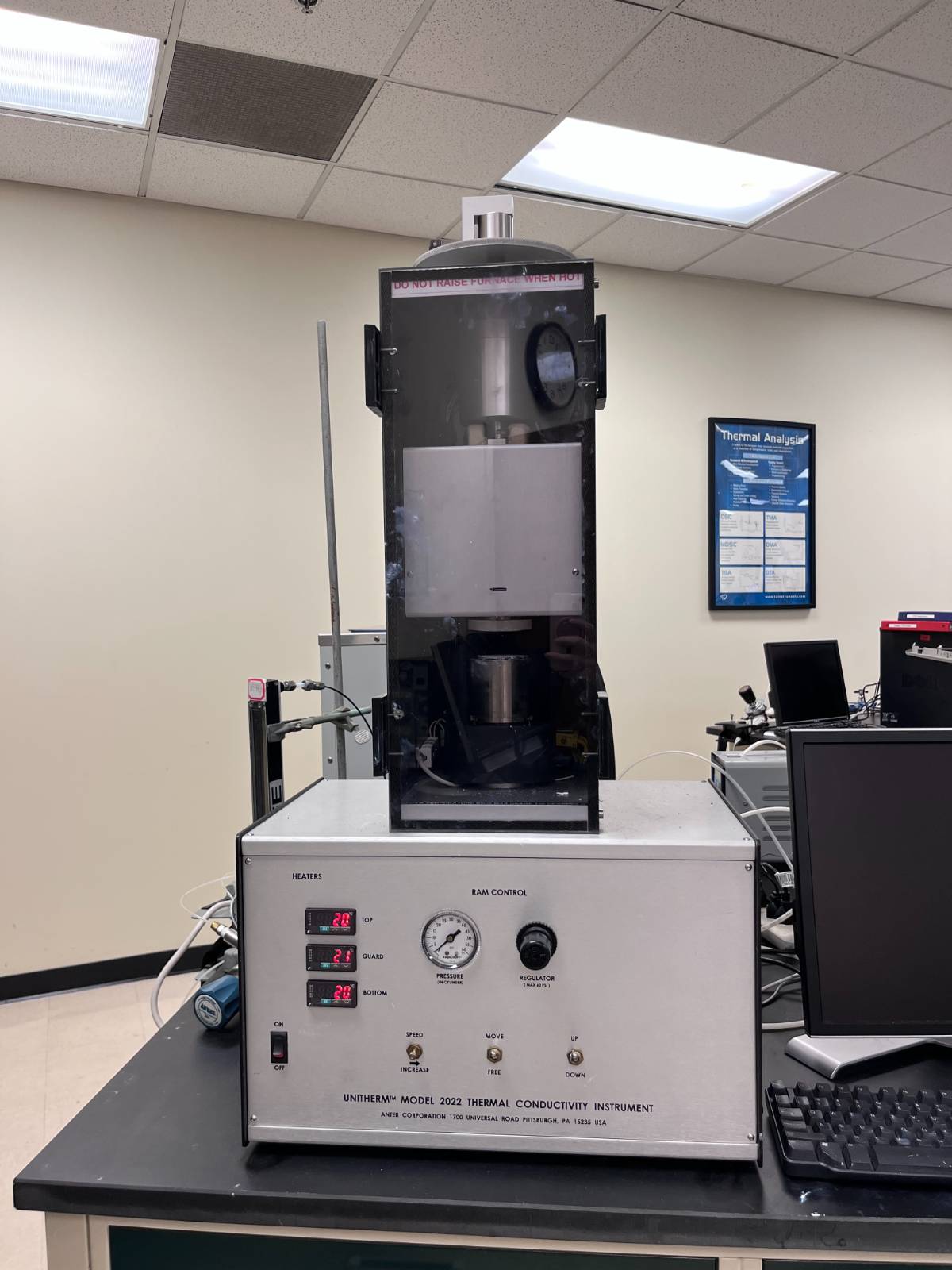
AMI uses a TA Instruments DTC-300.
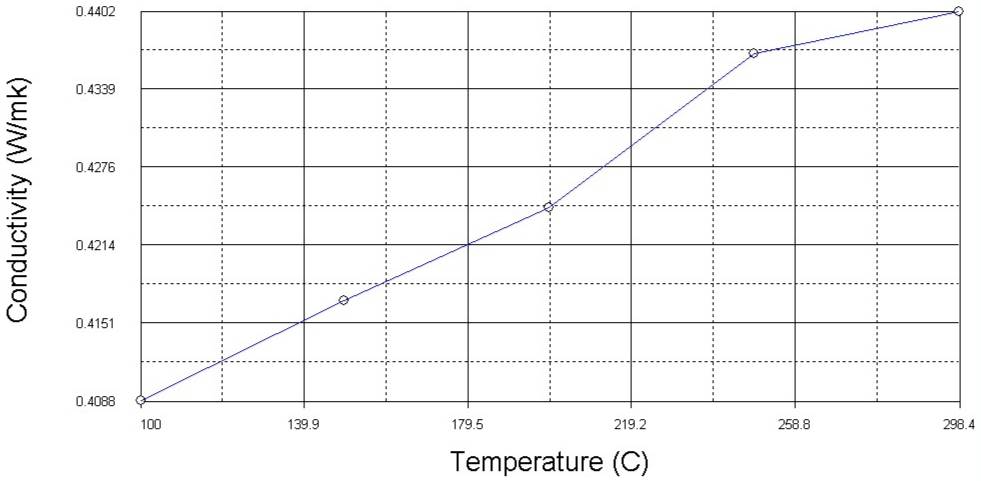
Thermal conductivity measures the ability of a material to transfer heat. The DTC-300 is a guarded heat flow meter that can measure the thermal conductivity over a wide range of temperatures. It employs one calorimeter module for the measurement of thermal conductivity, and a side guard furnace to prevent edge heat loss. The contact resistance is minimized by applying a pneumatic load to the test stack, and by using a thermally conductive interface compound. It can measure the thermal conductivity of a variety of materials, including polymers, ceramics, composites, glasses, rubbers, some metals, and other materials of low to medium thermal conductivity. Non-solids, such as pastes or liquids, can be tested using special containers.
For a sample, we need: 50 mm (diameter)× 25mm (thickness) max or liquid
| Specifications | |
| Temperature Range | -20°C to 300°C |
| Thermal Conductivity Range | 0.1 to 40 W/mK; Accuracy: ± 3% |
| Thermal Resistance Range | 0.0005 to 0.05 m2K/W; Reproducibility: ±1 - 2% |
Typical Methods:
- ASTM E1530
Some of the links on this page may require additional software to view.