

WKU Geology Research
WKU's Geology program hosts several active areas of faculty research interests, and undergraduate students are an integral component. We are always looking for energetic, motivated, and driven students to be a part of a vibrant team of researchers. In addition, many of the classes that students take in geology will also experience the research atmosphere in current topics and those research trends are discussed experimented with. Below are brief descriptions of focused research areas as well as the contributing faculty members.
Tectonic Geomorphology, Thermochronology, Geological & Environmental Remote Sensing, Structure-Tectonics
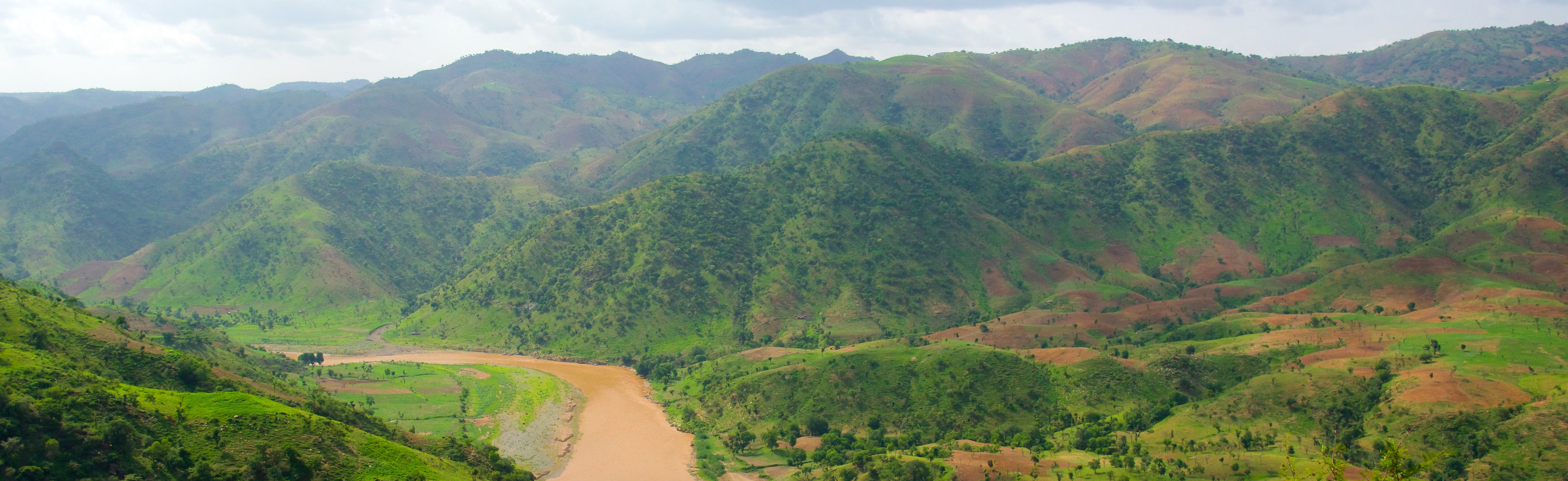
Dr. Nahid Gani's research investigates landscape evolution through geologic time from the complex interplay among tectonics, erosion, surface and subsurface processes, climate, and environmental impacts to address the grand challenges of earth-systems feedback problems. The research tools she uses include low-temperature thermochronology from igneous, metamorphic, and sedimentary rocks, geochronology of igneous (mostly granites and volcanic) rocks, quantitative geomorphology, field and lab-based structural modeling, thin section petrography and electron microscopic analysis, and GIS and remote sensing. Her study area includes geologically diverse places like the Ethiopian Plateau in the East African Rifts, which is the world’s longest continental rift, and the cradle for human evolution, the Nepalese Himalaya (one of the world’s highest mountain ranges), the Bengal Basin, various regions of the USA, and the Red Planet Mars. Motivated undergraduate and graduate students interested in learning more about Dr. Gani's research are encouraged to contact her for more information.
Hydrogeology, Cave & Kartst Environment
Dr. Chris Groves is the University Distinguished Professor of Hydrogeology at Western Kentucky University, where he directs the Crawford Hydrology Lab. He received a Ph.D. in Environmental Sciences at the University of Virginia and has since developed an active international research program in hydrogeology, geochemistry, and water resources, with karst fieldwork in 25 countries. He has been particularly active in the extensive karst region of rural southwest China, having now made 36 trips. In January 2017, Groves received the China International Science and Technology Cooperation Award, China’s highest honor for foreign scientists, from China’s President Xi Jinping. Groves has served as co-Leader for several karst-related United Nations scientific programs, including IGCP/SIDA598 “Environmental Change and Sustainability of Karst Systems” from 2011-2016. He also serves on the Governing Board of the International Research Center on Karst under the Auspices of UNESCO. For more information about research opportunities, contact Dr. Groves at chris.groves@wku.edu.
Sedimentary Geology, Plaeoclimate, Human Evolution, Stable Isotope Geochemistry
Dr. Roynan Gani's research primarily focuses on: (1) Sedimentary geology, which includes basin analysis; sequence and seismic stratigraphy; hydrocarbon reservoir analog; unconventional resources (tight-gas, oil shale/sand); subsurface mapping by integrating well logs, 2D/3D seismic, and cores; ground penetrating radar (GPR); from source to sink; facies analysis and depositional environments; ichnology and paleoecology; paleoclimatology, (2) Human evolution – paleoclimate and hominin evolution of East Africa. (3) Paleoclimate and paleovegetation – multi-system stable isotopic analysis (δ18O, δ13C, and δD from paleosol carbonates and compound-specific analysis of organic materials) of the Cenozoic strata of Nepal Himalaya.
Energy and Groundwater Resources
My current research focuses on the integration of outcrop and subsurface databases in Kentucky and adjacent areas in Mississippian and Pennsylvanian rocks. I have a special interest in energy and groundwater resources straddling the sub-Pennsylvanian surface, or what is formally known as the Kaskaskia-Absaroka Sequence Boundary. The energy resources research of late has been mostly in unconventional oil, asphalt rock, or tar sands - particularly those in Edmonson County and nearby areas of Kentucky. This work involves both traditional sedimentologic and stratigraphic methods in the field and subsurface but also petrographic characterization of these rocks, petrophysics, and to a lesser extent, analysis of fluids. This research engages undergraduate and graduate students and utilizes standard transmitted and reflective light microscopy and SEM, and we are also beginning to incorporate Raman microscopy and XRD analyses in our studies. Contact Dr. Mike May for more information.
Advancement of Geoscience Education
Dr. Margaret Crowder is a geologist focused on geoscience education and the advancement of women in areas of science, technology, engineering, and mathematics (STEM). She has a Master's of Science for Teaching in geology from the University of Florida and an EdD in educational leadership from Western Kentucky University. Her specific research interests from a pedagogical perspective are in the classroom incorporation of student-centered, problem-based learning for enhanced student engagement and understanding. She is currently working to develop more hands-on, inquiry-focused laboratory experiences for introductory geology students. From an educational leadership perspective, Dr. Crowder is also interested in gendered organizations and the effects that gendering has on women in STEM disciplines and on women in the wider world of academia. In her dissertation The University as a Gendered Organization: Effects on Management Type, Climate, and Job Satisfaction, she studied faculty job satisfaction and perceptions of organizational management type and climate, particularly focusing on the differences in these areas between genders and among college disciplines. Contact Dr. Margaret Crowder for more information.
Some of the links on this page may require additional software to view.